
Kids Who Are Mentally & Emotionally Brilliant Usually Do 10 Things Other People Consider Odd
 Mikhail Nilov | Canva
 For parents whose kids don’t quite fit into any social group, normal parental worries feel like they're multiplied. On top of standard concerns, they worry something might be wrong.
Fortunately, certain odd kid behaviors are actually can be a sign your child is brilliant.
As the Davidson Institute explains, "Gifted children often face unique challenges that can lead to misunderstood or misinterpreted behavior." Kids who march to the beat of their own drums might struggle in some areas, but often their odd habits are an indication that there’s something special there, too.
Kids who are mentally and emotionally brilliant usually do these things other people consider odd:
1. They hyperfocus
 Ground Picture / Shutterstock
According to an article published in the journal Psychology Research, hyperfocus can be described as “complete absorption in a task.” The article notes that hyperfocusing is characterized by someone giving their intensive attention to non-routine activities, so much so that their perception of their surroundings decreases.
In simpler language, hyperfocusing means someone is so tuned into what they’re doing that they tune everything else out.
The Child Mind Institute notes that hyperfocusing is often linked to neurodivergent conditions, like ADHD or autism, but that doesn't mean anything is wrong with your child. Kids with ADHD often struggle with attention switching, because their focus on a subject is so intense they can’t easily switch gears.
Kids often hyperfocus or hyperfixate on niche topics, like trains at the turn of the century or the sinking of the Titanic. While these behaviors might seem odd, they can actually be a sign of unrecognized genius.
2. They daydream
 Lomb / Shutterstock
For parents, having a dreamy kid can be frustrating, especially when you’ve asked them ten times to put their laundry away. Instead of following directions, they’re just staring into space.
Yet daydreaming serves an important function in our brains, as cognitive psychologist Stefan Van der Stigchel explains. Van der Stigchel notes that when a person is daydreaming, or “mind-wandering,” the neural activity in their brain is similar to what’s found in the “default network,” which he describes as “ a network of regions in the brain that are active during periods of rest.”
Daydreaming can give our brains a much-needed reset, a break from dealing with so much external stimulus. That mental downtime often gives our unconscious minds a chance to think of new approaches to complex problems or ideas we haven’t considered before. Daydreaming stimulates our creativity, and it’s often a sign of unrecognized genius.
3. Mentally brilliant kids ask questions about everything
 fizkes / Shutterstock
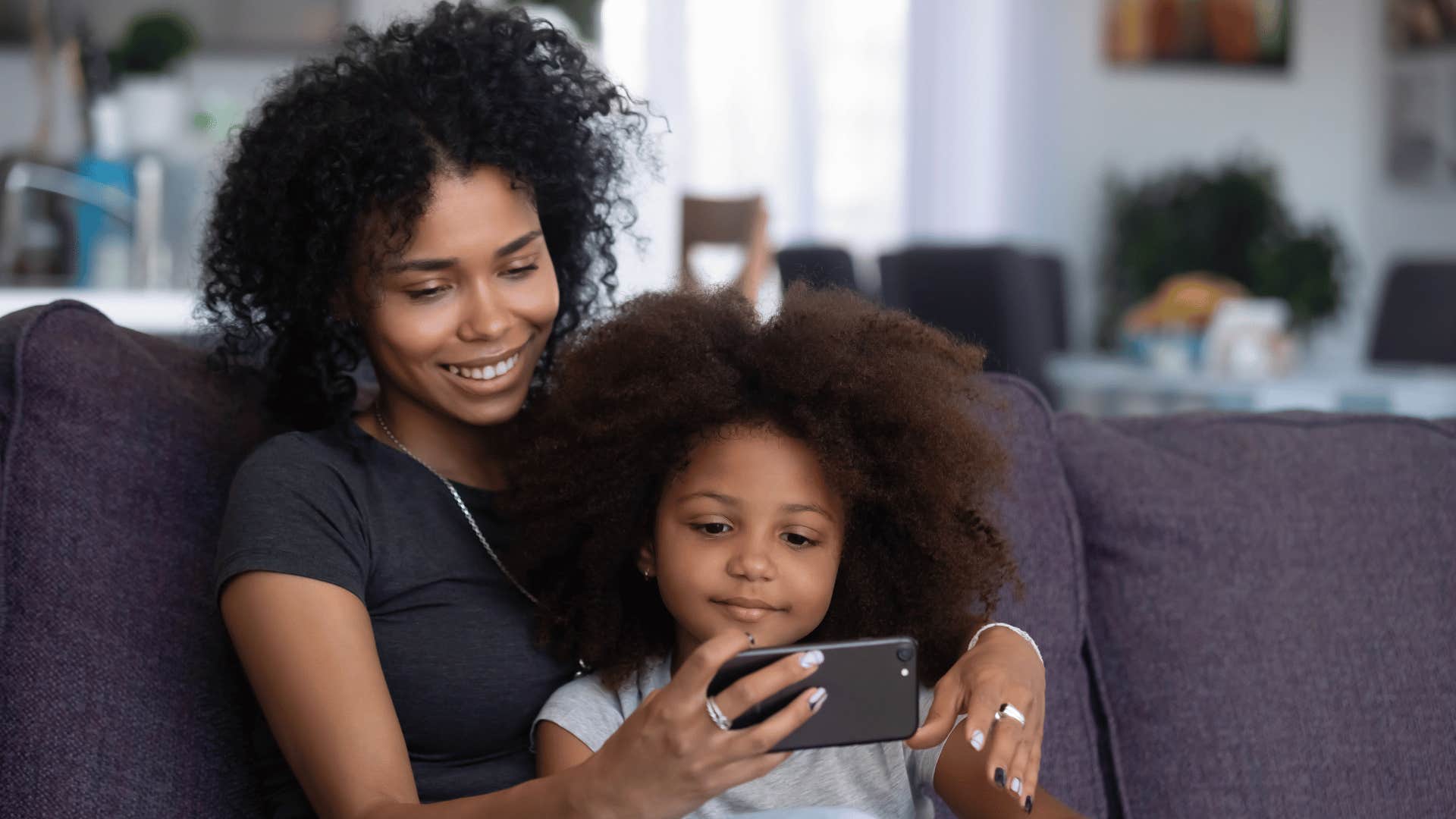
Your kid might ask why the sky is blue, why clouds look cotton balls, why we can see the moon during the day. They might ask questions that you don’t have any answer for, which can be annoying, but it also indicates how curious they are, which is a sign of high intelligence.
Kids who question how everything works aren’t satisfied with answers like, “Just because.” They want to understand the world on a deeper level. They want to know the “why” behind the “what.”
Parents can encourage their kids’ pursuit of knowledge by showing them how to research. They can take them to the library, where they’ll find endless sources about every topic imaginable.
By fostering their child’s curiosity, parents send the message that asking questions is a good thing, as it shows a willingness to challenge the status quo, and it’s a sign of a mind that’s always moving forward.
4. They take things apart
 Drazen Zigic / Shutterstock
While this might not be a parent’s favorite pastime when it goes wrong, taking apart the toaster or inspecting the inner guts of the family computer's keyboard shows that their kid has a passion for mechanics and wants to understand how everything fits together in order to function.
A kid who takes things apart could have an interest in mechanics or engineering. Their love of tinkering and taking things apart might seem like odd kid behavior, but it’s actually a sign of unrecognized genius.
5. They are extra sensitive to their surroundings
 Gladskikh Tatiana / Shutterstock
Brilliant kids often overreact to certain sounds. They might be sensitive to specific textures or get easily overwhelmed in crowds. This heightened awareness can be a sign that they have a high IQ.
Being highly sensitive is often an indication that they experience the world around them in a more intense way than other kids. As clinical research psychologist Elaine Aron points out in her book, The Highly Sensitive Child, 15 to 20% of kids are born with a highly aware nervous system.
Aron outlines four aspects to being highly sensitive: a depth of processing, being easily overstimulated, having high empathy and being emotionally reactive, and being acutely aware of subtle stimuli.
She advises parents of highly sensitive children to “appreciate that this is a wonderful trait. It is no illness or syndrome… It is an inborn temperament or style that is found in about twenty percent of children and of nearly all animals. Anything so persistent is not abnormal.”
While being extra sensitive to their surroundings might seem like odd kid behavior, it can also indicate unrecognized genius.
6. Emotionally brilliant kids are emotionally intense
 Iren_Geo / Shutterstock
Emotional intensity often accompanies being highly sensitive, as kids with these traits experience the world on a deeper level. They’re highly attuned to their own emotions and to the emotions of others, which means they can be reactive in heightened environments.
Kids are still learning how to process their emotions, which means they need parental guidance to understand and express how they feel. As the Gottman Institute notes, validating a child’s more difficult emotions helps them figure out how to navigate them
“Use your child’s negative emotions as an opportunity to connect, heal, and grow,” they advise. “Children have a hard time controlling their emotions. Stay compassionate, loving, and kind.”
Help your child put words and meaning to how they’re feeling. "Once children can appropriately recognize and label their emotions, they’re more apt to regulate themselves without feeling overwhelmed,” they continued.
Children "need a listening ear, a hand to hold, and a parent who can challenge them to reach from within and respond accordingly," the conclude.
7. They think eccentrically
 Dima Berlin / Shutterstock
Kids who think beyond the limits others consider normal demonstrate an ability to challenge the status quo, which is something all innovators do. It might throw some parents off to hear kids express ideas they’ve never considered before, but thinking differently is often a sign of unrecognized genius.
Kids who think in unconventional ways can come up with new solutions to age-old questions. By taking a creative approach to problem solving, kids show that their odd behavior is actually an indication that their minds are operating on a higher level, which is actually a sign of unrecognized genius.
8. They resist sleep
 SeventyFour / Shutterstock
Many brilliant kids push the boundaries of bedtime because they want to keep playing or they're worried about missing out on the secret parties their parents throw after they’ve gone to sleep. Yet kids who are unrecognized geniuses resist sleep for a different reason.
They often struggle to decompress and turn their brains off. Their minds are so active, they have trouble unwinding, which often translates to resisting bedtime.
A study out of the University of Michigan found that one in four parents report that their kids resist sleep because they’re worried or anxious. Having heightened anxiety is often an indication of having a high IQ, yet as the authors of the study explained, kids need to sleep, even the very smart ones.
“Establishing a consistent bedtime routine is crucial. When children don’t get enough rest, it can impact their physical development, emotional regulation and behavior,” says Sarah Clark, MPH.
“Parents should find a balance between offering reassurance and comfort while maintaining some boundaries that help ensure everyone – both kids and adults – get adequate sleep,” she concludes.
9. Brilliant kids invent imaginary worlds
 Q88 / Shutterstock
While it might seem weird that your kid has imaginary friends who live on a far-away planet and only listen to experimental jazz music (or whatever wild thing your kid is imagining), these vivid creations show how skilled your kid is at thinking abstractly.
They might even make up their own languages, an activity shows they have advanced linguistic skills and a strong predilection for noticing and creating patterns. Ultimately, what seems strange to parents makes perfect sense to their creative kids.
Parents should give kids unstructured down-time where they can visit all the worlds they’ve invented and let them revel in their unrecognized genius.
10. They prefer solitude
 fizkes / Shutterstock
Choosing to spend more time alone than with other kids might seem like odd kid behavior, but it's not necessarily something to worry about.
See, there’s a distinction between being alone and feeling lonely, as psychologists Dr. Netta Weinstein and Dr. Thuy-vy Nguyen explained on the American Psychological Association’s podcast, Speaking of Psychology.
“We tend to talk about solitude as simply the experience of being alone, the state of being alone,” Dr. Weinstein said. “We can feel lonely when we’re in solitude, but we can also feel lonely when we’re with other people.
So actually, if you think about the emotion of loneliness, negative emotion, it signals that we’re disconnected. It’s not something that’s unique to solitude, it’s something that can happen whether or not we’re with people.”
Dr. Nguyen echoed that explanation, describing solitude as, “A state of when you are not interacting with another person, and when you feel lonely, and that is when you feel like the social world doesn’t match with what you want it to be.”
It might seem odd that a kid wants to be alone more than they want to play with their peers, but having a preference for solitude can be a sign of unrecognized genius. Kids who choose solitude need time on their own to think, to imagine, and to process their experience of the world around them.
This might seem odd from the outside, looking in, but a kid with a rich inner world needs a lot of alone time. This doesn’t always mean they feel lonely, but rather, they’re enjoying their own company while exploring the corners of their own minds.
Alexandra Blogier, MFA, is a staff writer who covers psychology, social issues, relationships, self-help topics, and human interest stories.
