
4 Things People With Incredible Social Skills Do When Conversations Get Awkward
 Ricardo Luiz Antunes | Shutterstock
 It'd be nice if connecting with people always felt easy, like something you could walk into without overthinking. But the reality is, conversations get awkward sometimes, especially when you care about making a good impression.
The tricky part is that the more you think about how you're coming across, the harder it gets to act naturally. Fortunately, people with exceptional social skills use simple, repeatable habits to stay confident and keep conversations flowing, even when things feel a little uncomfortable.
Here are 4 simple things people with incredible social skills practice when conversations get awkward:
1. They hold eye contact long enough to actually connect
According to Leil Lowndes, author of How to Instantly Connect with Anyone, eye contact signifies "honesty, respect, interest, intelligence, candor, and confidence." But what makes eye contact good? In a word: duration. You need to look at someone long enough to actually connect with them, not just a brief flicker here and there.
Lowndes recommends a few strategies for maintaining continuous eye contact. Think about the exact shade of his eyes, count the number of times she blinks, and note the shape and asymmetry of his eyes.
2. People with exceptional social skills use subtle body language to show they're interested
 iona didishvili / Shutterstock
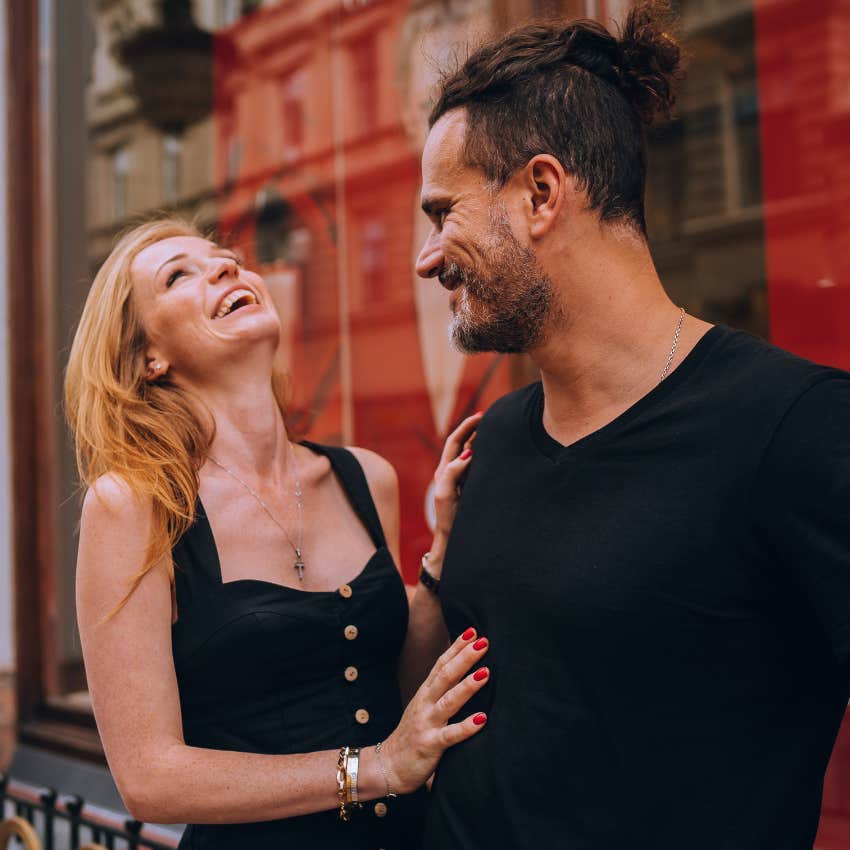
Touching another person's arm or shoulder is a standard flirting technique that indicates interest and comfort, but Lowndes suggests something else: the almost-touch. Reach out like you're about to touch them, but stop before you do.
Touch can show interest, but it's not always appropriate, and it's definitely not the only way people communicate. People with strong social skills rely more on subtle body language cues to show they're engaged. That might look like leaning in slightly, turning your body toward the person, nodding as they speak, or maintaining a relaxed, open posture.
Research shows that these kinds of nonverbal signals play a huge role in how connected we feel to someone. You don't have to say much. Your body language is already doing a lot of the talking.
3. They match the other person's energy without overdoing it
How do you come across as interested in someone without seeming overly-interested? Let the other person speak first, then match their level of enthusiasm. That way, you won't sound disinterested or desperate. This works well on a first date or when someone introduces you to someone else.
Research from 2013 revealed that matching someone's energy can lead to more positive judgments and greater eagerness for future interactions. However, if you come across as overly enthusiastic or insincere, it might raise suspicion. Showing genuine interest with a warm, trusting tone and sharing relatable personal experiences can create an immediate bond by fostering openness and shared vulnerability.
4. People with exceptional social skills make the ending feel just as good as the beginning
 Yuri A / Shutterstock
The way you say goodbye might be even more important than the way you say hello. Studies have shown that when people think about a past incident, they're more likely to remember the way they felt at the end, even if it's significantly different from how they felt during the event.
To create a great final impression, Lowndes advises: don't just say goodbye. Instead, say a full sentence that includes the person's name.
Making a good final impression can create an instant connection due to the recency effect, a phenomenon that causes people to remember the most recent information they receive more vividly than earlier information. A 2023 study found that a positive ending to an interaction creates a lasting impression that can overshadow earlier neutral or negative experiences.
Something like, "It was really great to meet you, Tom." Or "Thanks, I had a really good time." Be warm and friendly and speak with at least as much energy as you did when you said hello.
Sarah Harrison is an editor and content strategist whose work has appeared in The Guardian, Vice, The New York Times, The Independent, and Psychology Today.
