
I Started Making Tiny Crafts To Cope With Stress. After A Few Weeks, I Felt More Focused And Pain-Free Than I Had In Years.
 simonapilollatnf | Canva
 Two summers ago, my living room was invaded by tiny furniture. Sofas and chairs crowded the mantel; desks and cabinets paraded across the bookshelves and windowsills. By the end of August, I had made enough furniture to fill a village’s worth of small houses.
I didn’t realize it at the time, but I had just started to heal myself after a life-altering traumatic brain injury (TBI) and accompanying PTSD.
It turns out that in the midst of both Covid and the opioid crisis, with anxiety at an all-time high and medicine hard to come by, not to mention social isolation, getting creative with crafts is the best thing you can do for body and brain: In 2025, Better Homes and Gardens even announced that mini crafts were the hobby of the season.
I started making tiny crafts to cope with stress
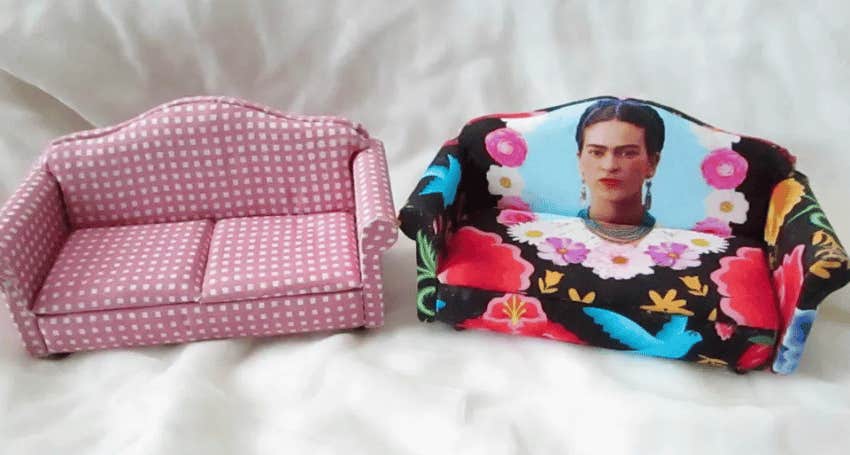 Photo from Author
A surprising discovery about tiny crafts
For me, it all began when my neighbor’s dog attacked and knocked me to the ground. My head hit a concrete step, and that was it. My traumatic brain injury stole my short-term memory and my ability to focus, and even my ability to speak and write.
In place of those useful functions, I had a permanent migraine and pain all through my body. And, of course, depression over the skills and memories and knowledge I’d lost. Oh yes, and my job. That was gone too, and so was sleep.
I needed a new world in which to live, preferably a joyful one. Within about twenty minutes of focusing on my tiny craft project, I felt a significant decrease in pain. In about an hour, I was feeling considerably less anxiety.
By the time I discovered my tiny portal, it was many months later. I was exhausted, but pain was keeping me awake. There were some sewing projects I’d started long ago — dresses I wouldn’t be able to fit into anymore, but the fabrics were good.
I’d always loved tiny things, and I’d inherited some old furniture kits from my mother. Why not put them together in a miniature sofa, the kind where some wee person could take a really good nap?
Shears, craft knives, a box of sewing pins, some sandpaper, and a bottle of wood glue: One of the great things about making miniatures is that you don’t need much equipment to do it.
When I got started, I thought doing the project would be like assembling a puzzle, which was a test I had failed in my neuropsych assessment. I thought it might be too hard for me. I did not know it would be a lifesaver.
It was the first real relief in over two years. Now, how did that work? I wondered. And what was going to happen next?
Why does tiny crafting help with pain and focus?
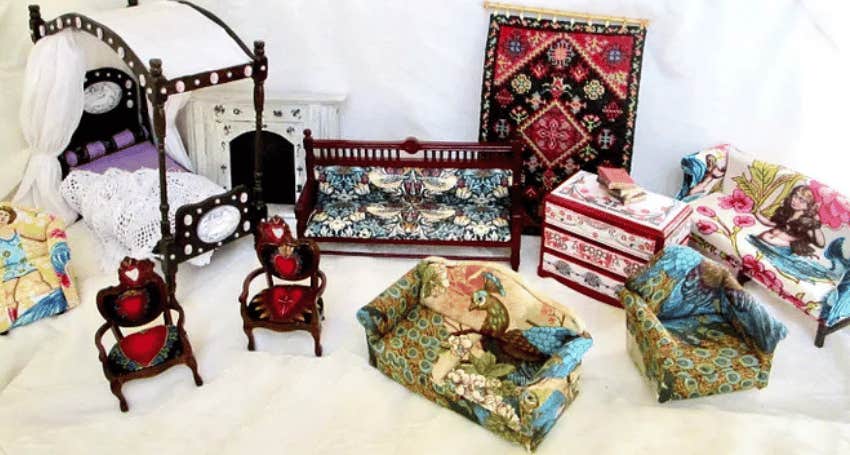 Photo from Author
That first sofa took me hours to make, with a lot of do-overs for the upholstery — and that surprising side-effect that I mentioned. As I focused on cutting and fitting the fabric’s print to the various parts, the back, seat, arms (trickier to fit than you’d think), I felt a gradual easing of pain throughout my body. In about an hour, the pain was almost negligible.
It was a temporary effect; the pain came back. So the miniatures came back, too. Over the course of insomniac nights in which I thought I’d jump out of my own skin, miniatures have kept me in it. I always want to know why and how things work, so I've observed my body’s reactions.
Here’s what I think must be happening: The craft work convinces my brain to ignore pain signals from my body. At least, that’s the only way I can explain it. I become absorbed in the details of making, and my brain just can’t process the less desirable signals.
The benefits have increased over time. My hands and mind have started working better together, as creating these little things has trained my thinking brain to communicate with my fingers.
I can read again, though not as fast as I used to. And, not to be underestimated in this socially isolated era, I’ve found friends online in social-media groups, where a single tiny hat or sofa can spark more than two hundred hearts and comments. Many of those new friends are also grappling with pain and other disorders, from cancer to PTSD and the loss of loved ones.
In short, handicrafts can be painkillers and mood lifters, without the side effects. You can get the same benefits from a range of crafts, from sewing and embroidery to building model airplanes or painting pictures.
Anxiety, depression, dementia, and tiny crafts
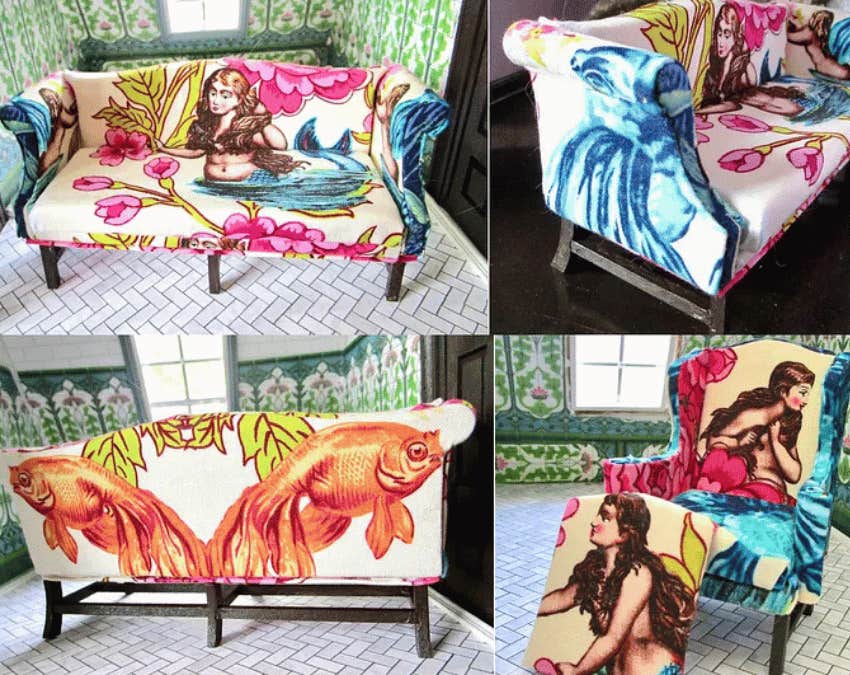 Photo from Author
The UK-based Crafts Council cites studies that support the idea that “crafting can alleviate the symptoms of anxiety, depression, loneliness and even dementia.”
Their page spotlights anthropologist Stephanie Bunn, who has been teaching stroke patients to weave baskets: “‘In the case of stroke recovery, which I’ve been studying, basketwork can re-establish neural pathways and improve brain plasticity,’ she explains. “Basketwork can do the same things for people with dementia, as well as trigger hand memories.”
In another example, Michelle Borst Polino of the American Counseling Association has found that crocheting can help dementia patients improve their memories and develop a sense of purpose each day.
On the University of Arkansas Division of Agriculture’s “Navigating Life’s Journeys” blog, Ashley Foster advocates for knitting as a major health booster. She cites a study by Herbert Benson of the Mind/Body Medical Institute, which “found that 100% of insomnia patients reported improved sleep with 90% being able to eliminate medication in a program that included knitting.”
She believes that the simple, repetitive motions of that particular craft are what does the trick. One hundred percent of patients have improved; that is a compelling statistic.
Build your brain a palace with tiny crafts
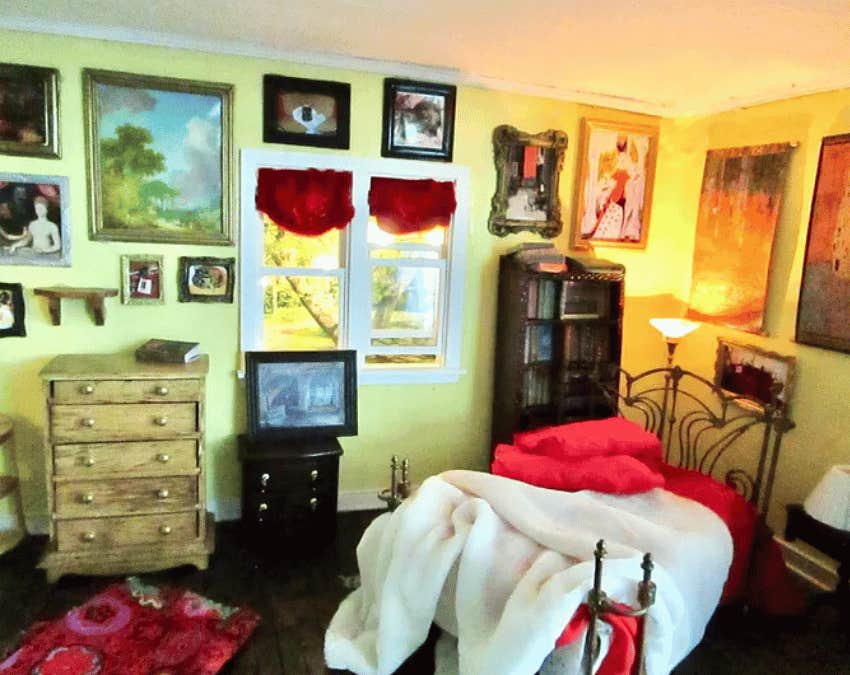 Photo from Author
I've been working mostly in 1:12 scale, which means that one foot of real life shrinks down to one inch when you’re putting it into a dollhouse. I make dollhouses too, and room boxes; sometimes I build them to suit the furniture, and sometimes it’s the other way around. No matter what, I get to create a little world in which I’d like to live.
Plus, miniatures just make you happy! So it’s no accident that in a world still shadowed by long Covid, not to mention plenty of other stressors, they are becoming more popular than ever. Dollhouses attract professional makers and novices just learning to shrink the world down; there are national guilds, countless clubs, Facebook groups, museums, and avid individual fans — even a couple of TV shows recently, such as HGTV’s Biggest Little Christmas Showdown and NBC’s Small Fortune.
We get to create tiny worlds in which we want to live peacefully, and as our best selves.
Eventually, you might wonder (as I did) what to do with everything you’ve been making. You can set up a scene in a room box or fix up a whole dollhouse, sure, but maybe your dollhouse can be more than just a dollhouse. It can do more for your well-being; it can help you recover from stress, trauma, grief, and more.
One idea is to create, literally, a memory palace, a commemoration of a special moment or person in your life. (In the abstract kind of memory palace, you imagine a home in which each room holds memories related to a certain topic. So you’d go into the parlor for your memories of music, the bedroom for quantum physics, etc. It’s a useful tool.)
Sometimes I build a concrete world like that with elements of my own life, including fabrics, jewelry, and other tokens, which means that working on my “domestic sculptures” has brought me back to my memories in unexpected ways.
As an example, I recently made a room box in honor of a beloved cat who helped me through the time when I was bedridden. The fabrics I used have been a record of my entire life: a red silk scarf that belonged to my late mother, some velvet scraps from a jacket I made years ago from a Renaissance Revival pattern. I don’t have the jacket anymore, but working with the scraps brought back that time in my life.
The room box has helped me deal with my grief and to heal from all kinds of losses. It reminds me how lucky I am to be able to construct these palaces in miniature, tiny waystations on the path to healing. Working on that scene, I rediscovered elements of memory from my injury. I got back in touch with some of my old symptoms, the problems at work, and learning to speak again. It reminded me how far I’ve come, and I continue to add elements.
While my recovery seems to have plateaued, the craft is an ongoing part of my life. Whenever my pain and/or anxiety get intense, another (imaginary) miniature person gets a new sofa.
If you want to see how to do it, here’s a little tutorial: How to reupholster a mini sofa.
Niddie Bone writes about health, relationships, and humor, especially about the ways invisible and/or hard-to-diagnose illness affects women's lives and interactions with the world beyond.
