
People With Very Little Mental & Emotional Consistency Usually Say 9 Phrases In Casual Conversation
 cottonbro studio | Pexels
 We're more aware of other people's inconsistencies than our own. And for someone with strong confidence and security, they notice right away.
So, these casual phrases often instantly give away when someone has very little mental and emotional consistency. They're flaky and skip plans out of the blue. They're emotionally unavailable and poor communicators. They're just generally hard to trust.
Phrases people say when they have little consistency
1. 'I can't promise anything'
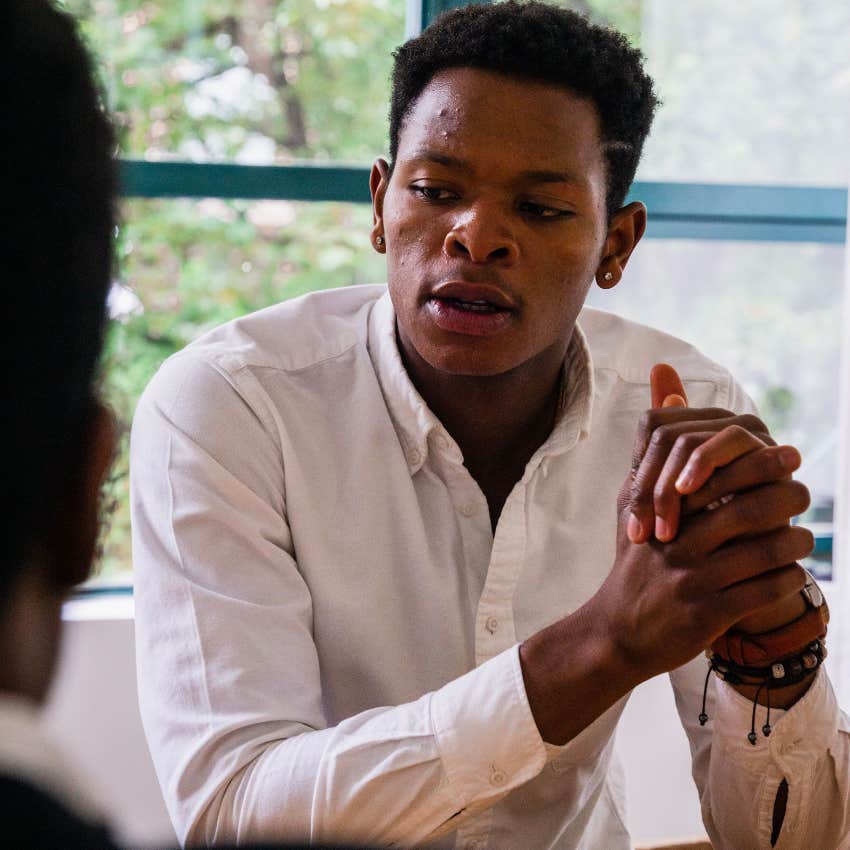 PNW Production | Pexels
It's silly to assume that we, as humans, will never break a promise or make a mistake. But the way that we respond is what actually builds trust in our relationships. It's apologies and commitments that rebuild trust, not vague phrases like this.
You can immediately spot someone who's flaky and inconsistent when they say "I can't promise anything." We sometimes have to say this when we don't know our schedule or how we'll feel, but if it comes up over and over again, it's not because someone's life is overly busy or complicated.
2. 'You don't have to remind me'
If someone is inconsistent, the reminders and actions of the people in their life are a blaring warning signal. They always have to follow up to get an answer and confirm plans constantly, checking in with these flaky people to make sure they're still committed.
In a healthy relationship with a consistent person, there's little worry about whether or not they're going to keep their promises because they just do. That's where trust builds from.
For someone who's wildly inconsistent across many different areas of their lives, they respond like this. They're annoyed by reminders because it points out something they know they're doing poorly.
3. 'I never said that'
Many emotionally inconsistent people fall short on promises and say things they don't mean. With secure friends and relationships, they have to take accountability because these disrespectful behaviors don't go unnoticed.
But if they're too insecure or have too fragile an ego to take accountability, they may resort to gaslighting as a way to shift the narrative and control how people perceive them. They may know full well that they said something, but they'll do everything in their power to walk it back with phrases like "I never said that" to avoid an apology they perceive as a personal weakness.
4. 'You can trust me'
Trust in relationships, and with ourselves, requires some level of action and consistency. It doesn't just pop up out of thin air because we know how to make someone feel seen or have all the right words to smooth over our mistakes. It comes from showing up, over and over again, and making people feel respected.
But people who are generally inconsistent try to develop trust with phrases like this, attempting to build it from scratch in the moment. They have to remind people they're trustworthy because their actions tell a completely different story.
5. 'I'll let you know later'
 Mizuno K | Pexels
Our social connections are often the root of our well-being and happiness, and yet, an emotionally inconsistent person breaks down their relationships at every turn. Even when it comes to making plans, they find a way to chip away at trust and disrespect people's time.
They're the types of friends and partners who never commit. They're inconsistent when it comes to following through on promises, but they're also quick to say "I'll let you know later" when asked to say "yes," and then never reach out.
They might be somewhat self-aware that they won't know how they'll feel in the moment, but never being willing to inconvenience themselves for anyone is a selfish and wildly isolating way to live.
6. 'Stop putting words in my mouth'
When someone comes to them for reassurance or validation, an inconsistent person will often respond aggressively with phrases like this. They've made all kinds of grand promises before, but when they have to show up like they said they would, it's defensiveness that everyone else gets in return.
Typically stemming from a lack of security in their own thoughts and emotions, they never know how to act because they're all over the place. Their relationships suffer because they never show up as the same person, which makes people feel like they have to walk on eggshells in their presence.
7. 'I'm just not feeling it anymore'
Even if they said "yes" to plans an hour before or made a big deal about committing to something with their friend group a week prior, someone with very little consistency will always find some dull excuse to cancel or step back.
Despite knowing their actions disappoint and anger the people around them, they make their cancellations overly casual, trying to justify their actions as if it's not a big deal. "I'm just not feeling it anymore" might be true, but they're really just trying to avoid being held responsible for their actions.
8. 'I'm not talking about this'
Someone's emotional inconsistency is often tied to unpredictability for everyone who's around, which can make them feel out of control. That's why open communication is a healthy person's first instinct. They want to talk things through and understand what the other person thinks and needs.
But someone who's inconsistent is also often emotionally unavailable. They find criticism and vulnerability scary, leading to avoidance tactics that manifest in casual phrases like "I'm not talking about this."
9. 'What if we did this instead?'
 Timur Weber | Pexels
Because someone with little emotional consistency can never predict their own desires, they're always shifting their expectations. Even if it disrespects someone else's boundaries, they always say "What if we do this instead?" or "Can we have this conversation another time?"
Not only does this make their partners and friends feel like they're completely unreliable when it comes to plans and tangible commitments, but they're also often on weird terms emotionally, unsure of what the other needs.
Zayda Slabbekoorn is a senior editorial strategist with a bachelor's degree in social relations & policy and gender studies who focuses on psychology, relationships, self-help, and human interest stories.
