
People Who Get 1% Better Every Day Do 20 Things That Don’t Feel Like Much Until They Suddenly Do
 Nastikbelaya | Pexels
 Colby Kultgen is an influencer who focuses on helping people streamline their daily habits to be more productive. He shares techniques for improving our lives that are accessible and designed for busy people seeking simple ways to better themselves. He recently revealed how to “get 1% better every day.”
When you try to force huge life changes, you might notice that they tend to collapse under their own weight: The elaborate 7-day workout routine that only lasts a few weeks collapses under the lack of rest days. The all-smoothie diet that's impossible to maintain for longer than two carb-free days. On the other hand, small habits are more sustainable over time. One small change in your evening or morning routine can slowly reshape your entire life, even if it doesn't feel like much at first.
People who get 1% better every day do 20 things that don’t feel like much until they suddenly do:
1. They write down what they're grateful for
“This is the best happiness hack I’ve found,” Kultgen shared. Keeping a tangible record of things that you appreciate is a great way to acknowledge what you have and what makes you happy. A gratitude list doesn’t need to be composed of anything earth-shattering.
You can write down the small things you love about your life, like taking that first sip of coffee in the morning, or listening to birds chirping while you work. Happiness is a practice. Recognizing what makes us happy allows for even more joy to enter our lives.
2. They switch up their nighttime tech routine
Kultgen recommended replacing your phone with a Kindle at bedtime, saying, “This fixed 90% of my sleep problems.”
Phones use blue light, which mimics daylight, meaning that it can make us feel more alert when we want to wind down. Blue light can also disturb our circadian rhythms, leading to disturbed sleep. Putting down your phone and decompressing differently creates a more restful nightly habit.
3. They read every day
Read one thing every day, even if it’s just one page or only a few sentences. This action will spark your imagination and get your creative flow going.
Reading is a scientifically proven stress reliever. It also helps you connect to people around you, as various studies have shown that reading increases our empathy. The bottom line is that any amount of reading is good for your mind, body, and soul.
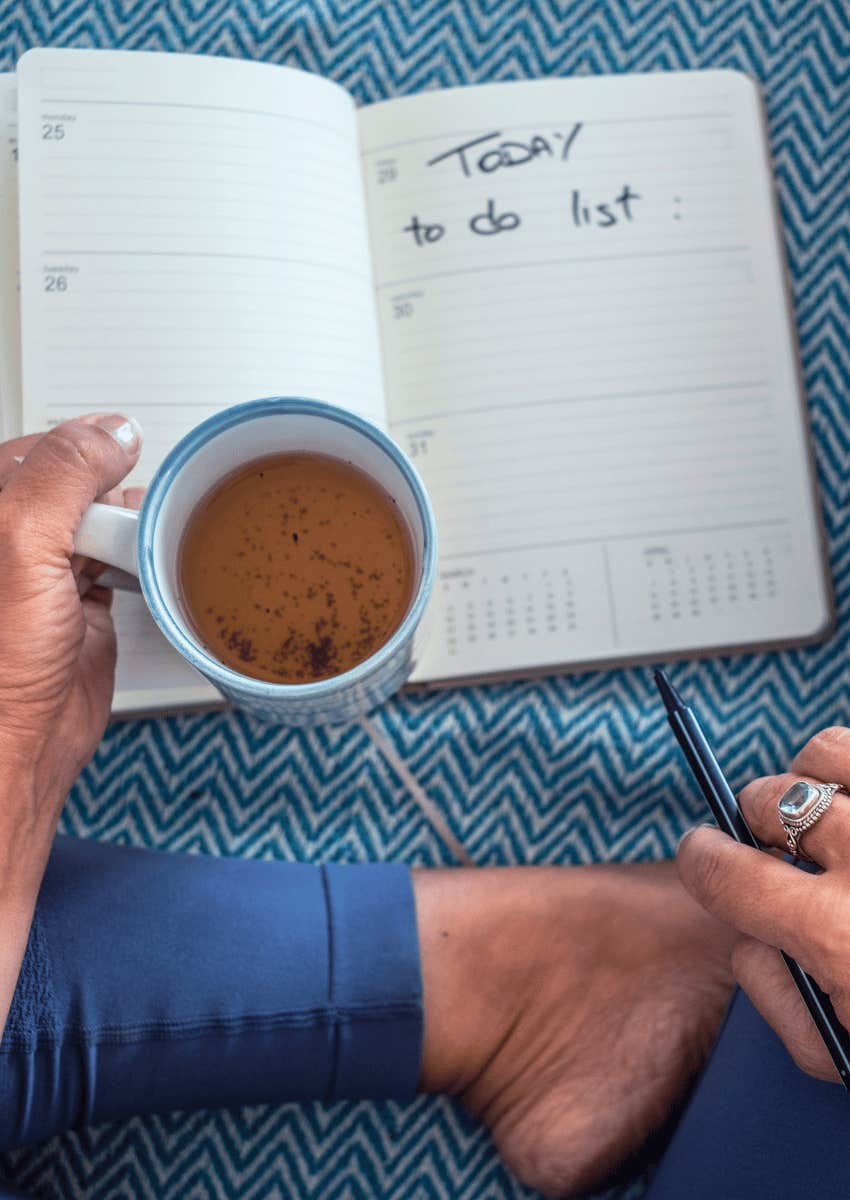
4. People who get 1% better write a to-do list in the morning
 Getty Images / Unsplash+
Kultgen suggested writing down five things you have to get done and prioritizing them by importance. Seeing a list of tasks in front of you makes your schedule feel more manageable, plus crossing things off your list feels great.
6. They automate small tasks
Outsourcing certain actions, like autopaying at least some of your monthly bills, can preserve your time and energy for more difficult things. Every tiny decision you take off your plate is a little more mental space available for other, more important things.
7. They meditate
Meditation is a practice that seems intimidating to start, yet the actual act of meditating isn’t as complicated as you might think. If you have trouble turning your mind off at night and falling asleep, body scan meditation is one tactic to try.
Body scan meditation, a mind-body technique, works because it gives your mind something quiet to do. Clinical psychologist Dr. Elayne Daniels explained that "meditation trains the mind so that during times of stress, you can more easily find calm. Consistency is more important than the amount of time overall spent meditating. Three to five minutes a day provides more benefit than thirty or more minutes once a week."
8. People who get 1% better go to bed earlier
Push your bedtime up by 30 minutes to ensure getting a full night’s rest. Keeping a set schedule for when you go to bed is great sleep hygiene. Having a consistent bedtime can help you maintain a routine and feel better the next morning.
9. They ask for what they want
Advocating for yourself can feel like a huge hurdle, something that lends itself to avoidance rather than facing the challenge head-on. But you can’t get what you want if you don’t ask. Speak up for yourself and make your needs clear: The worst thing someone can say is “no.”
Psychiatrist Dr. Danni Michaeli advises that asking for what we need is one of the most underused tools we have for staying connected. "Don't lean back, lean in. Sometimes, leaning in means asking for what we want. Sometimes it's an apology, and sometimes it's actually an expression of anger. But either way, it isn't shutting other people out," Dr. Michaeli explained.
10. They make plans with friends
 George Dagerotip / Unsplash+
Kultgen advised being proactive when it comes to staying connected with friends. “Life happens, and it’s easy to drift apart when you’re busy,” he explained.
Your plans don’t have to be anything huge. Meet up for a walk or your morning cup of coffee. Catch up on the phone while you’re cooking dinner. Keeping up friendships is proven by research to be vital to our happiness.
11. They save things that resonate with them
Kultgen suggested keeping a swipe file of things that resonate with you, whether it’s a photo that moved you or an article you want to look back on. Collecting what matters to you in an accessible place is a solid reminder of what’s important to you, and it’s a sweet way to give yourself some self-love.
12. People who get 1% better every day write down one anecdote every day
After recording one memorable moment each day, you’ll have 30 new stories to share in a month.
13. They put their phone away when they're working
Cut out distractions completely by leaving your phone in a separate room from where you’re working. That way, you won’t be tempted to swipe through social media. You might find that taking your phone out of the equation helps you focus on the task directly in front of you.
14. They commit to a creative practice
Getting into something creative is a hugely valuable habit, one that nurtures your inner world and helps you blow off steam. It can be something simple: Drawing a few pictures each day or listening to music you love.
It doesn’t even have to be artsy. You can cook a new recipe or plant in the garden, anything that relaxes you and lifts your spirits.
15. They keep track of their schedule minute-by-minute for one week
 Colin Lloyd / Unsplash
Kultgen believes that this method helps people see where their time is actually going.
16. People who get 1% better every day let themselves be bored
Spending time doing nothing gives your mind space to decompress. Being bored can inspire your imagination. So, lie on the couch and stare at the ceiling. Let your mind drift. See what comes to the surface.
17. They listen more often than they speak
Listening well is a muscle, one that helps you connect to others and builds up your emotional intelligence. Plus, you’ll gain insight into other people’s lives the more you listen, helping you feel connected.
18. They create more than you consume
It might seem like scrolling through social media on our phones helps us relax, yet research has found the opposite: social media makes us more anxious. We often end up comparing ourselves to what we see online, which only serves to make us feel depressed and isolated. Doing something small that inspires you is a much better way to spend your time, and it boosts your mood.
19. They offer more compliments than complaints
It’s easy to feel negative about the world around us, especially when so much feels out of our control. Complaining keeps us in a negative headspace, whereas recognizing small things we’re grateful for lifts us. Practicing a generosity of spirit makes us feel good about ourselves and shows that we appreciate the people we’re in community with.
20. People who get 1% better donate what they don’t need
 RDNE Stock project / Pexels
Take an hour and go through your closet, culling the clothes you haven’t worn in a while. See if you have any canned food that you just won’t use that you can bring to a food bank. Donating goods that you have no use for is a great way to spread kindness and support for those in need.
Our lives are busy, and there's not always a ton of time to devote to our self-improvement, but as Kultgen has illustrated, little 1% changes can ultimately make an incredibly huge difference. Commit to one small change a week, and the benefits will undoubtedly be massive.
Alexandra Blogier is a writer on YourTango's news and entertainment team. She covers mental health, pop culture analysis, and all things to do with the entertainment industry.
