
If You're Feeling These 11 Things, You're Probably Stuck In Survival Mode
 panitanphoto | Shutterstock
 Anxiety and stress are a normal, though bothersome, part of life for many people. But when a person is stuck in "survival mode," a non-stop cycle of fight or flight, it has repercussions on our mental and physical health. According to psychologist Dr. Gia Marson, "Stressful stimuli cause a physiological and psychological response called survival mode. This... involves the release of stress hormones and the activation of our stress-response systems. Our mind and body become focused on combating danger."
Though survival mode is a defense mechanism meant to protect against imminent threats, modern stressors like school, work, and family can trap people in a vicious state of survival. Whether it's suffering from exhaustion or feeling unable to focus, if you're feeling these things, you're probably stuck in survival mode. So, it's crucial to identify these signs to prevent further turmoil
If you're feeling these 11 things, you're probably stuck in survival mode
1. Everything feels urgent
 Andrii Iemelianenko | Shutterstock
According to psychotherapist Kiara Luna, a person may be experiencing survival mode if they have an urgent sense to take care of specific tasks right away. "We often get into this state where we feel a sense of urgency over non-urgent items because we're operating from fear, anxiety, and even anger. Those emotions are sending a signal to our brain that we must act now," she said.
This heightened state puts immense strain on our mental and emotional well-being, which can lead us to operate in survival mode.
2. You're always tired
 MAYA LAB | Shutterstock
Part of the process of preparing our bodies for survival mode includes extending more energy than usual. Our bodies do this by raising our cortisol levels.
While this is useful for a short duration of time, prolonged use tires our body, depleting our energy sources close to zero.
3. You anger easily
 Krakenimages.com | Shutterstock
If you're feeling anger at the slightest things, you're probably stuck in survival mode. Maybe your partner loaded the dishwasher the "wrong" way or another car cuts you off in traffic. And it's not just a one-off — this happens every day.
Your partner makes you roasted garlic chicken instead of plain roasted chicken? Irritated. Your children say one word to you after you get home from a long day of work? Irritated. The server gives you BBQ chicken wings instead of buffalo chicken wings? Irritated.
As author Tony Schwartz pointed out, "The survival zone is when your energy is high, but negative. When we feel threatened or devalued, control of our nervous system shifts from the prefrontal cortex to the sympathetic nervous system and we move into fight-or-flight mode. People in this zone are anxious, impatient, irritable, fearful, and self-critical."
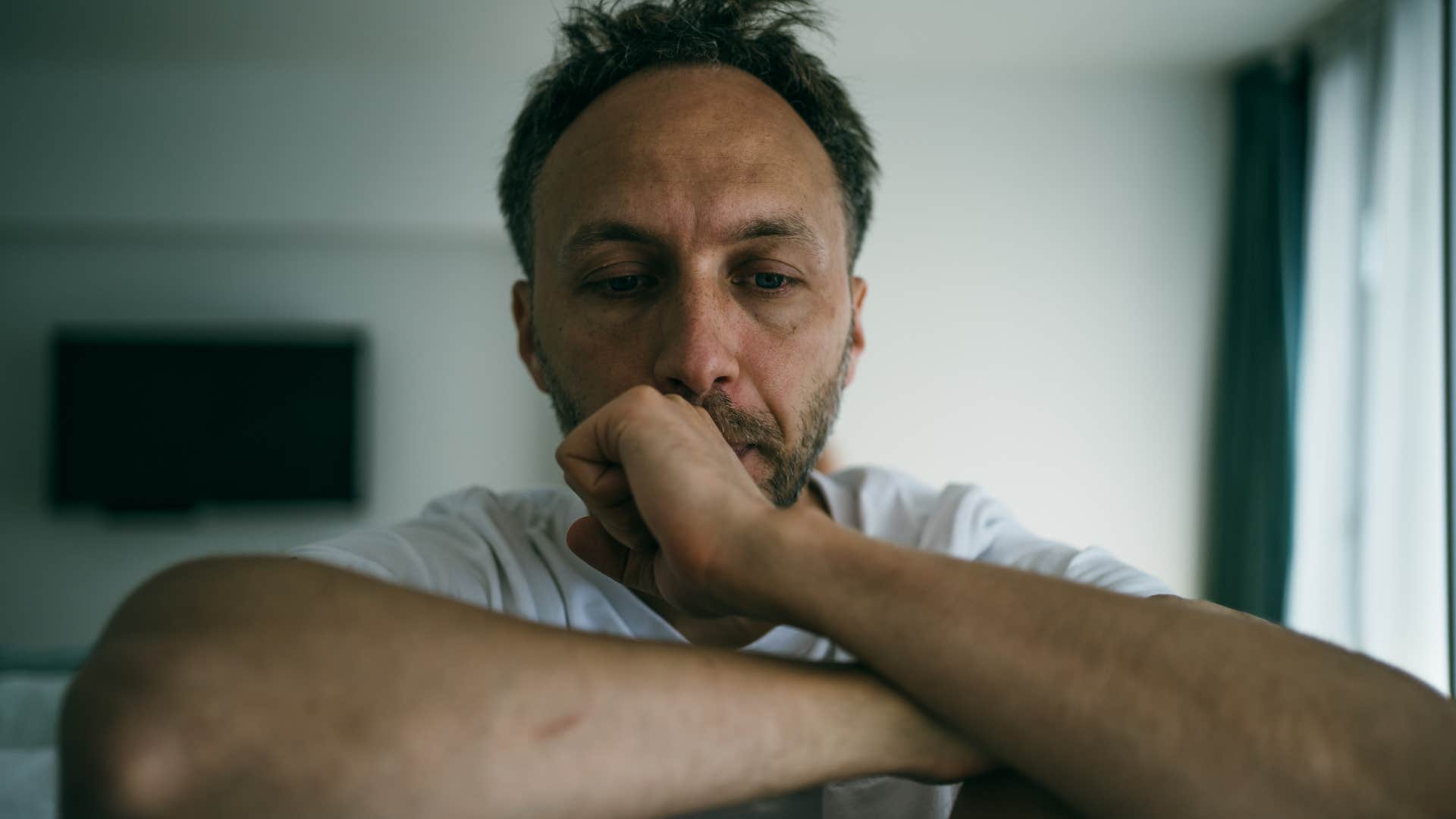
4. Nothing feels good enough
 DedMityay | Shutterstock
Not being able to enjoy the activities you once loved is a gut-wrenching experience, but you can't help it. Nothing ever feels good enough. The book you just read is trash, the date your partner took you on was horrendous, and that good grade you got on your paper could have been better.
If you're experiencing this feeling every day, you're likely in survival mode. Because even the tiniest accomplishments just aren't enough for you.
5. No day feels like a good day
 wavebreakmedia | Shutterstock
If you find yourself constantly feeling that no day is a good day, this could be a sign of multiple underlying mental health issues. While occupational therapist Dr. Brooke Weinstein identifies this as a sign of survival mode, it's crucial to delve deeper into the root cause.
It's important to highlight that this emotional state aligns with other mental health issues beyond survival mode, making it essential to seek professional guidance to tackle the problem more effectively.
6. You wake up stressed
 yourphotopie | Shutterstock
According to experts from Accelerated Resolution Therapy, "Stress becomes chronic when a person experiences frequent stress-producing stimuli without a return to comfortable normalcy in between stressors. As a result, the body and mind cannot return to a rested state. Individuals experiencing chronic stress are hypervigilant, physically tense and 'on edge,' unable to return to a deepened, relaxed state required for recovery," they explained.
This stress can create immense problems such as anxiety, depression, and sleeping disorders, as well as digestive issues, sweating, headaches, dizziness, and weight fluctuations.
7. You feel anxious for no reason
 PeopleImages | Shutterstock
Have you been anxious a lot lately? For instance, your friends want to go out to a nice restaurant and you're so anxious because you don't know what to wear. Or maybe you're cooking a nice dinner for your partner but you're anxious because what happens if they don't like it?
If you're feeling anxious and unsure of why, you're probably stuck in survival mode. Lately, you may be feeling on edge. You wake up anxious, get dressed anxious, and you're constantly working feeling anxious. No matter what, your heart feels as if it's going to fall out of your chest every single day.
8. You find yourself zoning out and unable to focus
 Twinsterphoto | Shutterstock
Whether it's in a meeting or while you're in a conversation with someone, you can't seem to pay attention. Pinching yourself doesn't work and rubbing your eyes somehow makes it worse. According to licensed psychologist and assistant professor Jennifer Bahrman, cognitive dulling is "a form of mental fatigue that leads to difficulty concentrating, decreased productivity, and a decline in emotional and mental health."
This can occur due to our bodies constantly living in survival mode. Cognitive dulling can cause issues with our productivity and a decline in our mental and physical health, which, in the long run, can affect both our personal and professional lives.
9. You feel overwhelmed
 voronaman | Shutterstock
It can be hard to focus on important tasks when you're constantly in fight or flight, and your sense of uncertainty can quickly escalate into powerful emotions. This may lead to forgetfulness, confusion, and withdrawal. Over time these can snowball into bigger issues such as depression and anxiety.
Unfortunately, if you're feeling these things, you're probably stuck in survival mode. And if that isn't bad enough, being overwhelmed on a daily basis can be a catalyst for dependency issues and many other disorders.
10. You engage in destructive behaviors
 Stokkete | Shutterstock
Many of us have engaged in destructive behaviors at some point, whether it was throwing a pillow or breaking up an otherwise healthy relationship. However, when experiencing constant stress, our coping mechanisms tend to be a bit more extreme.
Overeating and dependency issues are just some of the many dangerous destructive behaviors we engage in when under constant stress. If you're experiencing these problems, it's essential to seek out professional help.
11. You're easily startled
 Anatoliy Karlyuk | Shutterstock
Are you the type of person who is easily startled when someone taps you on the shoulder and greets you? Do you jump out of your skin when you hear an unexpectedly loud noise? Startling easily is biologically programmed into us when we are in survival mode in order to keep us safe.
Startling easily in this way means your nervous system is working in overdrive, which can cause exaggerated reactions. Eventually, however, this leads to exhaustion from hypervigilance.
Marielisa Reyes is a writer with a bachelor's degree in psychology who covers self-help, relationships, career, family, and astrology topics.
