
Kids Raised By Parents Who Didn't Show Much Love To Each Other Usually Carry 8 Habits Into Adulthood
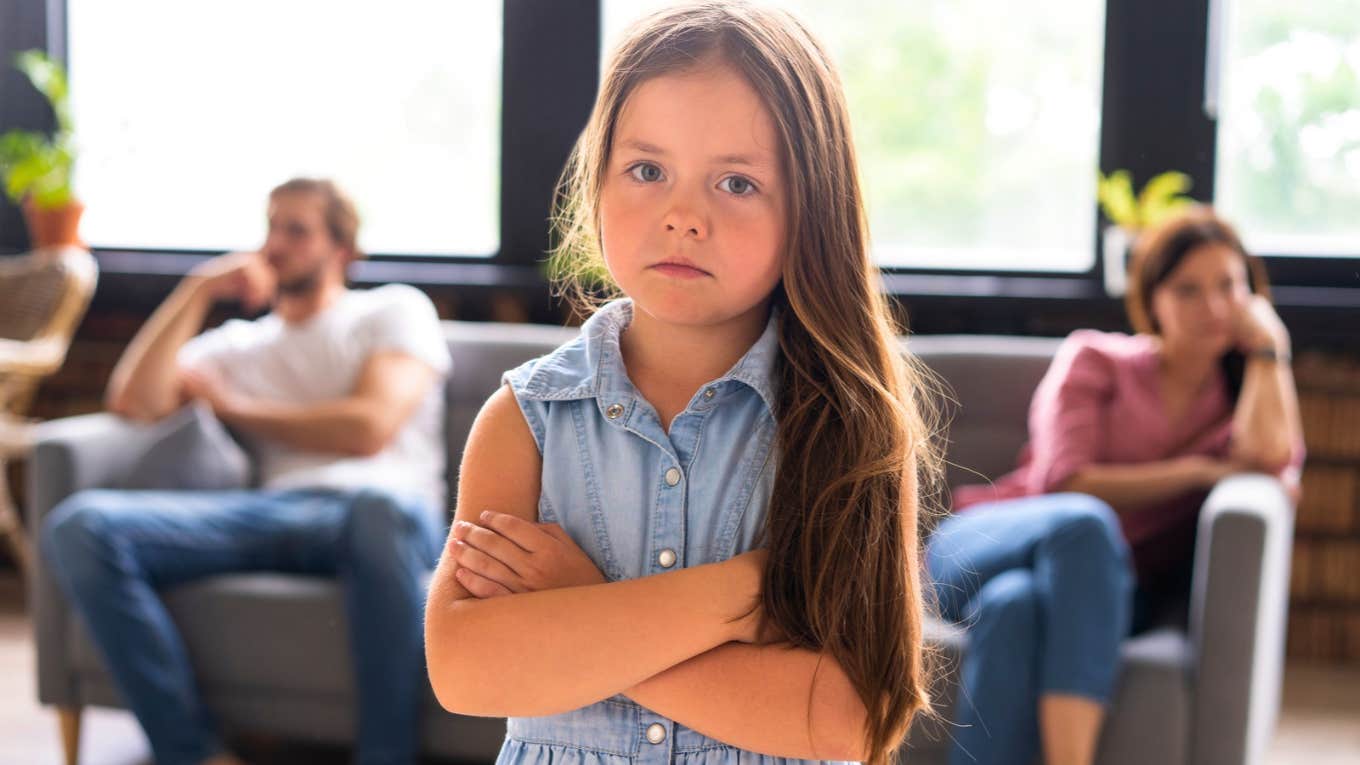 OPOLJA | Shutterstock
Having positive role models is one thing. Experiencing love and feeling worthy of it as kids is another, and is an even more important predictor of lifelong well-being.
The kids with supportive, affectionate parents feel secure in themselves. But kids raised by parents who didn't show much love to one another end up carrying bad habits into adulthood. They struggle to navigate life without the picture of healthy love they should have had.
1. They feel aimless in relationships and repeat toxic patterns
 PeopleImages | Shutterstock
When you grow up without understanding healthy love, relationships in adulthood can feel scary. Kids who were raised this way were socialized into building insecure attachments. In their relationships as adults, the cycle of neglect and self-isolation continues.
Asa study from Frontiers in Psychiatry explains, the dynamics that were modeled repeat and transform for these adult kids. They may feel aimless and avoid love entirely. They could even repeat the same patterns they loathed in their parents because it's what feels familiar.
2. They rely on external things to comfort themselves
Adults with neglectful parents have a hard time building a strong sense of self, according toexperts like trauma expert Wendy B. Smith. "Neglected children see and feel the lack of care from the adults closest to them," she says. "It is a piercing experience of being unloved."
They can't self-soothe because they don't trust themselves or feel good in their own bodies. So, instead, they turn to other people or distractions for comfort. It's an escape route from self-soothing, and it regularly comes at the expense of their well-being.
From mental health concerns to self-sabotage, they struggle to find fulfillment becausethe openness and challenge that most people find meaning in feels too threatening to lean into.
3. They simultaneously yearn for and run from attention
Many of these adult kids are battling an internal void of connection. They're yearning for attention or love, and feeling too insecure to adopt healthy dynamics, where they can accept those things when they cross paths.
To them, love and attention were rooted in fear and anxiety because they were fleeting. And all of those emotions are still prevalent today, even if they've moved out and on.
"Handling relationships in this way is often learned, part of a family culture where parents and other important people do the same,"social worker Robert Taibbi explains.
"Often there's a you-against-the-world stance where others can't be trusted, where they can turn on you or disappoint you. If you expect this from others, it's easy to find it, and once you feel wounded, you cope by cutting these folks off as quickly as possible."
It feels natural to run from attention because there's always a fear it will be taken away.
4. They struggle to be affectionate with people, including their own kids
"Because childhood emotional neglect is so very common, so are emotionally neglectful parents. And since emotionally neglectful parents are so common, so are emotionally neglected children. It's because these children grow up to be parents,"psychologist Jonice Webb explains.
"The cycle continues, and on and on it goes, passing down through generations until someone finally sees what's happening and calls a halt to its insidious process."
The same kids who felt unloved and detached from their parents may become parents themselves. They may feel strange trying to heal the cycle with their own kids, though. They didn't have an example, so everything feels uncomfortable.
5. They end up stuck in 'therapist friend' roles
 DexonDee | Shutterstock
Children who grew up with parents who rarely showed love to each other ended up parentified. They werestuck being the mediators and the peacemakers at home, and that dynamic sticks around when they grow up, just in a different way.
They may people-please for attention and change their personalities depending on who's around. They may become therapist friends and partners to keep the peace.
However it manifests, they're used to taking on the blame and responsibility of other people's struggles, because that's how they were raised.
6. They're always preparing for the worst in relationships
When you grow up with parents who rarely show love to each other, it's easy to assume that love is conditional. When someone is in a good mood, they offer attention and affection. When things are bad, people self-isolate.
Whatever the dynamic was like growing up, these kids learned to fear attention and love from other people because it could always be taken away.
"If a child doesn't receive basic comforts like physical affection, emotional connection, and safety, they may learn not to trust these will last into adulthood,"psychology writer Lisa Fritscher explains. "Many people with a fear of abandonment state that they never felt like they had a 'tribe' or a 'pack' when they were growing up... they always felt 'other' or disconnected from those around them."
They prepare for the worst because they grew into their identity without parents to model healthy love. Now, they find themselves preparing early on to save themselves the hurt.
7. They exaggerate relationship quirks and warning signs
When you're constantly bracing for abandonment or rejection, even tiny warning signs like a missed text can spiral into something much more consequential. This kind of hypervigilance isn't uncommon for people with childhood trauma, according toa 2020 study.
They read into things and constantly scan other people's moods. They exaggerate small details, projecting their own fears and insecurities onto others.
They're used to doing the same at home. But instead of their own relationships, it was with their parents, trying to figure out where they stood.
8. They find ways to justify avoiding commitment
 Nyszczuk Emanuel | Shutterstock
Chronic situationships aren't uncommon for these kinds of adult kids, either. They're so used to anxiety and fear around romance and relationships, as a result of their dysregulation growing up, that commitment feels like something to avoid.
"If you fear that others will hurt you the way your caregivers did, avoiding settling down can feel safer as it allows you the freedom to leave the relationship when and if necessary,"psychotherapist Kaytee Gillis says.
"While the underlying fear is that the partner will eventually leave, these thoughts often reveal themselves in everyday situations such as getting scared when a partner goes out by themselves, or being unable to self soothe if a partner leaves the room during an argument."
Zayda Slabbekoorn is a senior editorial strategist with a bachelor's degree in social relations & policy and gender studies who focuses on psychology, relationships, self-help, and human interest stories.
