
8 Normal Childhood Rules From The 80s & 90s That Experts Now Realize Tuned Kids Into Stressed Adults
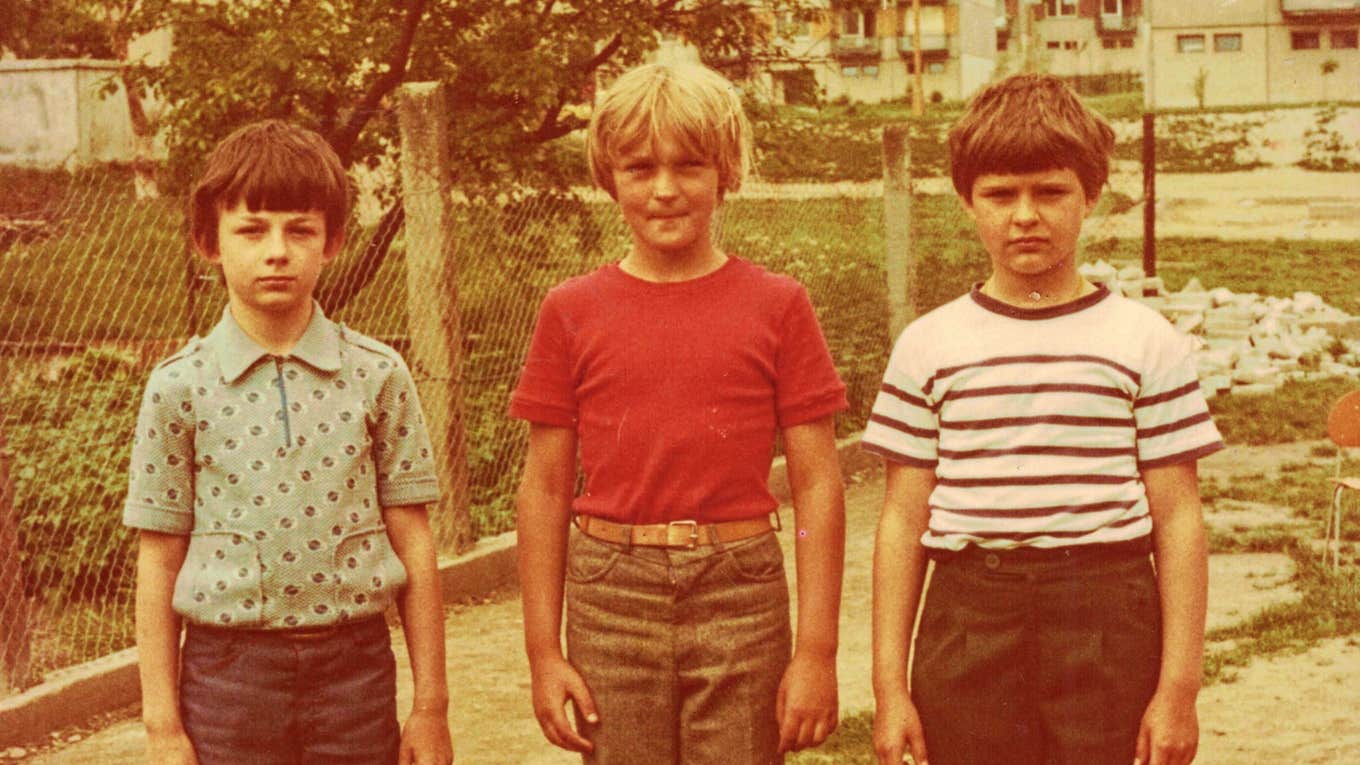 Roman Nerud | Shutterstock
Kids from the 80s and 90s had much more rigid upbringings than kids today. These expectations weren’t inherently bad, but they caused them to second-guess their emotions and relationships with adults.
This was a period when children were supposed to listen to and do whatever their parents said. Kids often felt pressured, always on edge, waiting for their parents to lash out at them over something. Now, they might be anxious adults.
These normal rules turned 80s and 90s kids into anxious adults:
1. Never talk back to adults
 MAYA LAB | Shutterstock
I was never allowed to talk back to adults as a kid. I understand why my parents encouraged this behavior. Being respectful is important. However, this has made me a bit anxious as an adult. I fear confrontation and find myself going along with whatever I’m told. I never stand up for myself. I’d rather be agreeable and fly under the radar.
Some psychologists believe that kids, especially teenagers, who talk back are doing so because they care. Blind compliance can make them afraid to question authority in adulthood. “Don’t treat talking back as disrespectful of authority because the reverse is actually true.
Disrespect is shown by ignoring and dismissing what parents say, treating it as not worth attending to,” says Carl E. Pickhardt, Ph.D., for Psychology Today. “By talking back, however, the teenager affirms and engages with their authority by taking it on. In this sense, talking back is an act of respect.”
2. Stop crying about your problems
How many times were you told to stop crying and pull yourself together as a kid? I know it was more times than I could count. Kids feel emotions hard. When you think about it, it’s all brand new to them. They don’t have life experience as their parents do, so little things feel big. Often, they want us to stop crying because it is annoying not only to them, but to others in public. Trust me, I get it, but I also know it kept me from sharing my emotions easily.
This behavior can cause people to become stressed adults because they were made to feel like their emotions weren’t important. Child psychiatrist Dr. Willough Jenkins says, “Telling kids not to cry sends the message that their feelings aren’t valid. Crying is a natural way to express emotions, and it’s important for kids to feel safe by showing how they feel.” Being taught at a young age to stifle emotions can make adults struggle with vulnerability.
3. Children should be seen, not heard
No one wants to be silenced. While it’s important to respect your parents’ wishes, living by this rule can make children feel unwanted. Kids in the 80s and 90s were often taught to blend in and keep their thoughts to themselves. Ultimately, this made them feel invalidated. It was like they didn’t matter in their own homes.
Childhood invalidation can leave lasting effects into adulthood. It can lead to feelings of insecurity. Adults who grew up being told to stay quiet may not truly know themselves. Never speaking up can make someone question their self-identity. They may struggle to form opinions because they were always following the lead of the adults in their lives.
4. Respect your elders
 fizkes | Shutterstock
I’d like to think most of us respect everyone we meet. It doesn’t matter how old they are; our default is kindness. However, being told to respect everyone older than us as kids can lead to consequences in adulthood. What happens when that adult disrespects us or makes us feel unsafe? We were essentially taught not to defend ourselves.
A study published in Frontiers in Psychology found that as people, especially parents, age, they feel more entitled in relationships. This might make elders push boundaries with kids. Now, it seems like parents are enforcing stricter boundaries to prevent their kids from enduring this. In the 80s and 90s, however, this expectation could seriously stress kids out.
5. You should know better than that
Getting in trouble during the 80s and 90s was serious. We didn’t grow up with cell phones that could be taken away if we failed a test or did something wrong at school. This meant we were truly grounded, and sometimes, it meant staying in our rooms for days on end until we made it up to our parents or learned our lesson. If our parents thought we should know better, there was no excuse for breaking the rules.
Parenting methods have changed a lot since the 80s and 90s. A study from the University of Valencia found that over time, parenting became warmer and more comforting. Could this be 80s and 90s kids choosing not to treat their children the way that their parents did to avoid raising anxious adults?
6. Because I said so
Kids are naturally curious. If someone tells them no, they want to know why. I know I drove my parents crazy in the 90s with my constant questions. I don’t blame them for leaving it at “because I said so.” However, I’m afraid it made me a bit stressed about authority as an adult. I’m guilty of doing things just because someone told me to without questioning it.
Our parents may have told us to stop asking questions, but doing so has benefits. A Harvard study found that asking questions improves communication and gives our actions purpose. When we understand why we’re being asked to do something, we understand things better. The childhood rule of doing what we’re told without reason may have created stressed-out adults.
7. Always be grateful
Of course, being grateful for what we have is never a bad thing. It’s important to reflect on the good in our lives. It’s also important to reflect on the bad. When we’re too caught up in positivity, it can lead to serious issues.
Parents may be unwillingly teaching their kids toxic positivity. The truth is, not everything is sunshine and roses. Often, forced gratitude doesn’t reflect the state of the world. Clinical psychologist Dr. Shannon Curry shared why this is a problem in parenting with TODAY.
She said, “This form of toxic positivity discounts the influence of powerful socioeconomic, cultural, political, and identity factors that contribute to each individual’s life experience.” Instead of accepting that sometimes, things won’t work out, we 80s and 90s kids were supposed to focus only on the good. When life wasn’t so easy, we became anxious adults.
8. Playing outside with zero supervision
 Irina Milordova | Shutterstock
A few of my friends are parents, and they can’t wrap their heads around the freedom we were given as kids. Let’s be honest, the 80s and 90s weren’t exactly the safest years to grow up in. That didn’t matter.
Our parents grew up with freedom, so they let us have the same. I remember riding my bike around with my neighbors from the second I got home from school until the sun went down. While I loved it as a kid, I’ve seen how it’s made my generation more hypervigilant with their own children.
Parenting styles change with every generation, but millennials seem to be the most anxious parents. They’re taking on more emotional responsibility for their kids than our parents did. They are often doing more emotional labor because they felt disconnected from their parents due to the space and freedom they were given. While some kids loved it, others felt abandoned or distant from their caretakers. They’re not only hypervigilant about their safety, but they also want to make sure they are emotionally taken care of. Gone are the days of running around with the neighbors
Haley Van Horn is a freelance writer with a master’s degree in Humanities living in Los Angeles. Her focus includes entertainment and lifestyle stories.
