
People Who Grew Up Watching Their Parents Do These 8 Things Usually Become Kind, Respectful Adults
 Alan Garzón | Pexels
 Nobody thinks that their sweet little baby will grow up into a bully. Unfortunately, some parents experience a rude awakening in the form of a call from school or from another parent, where they learn that their child has been bullying others. These tips center around teaching empathy, which means awareness and respect for others’ feelings and perspectives.
There are numerous ways to ensure that your child has the greatest possible chance to learn to be kind and empathic to peers. All of them are easy for you to do at home, from the time that your child is conscious of the social environment around toddlerhood, onward.
People who grew up watching their parents do these things usually become kind, respectful adults:
1. Considering other people's feelings
It needs to become second nature to him to think about others and their feelings almost as quickly as he thinks of his own. Many parents validate one child’s perspective but fail to discuss their own feelings or the feelings of another child. Just validating your own child’s feelings does not teach him that there are other people in the world whose feelings matter.
Example: “I see you felt really angry right there when John took your ball.”
Example of teaching empathy: “I see you felt really angry right there when John took your ball. He looked angry, too. I think he thought you were going to play with him, but then you ended up playing alone.”
2. Discussing their emotions
It does children no good to view a parent as having no weaknesses or vulnerable emotions. If they can empathize with you, they will remember this, and it will facilitate self-compassion when they are adults behaving as you do.
Example: “I’m sorry I didn’t play with you. Mommy was feeling anxious because she had a lot of cleaning to do before our friends came over. I will play with you tonight.”
3. Validating both sides after conflict
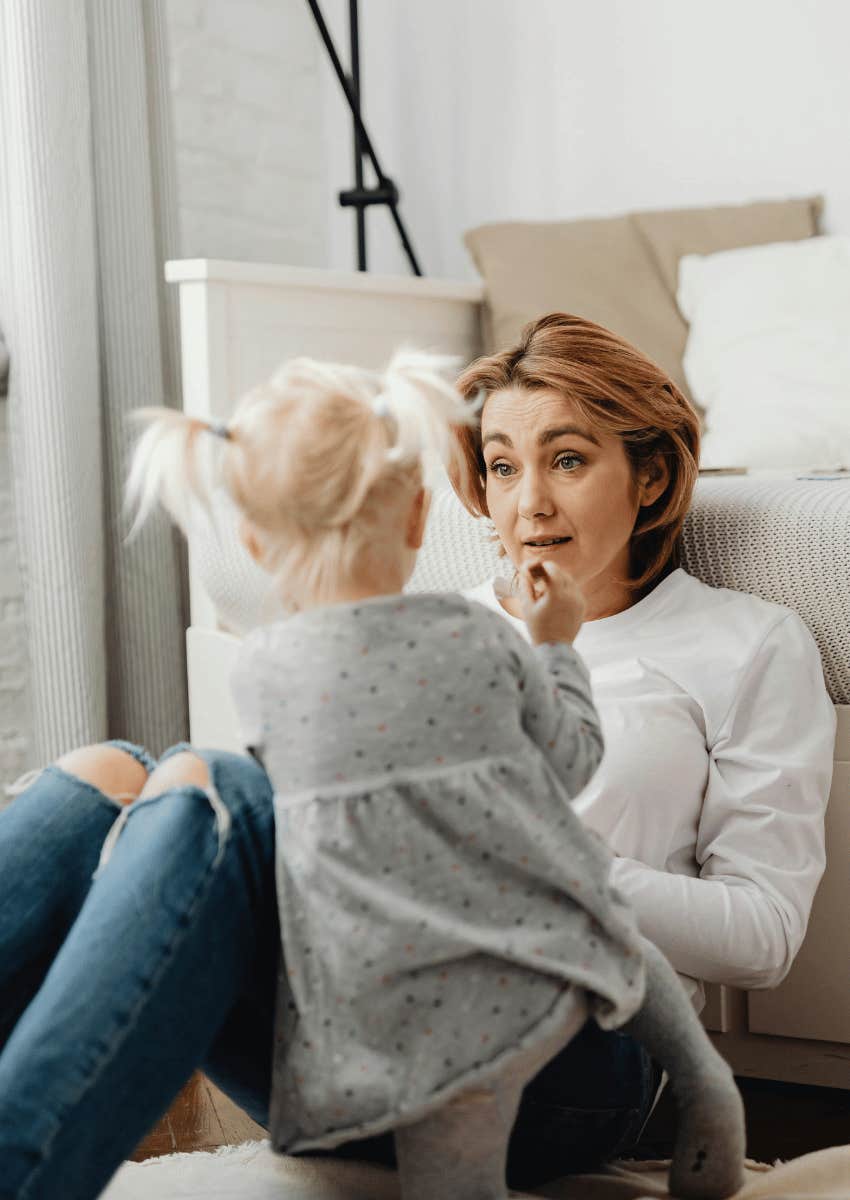 Karola G / Pexels
Do not only validate the child whose actions you agree with more.
Example: “You were mad that your sister grabbed your doll, and she was feeling sad that you weren’t paying attention to her. That’s probably why she grabbed it.” You’re not condoning any behavior, but just giving a value-free description of the emotions underlying each child’s actions.
4. Speaking for those who cannot speak
Such as pets or babies. And a zero tolerance policy for meanness to those smaller and weaker than yourself. Horton Hears A Who! by Dr. Seuss is a good book to serve as a springboard for a discussion about why it is important to look out for those smaller than yourself.
Example: “Why is the baby crying? I wonder if he is hungry or tired? What do you think?”
5. Talking through how they felt after social interactions
You can also do this with characters in books and on TV.
Example: “I wonder what Grandma was thinking when she waved bye-bye to you. I think she was happy she visited with you, but also a little sad you had to go. What do you think?”
6. Having a zero-tolerance policy around being mean
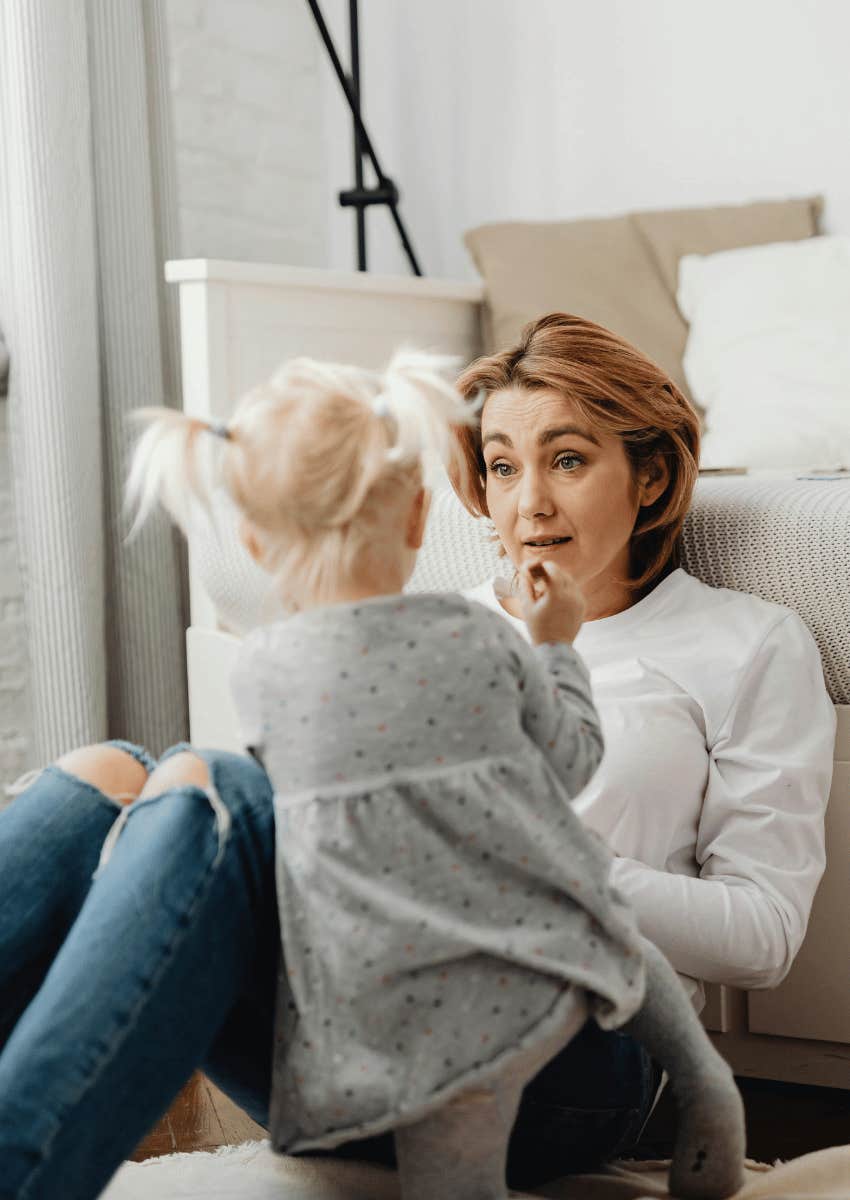 Barbara Olsen / Pexels
Any name-calling or making fun of others should be nipped in the bud right away. Bad names and mean words are unacceptable, even from the smallest child. Don’t laugh or roll your eyes when your 3-year-old calls Daddy a poopy head. This just shows her that bad names are okay and even funny.
Example: “It hurts Daddy’s feelings when you call him a bad name. That is not nice, and it’s not okay.”
You and your partner or any other caregiver should get on the same page about “teasing.” Often one parent thinks that gentle teasing is okay, and a more sensitive parent or child then ends up getting hurt a lot because the less sensitive family members are “just” teasing them multiple times a day. This is especially a salient issue with highly sensitive children. I recommend that this be discussed openly in a family.
Example: “Mary thinks that you calling her sillyhead isn’t funny, so please don’t say that to her. Joe thinks it’s funny, so we can say it to him. Whenever someone says they don’t think teasing is funny, it means we should stop right away.”
7. Embracing differences in others
Don’t be content with just telling your kids not to talk meanly or make fun of these children. You should go up and say hello and introduce yourselves. Read this wonderful article by a mom of a little boy with a craniofacial disorder for more on this.
8. Apologizing
Don’t just feel ashamed and then try to silently make it up to your child or partner later. Own your mean behavior. This is extremely important because you’re modeling taking responsibility for your mean behavior. Children learn from what they see you do much more than from what you tell them.
Example: “I’m sorry I grabbed your arm roughly when you pulled the stuff off the shelf in the grocery store. I did it because I was mad. But no matter what I was feeling, grabbing you wasn’t okay.”
These tips can help you raise a child who finds it easy to empathize with others and who is aware that meanness is not acceptable. This will make it much less likely that your child bullies others. (And if your problem is that your kid is the victim of a bully, read books like Cool, Calm, and Confident, which is actually a workbook, with your child.)
Dr. Samantha Rodman Whiten, aka Dr. Psych Mom, is a clinical psychologist in private practice and the founder of DrPsychMom. She works with adults and couples in her group practice, Best Life Behavioral Health.
