
Boomers Depended On 11 Old-Fashioned Parenting Techniques Younger Generations Could Benefit From
 PeopleImages | Shutterstock
 The way parents decide to raise their children is a deeply personal choice. Every family operates differently, and despite what you might here on social media, there’s no one-size-fits-all approach to parenting. While certain approaches to child-rearing are outdated, like believing children should be seen and not heard, there are other old-school parenting techniques the younger generation could learn from.
The American Society for the Positive Care of Children notes that there are four widely-accepted types of parenting, and that popular models that come and go tend to fit within these, as well as different types of unhealthy and even harmful ones. Developed in the 1960s by Dr. Diana Baumrind, they are: authoritarian, permissive, neglectful, and authoritative. Each style marks a distinct level of caregiver involvement and responsiveness, and it affects children’s psychological and emotional development in different ways. These objective parenting style categories allow us to look at parenting techniques boomers depended on and decide which ones younger generations could benefit from, too.
Boomers depended on 11 old-fashioned parenting techniques younger generations could benefit from
1. Allowing for unstructured playtime
 Q88 | Shutterstock
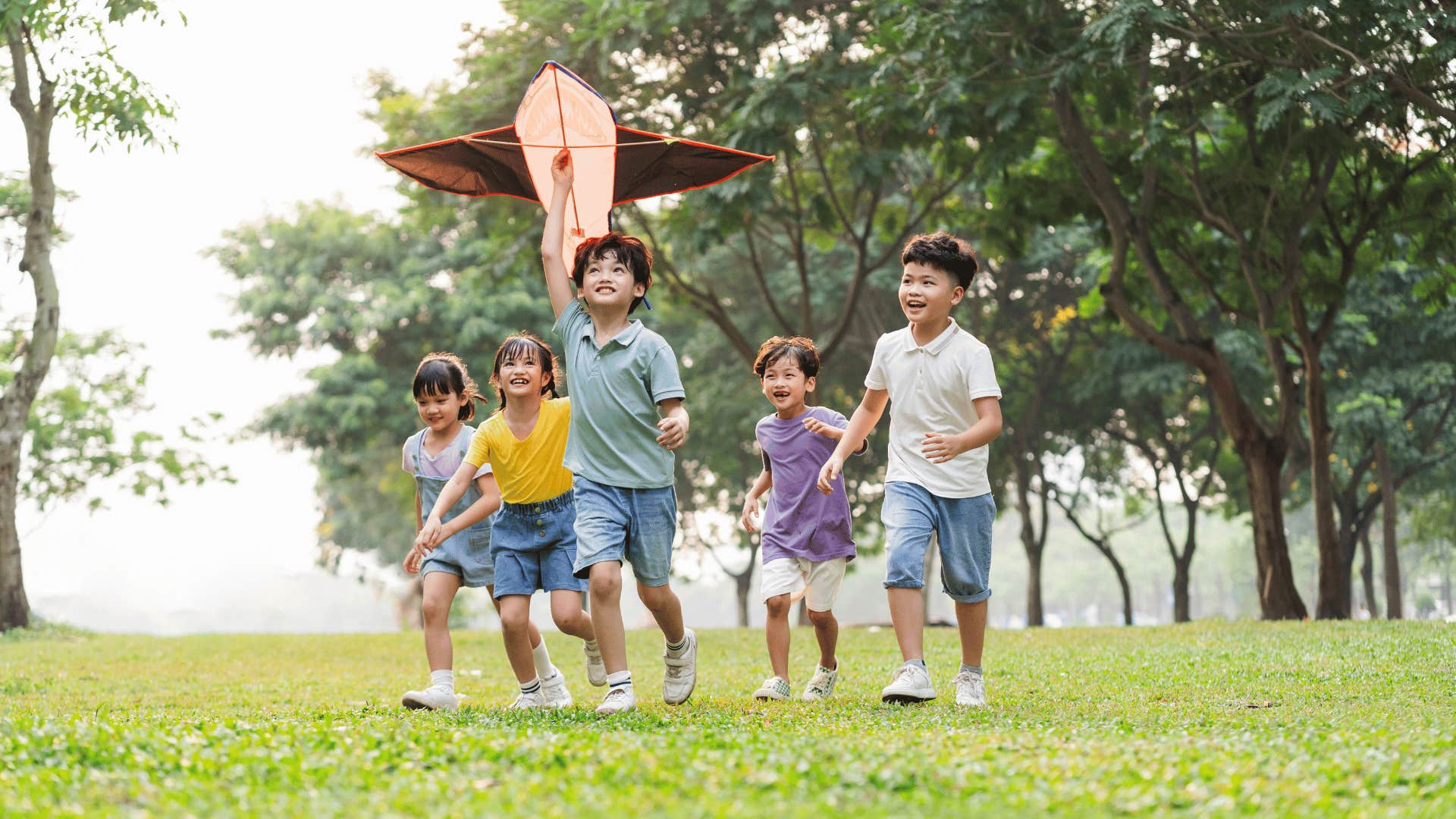
An old-school parenting technique the younger generation should bring back is letting kids have unstructured time to play. The American Psychological Association defined unstructured play as “play that isn’t organized or directed by adults or older peers and that generally doesn’t have a defined purpose or outcome.” The APA noted that unstructured play is fundamental for kids to thrive, allowing them to cultivate their independence and boost their confidence.
There are various types of unstructured play, including active, challenging, and pretend play. Active play, like swinging, helps reduce stress and anxiety. Challenging play, like jumping and climbing, helps kids learn to make decisions and practice taking controlled risks. Pretend play fosters creativity and shows kids how to manage their emotions.
Playing outside is especially beneficial, as it promotes kids’ sense of adventure and boosts their physical activity and mental well-being. There are even theories that unstructured outdoor play can help a child's vision!
2. Sitting down for family dinners
 Monkey Business Images | Shutterstock
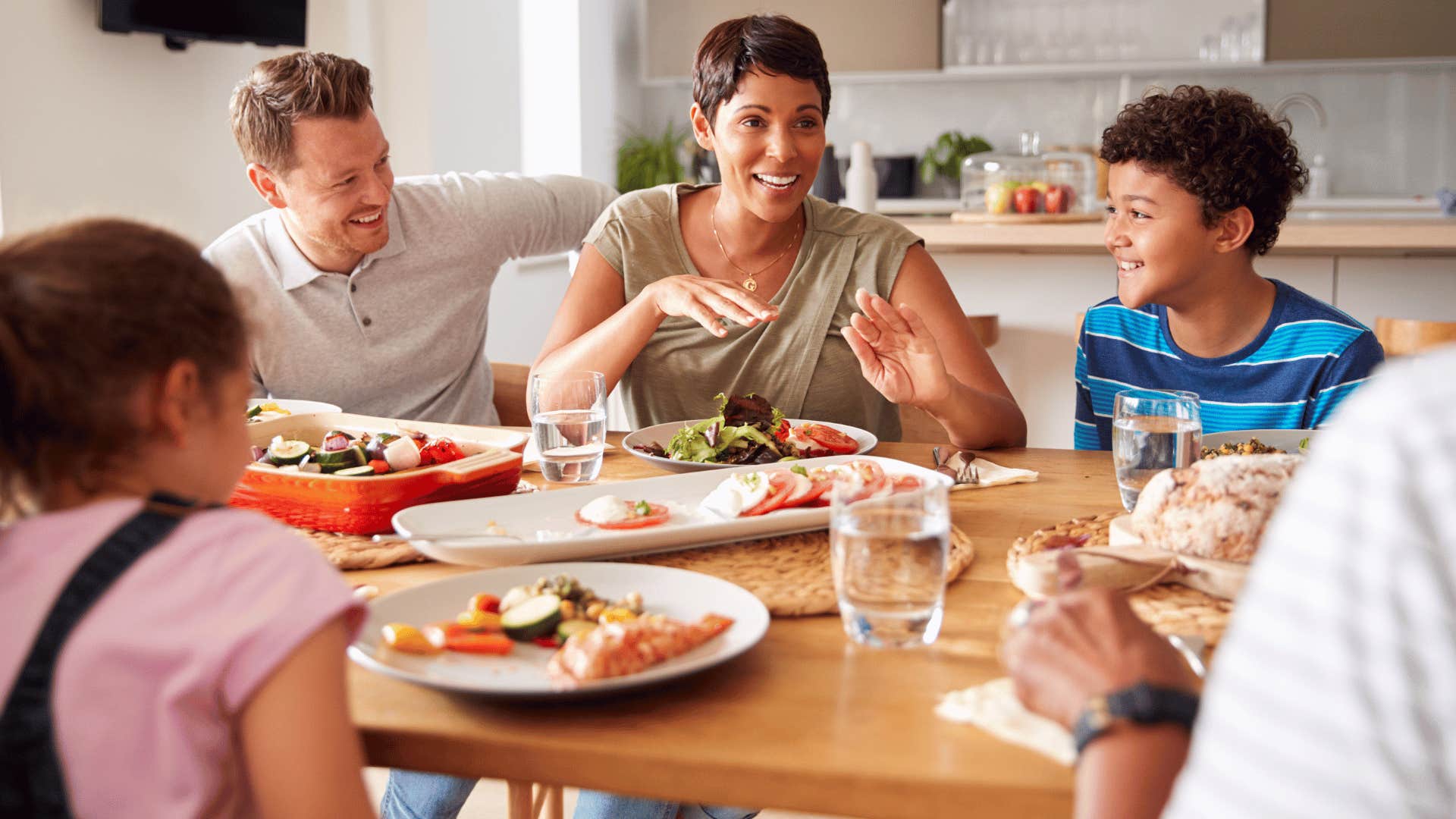
Another boomer parenting technique that could benefit younger generations is the tradition of having dinner together. Sitting down for family dinner without the distraction of screens allows kids and parents to connect after a busy day of school and work. It also helps kids learn relational skills like conversational flow, "reading the room" and interpreting non-verbal cues like body language.
Lisa Newman, a health coach and certified intuitive eating counselor, explained that instituting family mealtime promotes healthy eating habits and benefits like “Better grades in school, less family stress, and stronger relationships among family members.”
She acknowledged that conflicting schedules might make it hard to have dinner together. Yet sharing a family meal doesn’t have to be limited only to the evening. Having family breakfast or lunch is also a great routine; Newman noted, “Any positive family time together has benefits.”
3. Assigning kids household chores
 Inna photographer | Shutterstock
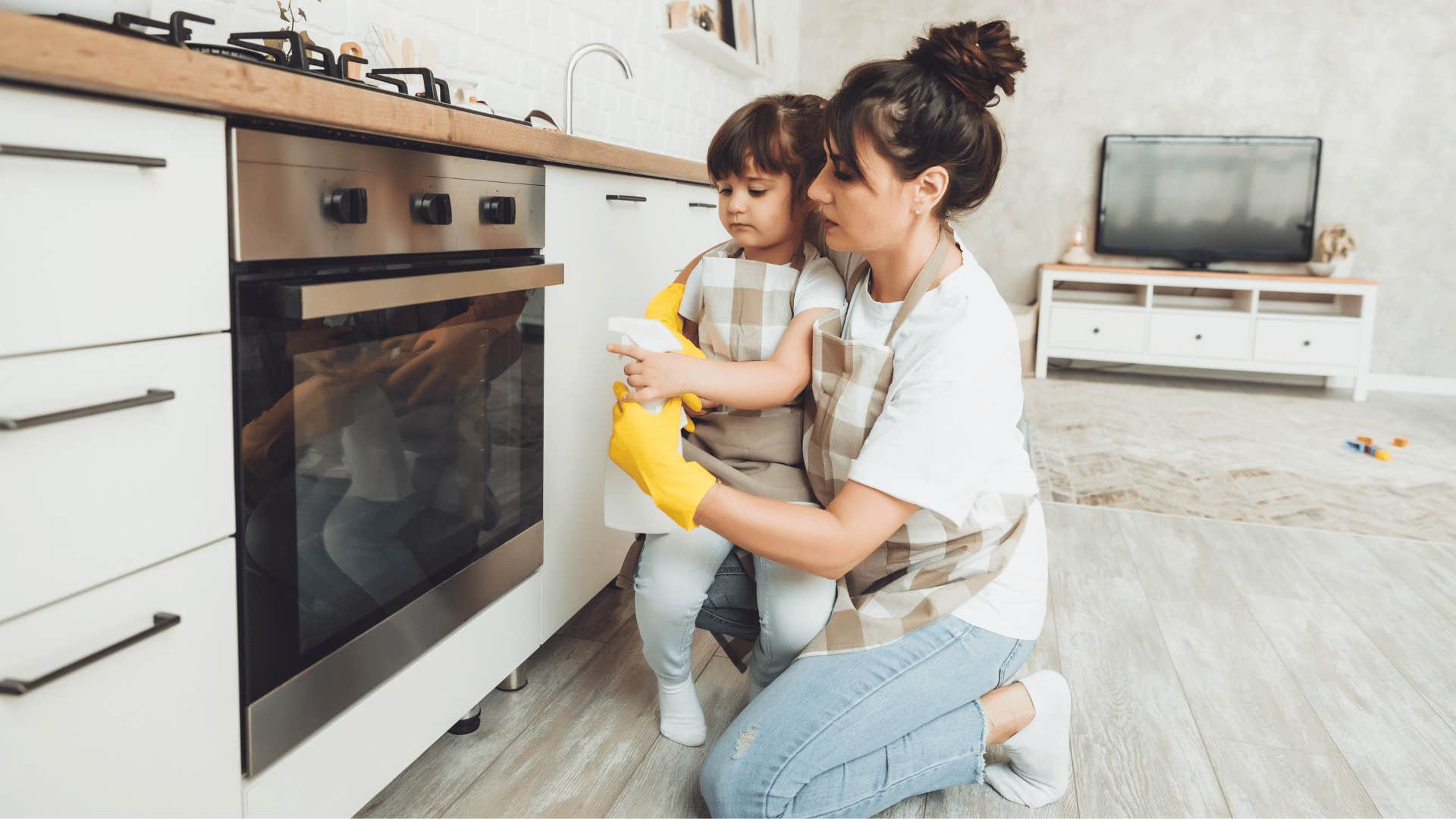
Giving kids tasks to complete around the house teaches them responsibility and self-reliance. It shows them the value of pitching in and helping the family unit run smoothly. It also teaches them the value of the labor done by their parents.
Parents should aim to give kids chores that are developmentally appropriate, and not put pressure on them that exceeds their age limitations. For example, a 10- or 12-year-old can learn to load the dishwasher appropriately, while a 6-year-old would likely have more success unloading the clean dishes.
Assigning kids household chores teaches them empathy and gives them a strong sense of self-worth. It also has practical benefits, like teaching them how to do their own laundry before leaving for college. Studies from Harvard University and the University of Minnesota have shown that kids who do chores become happier, more successful adults. This is likely because they develop earned confidence from doing rather than just being told they are great.
4. Limiting extracurricular activities.
 Liderina | Shutterstock
Modern kids are notoriously over-scheduled. They go from school to soccer practice, piano lessons, and dance class with barely any time to breathe. Limiting extracurricular activities is an old-school parenting technique the younger generation should bring back. Just like adults, kids need time to decompress and relax.
According to a 2012 study on adolescent development related to participation in organized activities, the positive outcomes of having a full extracurricular schedule outweigh the negatives. The study looked into a theory known as the “Over-scheduling hypothesis,” which posited that “too much organized activity participation leads to poor developmental outcomes.”
The study concluded that participating in organized activities as a teenager fostered positive adjustment in young adulthood; other child and adolescent psychology experts disagree. According to Dr. Ronald Stolberg, over-scheduled kids don’t learn the necessary skills to entertain themselves or relax independently. Having free time along with extracurriculars gives kids an opportunity for a more balanced lifestyle, and it reduces their stress levels.
5. Letting children experience discomfort
 fizkes | Shutterstock
Parents naturally want to keep their kids safe from physical harm and emotional distress, yet there are some positive benefits to letting kids experience discomfort. Licensed clinical social worker Cheryl Gerson poses two important questions to parents:
“Have we gone too far in protecting our children from any feeling that causes them frustration, worry, or anxiety? Have we started protecting them to the point that we are now undermining their emotional resilience?”
Gerson notes that a significant part of raising emotionally resilient children is showing kids that it’s not always easy to get what they want, stating that parents need to “Walk by their side as they learn just how strong they can be.”
She shared that developing a growth mindset is rooted in a child’s “tolerance for frustration, mistakes, and surprises.”
“If they can learn to bear the temporary uncomfortable feeling of being ‘wrong,’ long enough to get curious about their missteps, your kids can develop a ‘growth mindset,’ she explained. “The ‘growth mindset’ welcomes ongoing discomfort and dissatisfaction with some excitement, pleasure, and satisfaction mixed in.”
Kids can learn much about themselves by pushing through challenges, so the younger generation should bring back this old-school parenting technique.
6. Allowing for more unsupervised time
 BOONDARIN | Shutterstock
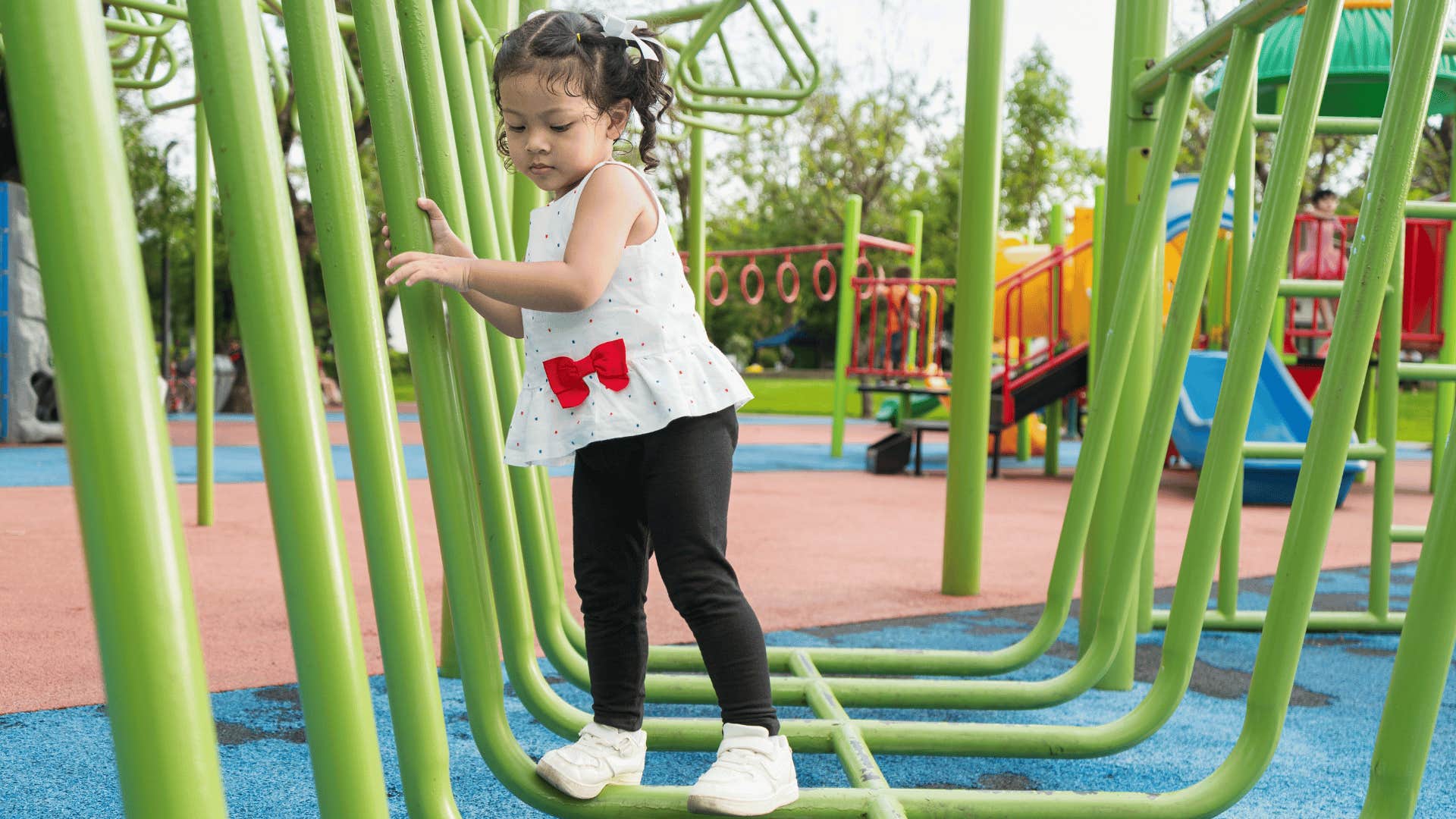
Millennial parents are often stereotyped as overly involved helicopter parents who follow their kids around so that none of their needs go unmet. Parents should absolutely show up for their kids and meet their practical and emotional needs to foster a secure attachment style. Yet, there are benefits to taking a step back and letting kids figure some things out independently. When allowed to complete tasks independently, kids learn resilience and critical thinking skills.
A study out of Stanford University found that kids with over-involved parents had difficulty regulating their emotions and behavior at times. They also struggled with tasks measuring delayed gratification, impulse control, and the ability to shift their attention.
As Jelena Obradović, the study’s lead researcher noted, “Too much direct engagement can come at a cost to kids’ abilities to control their own attention, behavior and emotions. When parents let kids take the lead in their interactions, children practice self-regulation skills and build independence.”
Of course, there are socioeconomic factors at play. In communities where a parent is home in most of the houses, children are supervised even when their parents aren't following like a shadow. These parents are often applauded for letting their kids play freely while families in underserved communities may be condemned for it.
Regardless, there's a balance to be struck when it comes to unsupervised time. You want just enough supervision to maximize safety while allowing them to take some well-measured risks.
7. Celebrating birthdays in simple ways
 DenisProduction | Shutterstock
Another old-school parenting technique the younger generation should bring back is celebrating birthdays simply. While making kids feel recognized and special on their birthdays is important, having an extravagant and expensive party isn’t always necessary.
Kids’ birthdays can be a hot-button issue in the parenting world. One mom declared she was done throwing birthday parties for her kids after spending over $700 on a party for one of her three kids. Parents can save money and energy by keeping celebrations simple. After all, most kids really want to eat cupcakes and play with balloons.
By focusing on birthdays and time spent with family and close friends instead of overindulging in presents and gift bags, kids learn to avoid materialism while practicing gratitude.
8. Replacing screen time with reading physical books
 Yuganov Konstantin | Shutterstock
Reading books with children not only promotes literacy but also fosters their imagination and family bonding. In contrast, the negative effects of excessive screen time on child development have been widely researched and reported.
While kids who spend too much time occupied by screens have difficulty regulating their emotions and behavior, not all screen time is completely detrimental. In fact, most kids are assigned at least part of their homework on tablets instead of textbooks these days, and educators have seen some benefit in gamifying learning things like math facts.
While digital-native kids need to learn how to engage with technology, developing their reading and writing skills is equally important. When parents dedicate time to reading with their kids, they help boost their creativity and set them on a path toward academic success.
Paper books also offer kids a chance to browse through libraries and bookshelves, picking up books and getting a sense of the tone and illustrations. This is an important part of learning what works for their reading style and aesthetic, which is a valuable skill throughout life.
9. Prioritizing volunteering in your community
 Ground Picture | Shutterstock
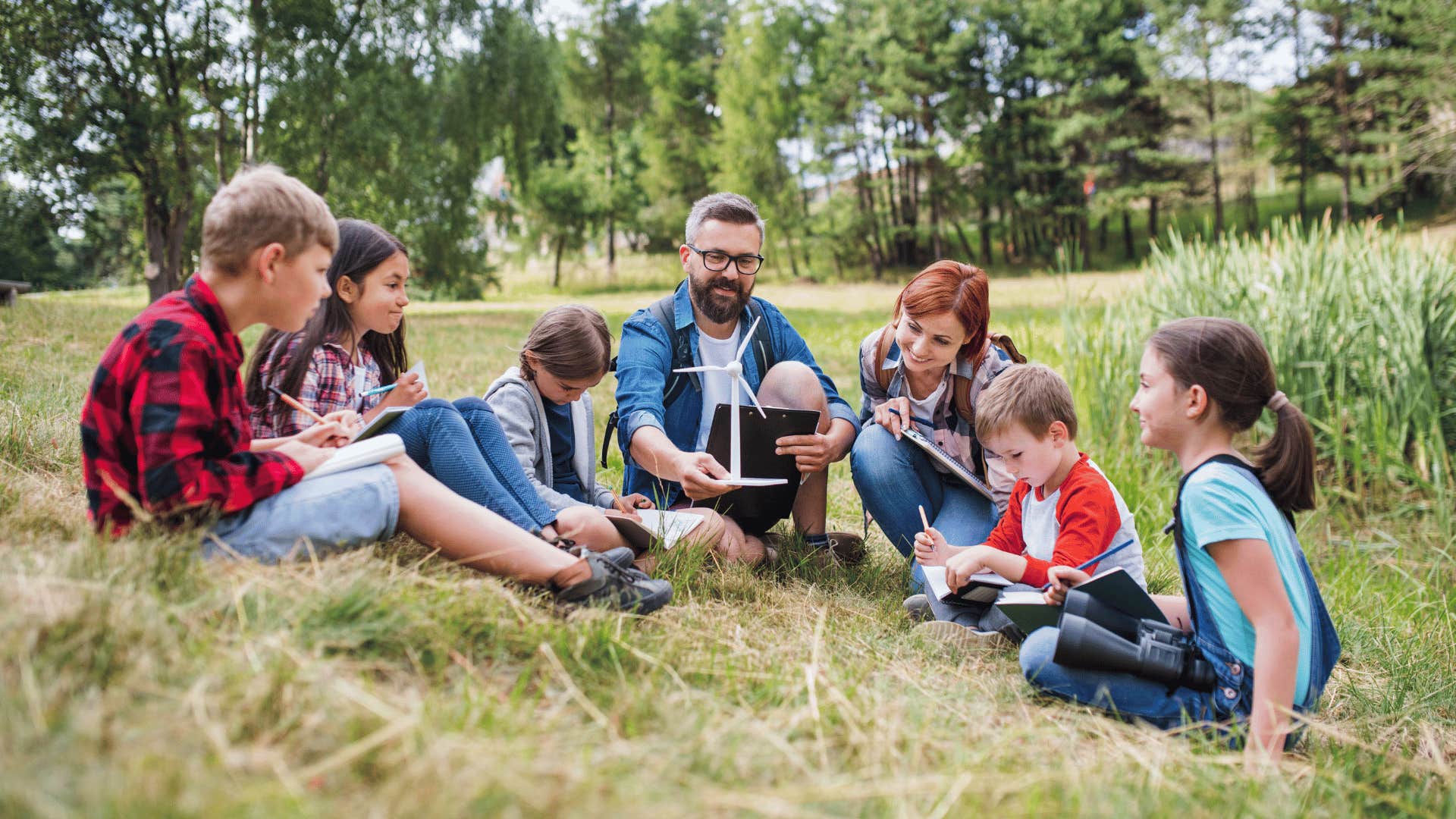
Getting involved in the community is an old-school parenting technique that the younger generations should bring back. Many Americans experience harmful degrees of isolation and loneliness, yet teaching kids to connect with people in their neighborhoods can alleviate some of those negative experiences.
By participating in local events and volunteering in community service, kids learn about the power of helping others and being in service, along with other valuable life lessons. They experience a sense of belonging and civic duty, which are essential to practicing gratitude.
Kids often feel a sense of security seeing their parents interact with the community, grounding them in the sense that they are part of something bigger. When neighbors and other community members care for children, everyone benefits.
10. Expecting children to use manners
 BlueOrange Studio | Shutterstock
Part of being a parent is modeling appropriate behavior and showing kids how to act on their journey into adolescence and adulthood. Good manners include saying “please” and “thank you,” but it’s about so much more than that.
Manners are often based on values like respect, kindness, and generosity, all aspects of boomer-style parenting. The deepest value lies in explaining to kids why we want to be thoughtful of other people, which helps them practice empathy skills and self-regulation, all essential skills for today's world.
It can be obvious when someone wasn’t raised with good manners. Parents should teach their kids to respect themselves as they teach them to respect others. Solid self-respect allows kids to set clear boundaries, stand up for themselves, and know how they deserve to be treated. Teaching kids to be respectful to the people around them makes the world a kinder place, which is something the younger generation should bring back.
11. Working on household projects
 Elena Medoks | Shutterstock
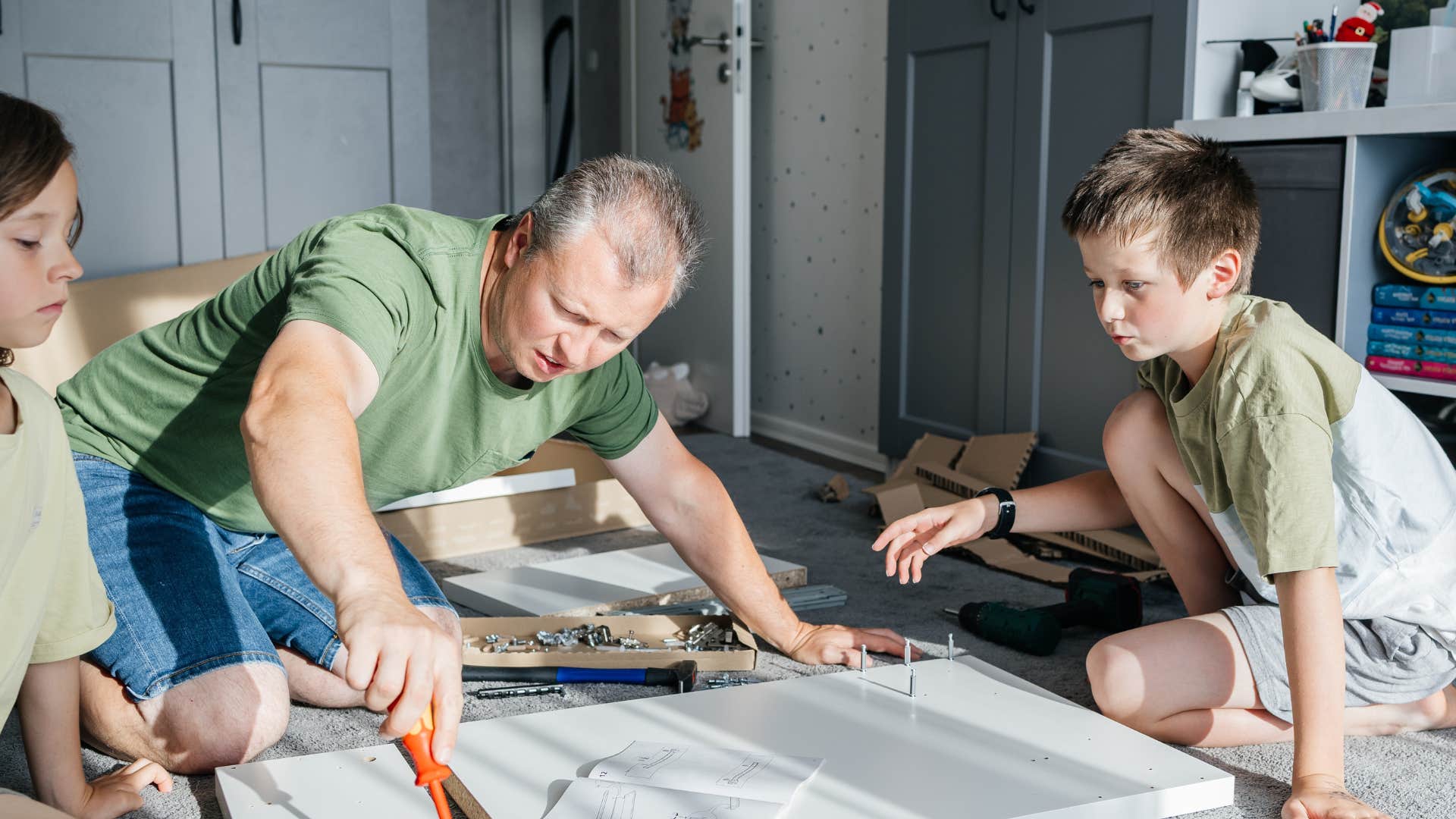
These days, it's easy to find a handyman or other professional helper to hire for fix-it projects around the house. Unfortunately, there are valuable parenting opportunities that can get lost when we no longer ask our kids to help us fix things.
First, helping with repairs is educational. Kids learn how things work, how to find the right tools for the job, and how to have patience enough to finish a project. They enter the world with skills most boomer parents taught their kids, but very few Gen Z or Gen Alpha kids have.
Second, it can be hard to get them to talk about serious or emotional topics as kids get a little older. As Dr. Stan Tatkin, a psychologist who focuses on psychobiological perspectives, told the authors of the book Talk To Your Boys, the best way to bond and communicate with a tween or teen (especially a boy) is to find an activity to do together, shoulder-to-shoulder and let conversation flow.
"If you and I start a round of ping-pong or play catch, we have to look at each other to see where the other person is going to hit or throw the ball... we're not staring at each other, we're glancing." Dr. Tatkin shares that this "shears off excess adrenaline" and lowers the pressure on the kid.
He also insists that doing project together can have a similar effect, reducing pressure and helping kids feel safe enough to open up. And that's what all of these boomer activities have in common: they set kids up for healthier lives, relationally and emotionally. And that matters more than we often realize.
Alexandra Blogier is a writer on YourTango's news and entertainment team. She covers social issues, pop culture analysis, and the entertainment industry.
