
Kids Whose Parents Couldn't Handle Seeing Them Sad Often Carry 8 Traits Into Adulthood
 PeopleImages | Shutterstock
Parents who try to fix every problem for their kids have good intentions, but they create unfortunate consequences.
Kids who have a safe space to feel their emotions thrive as adults, compared to kids who learn to avoid and fear their emotions. It's difficult to see kids sad, but parents who try to fix their dysregulation often send them into adulthood with a few unfortunate traits.
Traits kids carry into adulthood when their parents couldn't handle seeing them sad growing up:
1. They avoid complicated emotions with distractions
 TetianaKtv | Shutterstock
Instead of taking a few minutes to really feel their emotions and maybe even communicate them to others, kids from these kinds of family dynamics avoid and deflect. They've been taught by their parents that their emotions are something to push away,
So, as adults, not only are they unequipped to handle their emotions when they come up, but they feel scared when they're sad or angry.
2. They blame themselves for literally everything
While parents may have provided some kind of security by taking the reins when their kids were sad, as adult children they now feel helpless when they're upset. Their parents aren't around to figure it all out for them, and they don't know how to do it themselves.
That's part ofwhere self-blame comes into play. If they can't distract themselves from sadness, they blame themselves for it. It gives them a kind of control that feels instantly gratifying, even if it sabotages their self-esteem.
3. They need a very long time to get over minor inconveniences
From a stranger making fun of them to getting a text that feels like rejection, emotionally dysregulated adults need a lot more time than most to get back to normal after things go wrong. If their parents are no longer around and nobody is willing to take on that "fixer" role, they likely sit and simmer in their emotions for a long time.
Without the coping strategies good parents teach their kids growing up, they rely on all the worst instant fixes. They keep themselves busy and eventually move on, but not without lowering the trust they have in themselves.
4. They over-rely on friends and partners to soothe themselves
Kidsfeel their best when they're emotionally secure, and that starts with parents teaching them to process their emotions without relying on external forms of comfort. At home, that means crafting a safe space for big emotions and being the kind of parent who listens before trying to solve anything.
When children have parents who can't handle seeing them sad and will instead try to fix everything, they feel worse about themselves in adulthood, as they need another person to help them cope. It's anxiety-inducing for them and puts a huge strain on relationships with people who are drained from being a built-in therapist all the time.
5. They stay in relationships that aren't right for them to avoid sadness
 PeopleImages | Shutterstock
A fear of rejection stems from a childhood where emotions were inherently bad. Living with parents who can't handle their kids' sadness or are neglectful means these kids end up doing whatever it takes to avoid big feelings.
In adulthood, that manifests in unique ways. They stick around in relationships they've outgrown and tolerate misbehavior, all to avoid the emotional conflicts they need in order to set boundaries.
6. They won't have necessary conversations because it feels safer than leaning in
Adults with emotionally dysregulated parents do things like people-pleasing or shoving their emotions down to avoid conflicts. They simply don't have the tools to work through hard conversations.
Unfortunately, asa study from the Journal of Consulting and Clinical Psychology explains, avoidance only brings relief in the present moment. Over time, avoidant people only end up facing more anxiety and stress.
Because even if refraining from a hard conversation feels like you're avoiding feeling hard emotions, the truth is they're just getting suppressed for you to deal with later.
7. They feel responsible for everyone else's bad moods
If they cancel plans and a friend says they're upset, these adult children feel like it's their responsibility to change that. If they think saying no or rejecting someone will make them upset, they won't.
It's this kind of people-pleasing behavior that stems from having a fixer parent at home, because kids end up feeling responsible for their parents' discomfort. They didn't have a safe space to express emotions and were more worried about making their parents uncomfortable.
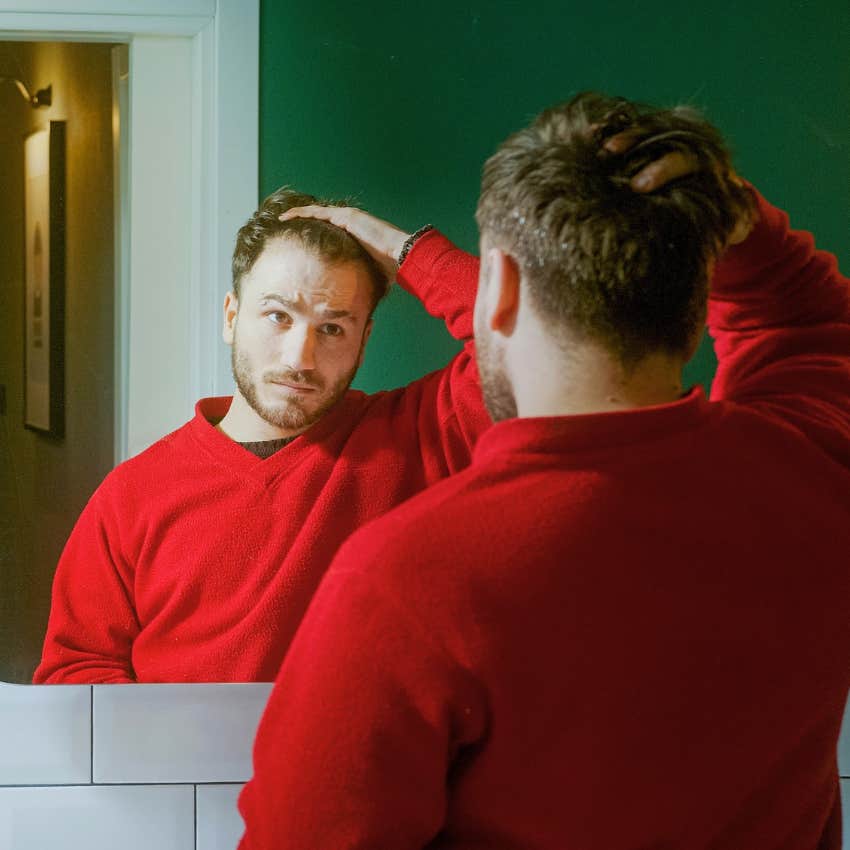
8. They constantly second-guess and doubt themselves
 Mahir KART | Shutterstock
If your parents always step in when you're upset, you learn slowly that you're incapable of handling things on your own. Even when it's untrue, relying on your parents to keep the peace becomes the norm.
It's these small moments and seemingly harmless interactions that damage a kid's self-worth over time, leading to self-doubt and constant second-guessing in adulthood.
Zayda Slabbekoorn is a senior editorial strategist with a bachelor's degree in social relations & policy and gender studies who focuses on psychology, relationships, self-help, and human interest stories.
