
7 Toys 90s Kids Grew Up With That Were Basically Propaganda
 melissamn | Shutterstock
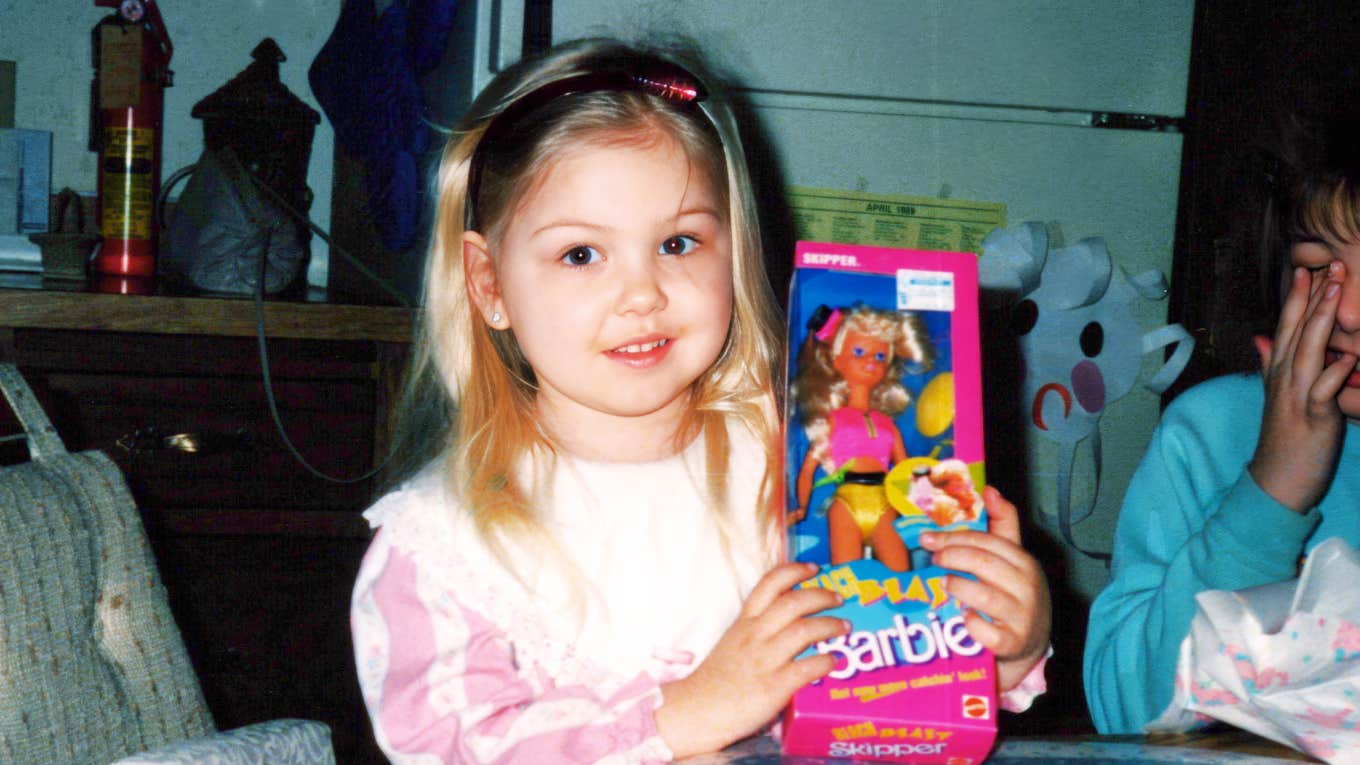
 Most of us don’t think of our childhood toys as political. They were just there, scattered across the living room floor, stacked on shelves, or monopolizing the dining room table. But according to child psychologists, play isn’t frivolous. It shapes brain development, influences social learning, and helps children make sense of their environments.
As a result, toys are a shockingly powerful vehicle for influencing someone’s beliefs, values, and behaviors — oftentimes before they can even walk. Some were harmless. Others were pretty insidious, and we had no idea. Whether they promoted late-stage capitalism, military enlistment, trad-wife ideology, or the fossil fuel industry, these nostalgic toys from your childhood are actually propaganda — and I’ve got the research (and the creepy commercials) to prove it.
Here are seven toys 90s kids grew up with that were basically propaganda:
1. Monopoly
Ironically, the concept of Monopoly was invented to criticize capitalism, not celebrate it. Board game designer Elizabeth Magie patented The Landlord’s Game in 1904, and this version illustrated how greedy land-grabbing practices devastated communities. In 1909, Magie pitched her game to the American toy company Parker Brothers, but they rejected the idea because it was “too complicated.”
Then, in the 1930s, an unemployed dude named Charles Darrow stole Magie’s idea, flipped the message, rebranded it as Monopoly, and sold it to Parker Brothers. Launched at the height of the Great Depression, this new version glorified capitalism instead of condemning it — and desperate for hope, the American people ate it up.
Monopoly and its spin-offs (including Monopoly Junior, marketed to children as young as five) have sold over 275 million copies worldwide. The game doesn’t teach kids cooperation, ethics, or fair economics. Rather, it teaches them that money is the ultimate goal, wealth justifies cruelty, and winning requires someone else to lose.
2. Plastic army soldiers
 Chris F / Pexels
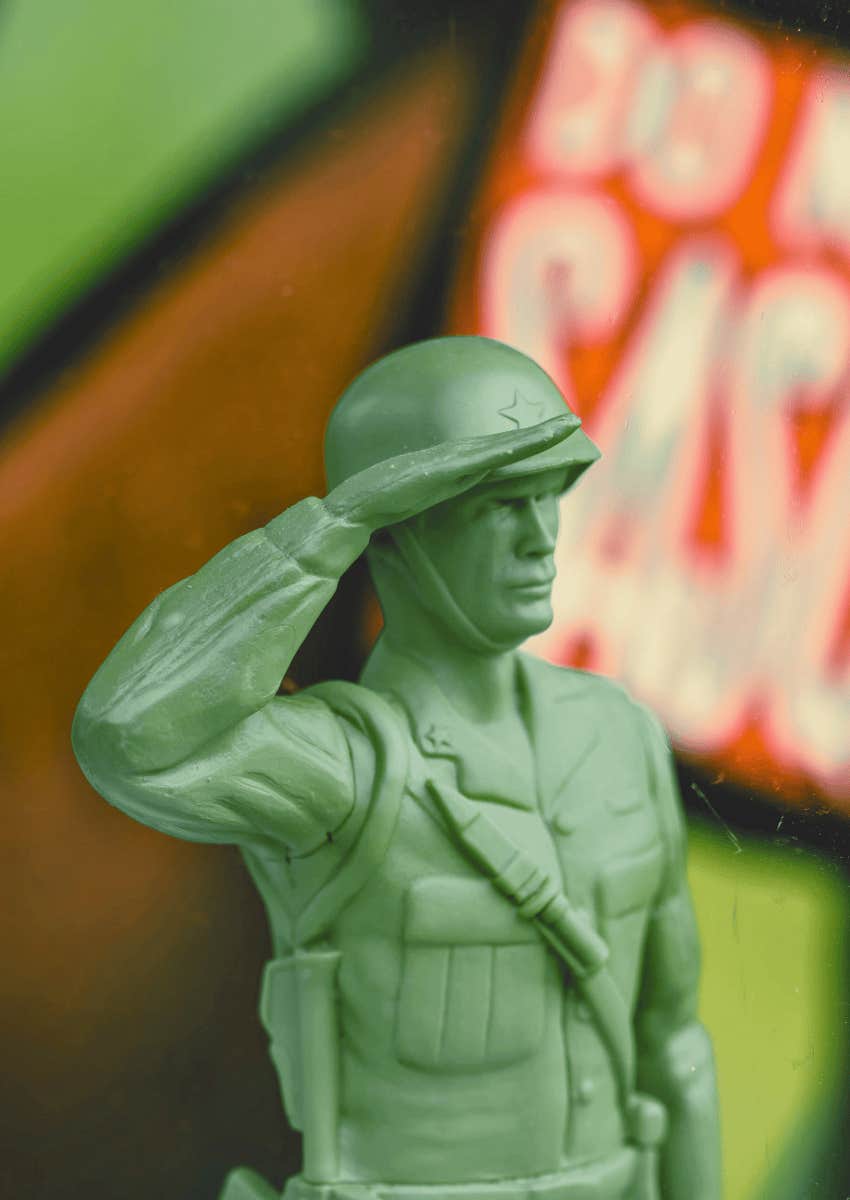
How do you get men to fight for their country? Easy: you normalize military combat while they’re children. The United States didn’t invent toy soldiers; in the 1700s, Germany created them out of metal to celebrate the military exploits of Frederick the Great. That said, we were the first to make them out of plastic, and they played a major role in glorifying militarism for 20th-century American children.
After all, when you make war seem like a game, people are much happier to participate. In 1938 (the year the Nazis annexed Austria), an American toy company named Bergen Toy & Novelty started producing plastic toy soldiers. Children bought them in boxed sets of seven, posed in a variety of combat stances. Later, they were sold in buckets of hundreds.
Initially, they wore World War I helmets, but after America entered World War II, Bergen updated the helmet style and sold them in their iconic green color to match modern United States Army uniforms. In 1995, they appeared in Toy Story, and in 1999, they inspired a video game for the Nintendo 64. You can still buy them in toy stores and supermarkets.
3. Easy-Bake Oven
I’ve written about this before, but the traditional housewife of the 1950s never actually existed. She was post-wartime propaganda. After World War II ended and the men came home, the American government manufactured the squeaky-clean housewife image to replace Rosie the Riveter. This served to push women out of factories and back into the kitchen.
Suddenly, ads for cookware, vacuums, and appliances were everywhere — and the marketing didn’t stop at adult women. The Easy-Bake Oven launched in 1963. It used incandescent bulbs to cook real cakes while minimizing the risk of burns, so it was “suitable for girls as young as eight.” The toy disguised domestic labor as play, teaching young girls that cooking was a fun activity for females and an inevitable part of their future.
(Notice how the above brother is stuffing his face, not helping.) Six decades later, the Easy-Bake Oven is still around, and the brand has sold over 23 million units and more than 130 million baking mixes.
4. Barbie
 Julee Juu / Unsplash
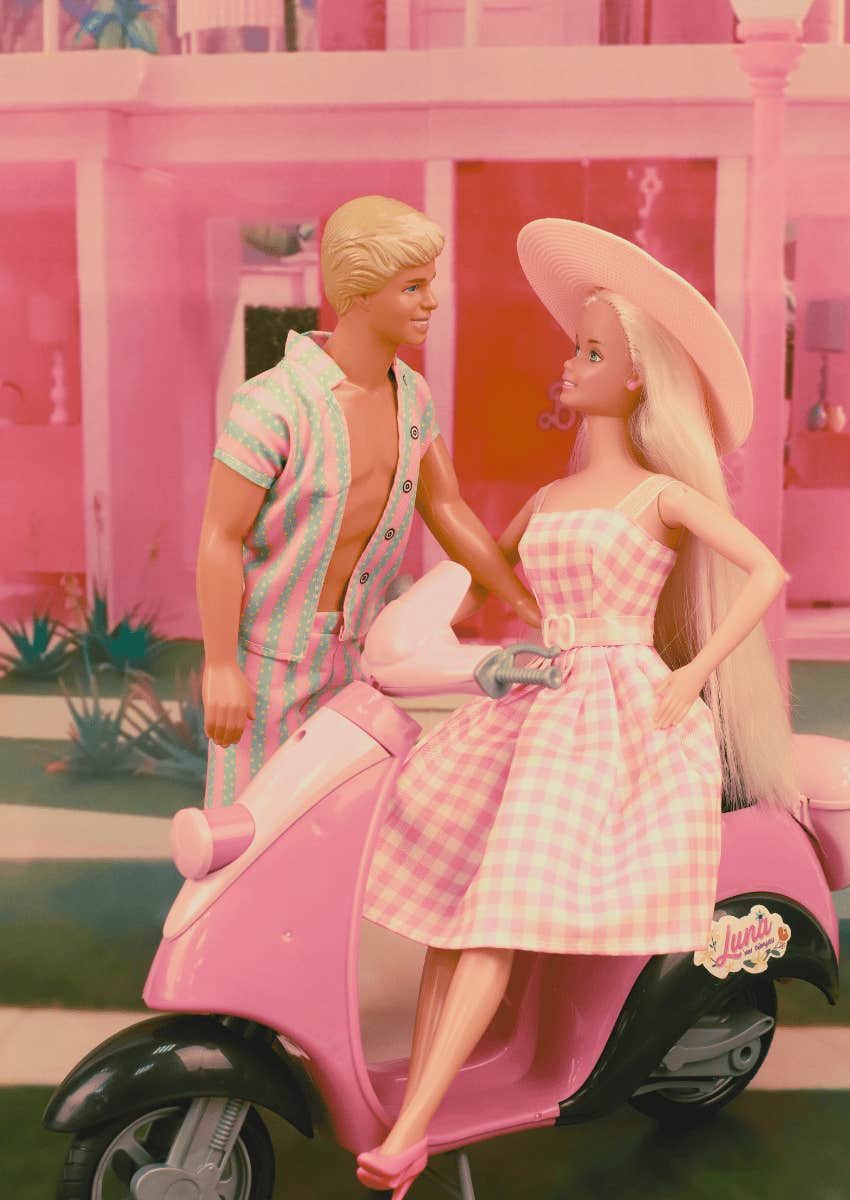
Until the 1950s, all dolls were baby dolls, designed to teach little girls how to nurture their inevitable children — a form of propaganda all its own. Created by Ruth Handler and launched by Mattel in 1959, Barbie was the first mass-market adult doll in American history. Instead of teaching girls about motherhood, this one taught girls how they should look, dress, work, and shop.
On one hand, at least Barbie had a job. On the other hand, she also had impossible — and weirdly arched — shoes to fill. The first several decades of Barbies were thin and white with anatomically impossible body proportions. Her anatomy would’ve required her to walk on all fours, despite the 1959 commercial’s sugary-sweet song, “Someday I’m gonna be exactly like you.” Early Barbies also had jobs like stewardess, nurse, ballerina, and fashion model, which reinforced gendered labor norms.
Finally, Barbie taught girls that femininity is something you buy, beautify, maintain, and perfect — which explains why women now make roughly 85% of all purchases in America.
Now, the Barbie brand is known for its diverse dolls and feminist live-action movie, but change was slow, and Mattel only amped up inclusion in response to plummeting sales and decades of criticism.
Mattel didn’t debut its first Black Barbie until 1980, its first size-inclusive Barbie until 2016, or its first wheelchair Barbie until 2019. (Mattel did create Share-a-Smile Becky in 1997, but they discontinued her when her wheelchair couldn’t fit through the door of the Dreamhouse.)
5. G.I. Joe
G.I. Joe debuted in 1964 — right before America’s involvement in Vietnam escalated. Hasbro was careful to brand them as “action figures” (a term that didn’t exist prior), so no one called them “dolls.” The first handcrafted 1963 G.I. Joe prototype sold at auction for $200,000.
Early versions had uniforms and weapons that mimicked Army, Navy, Air Force, and Marine Corps soldiers, familiarizing boys with the four branches of the military. The action figures’ success evolved into animated series, films, and video games, which inspired multiple generations of men to become U.S. service members.
In 2016, The Hollywood Reporter interviewed Michael Bell, who voiced the character of Duke in the animated series, G.I. Joe: A Real American Hero. Bell said: “I do Comic-Cons. And people say, ‘Oh my God, you were Duke. You have no idea how you influenced my life.’ […] I’ve had soldiers who did duty in Afghanistan and Iraq. One came over to me, and he had one leg and a prosthesis. He said, ‘You’re my hero.’ I said, ‘I think you’ve got that wrong, pal.’”
Ironically, Ron Friedman (the show’s creator) identifies as liberal, and he has “complex feelings about the show’s portrayal of war and its legacy.”
6. Nerf Blasters
 mosinmax / iStock
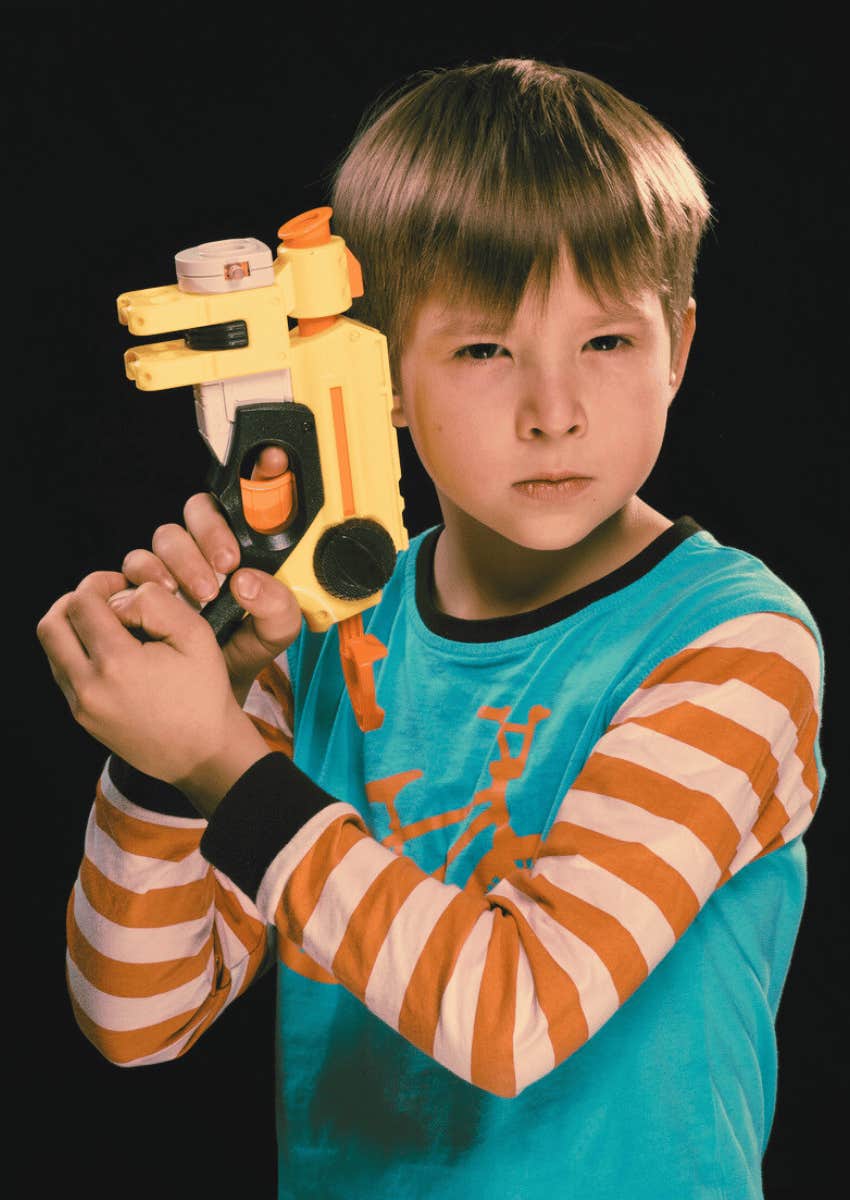
American children have played with toy guns since before the Civil War. Guns are woven into our Constitution and permeate our identity as a nation, so despite over 500 mass shootings since 1966 and research that links toy guns to antisocial behavior, they haven’t gone away. They’ve just taken on a softer form.
Nerf was born in 1969 when toy developer Reyn Guyer pitched his four-inch foam ball to Parker Brothers. It was marketed as an indoor sports toy that wouldn’t break stuff: “You can’t hurt babies or old people,” the commercial said.
Nerf didn’t start creating toy weapons until 1992, but they weren’t called “guns.” They were called “foam dart blasters,” emphasizing that they were safe, recreational toys — different from the real-life firearm that had killed six and injured 31 in the Stockton schoolyard just three years prior.
Still, if it’s shaped like a gun, has a trigger like a gun, and shoots like a gun, it’s probably a gun — and studies show that merely seeing a gun increases aggressive thoughts and hostile behaviors. I also find it mildly concerning that the boy in the above commercial is wearing sunglasses and a trench coat, immortalized after Columbine as the uniform of the school shooter.
While foam bullets may have softened the physical blow (besides a few dozen ocular injuries, anyway), they haven’t softened the psychological effects.
7. Hess trucks
If you were born before Y2K and you lived on the East Coast of the United States, you remember the iconic holiday commercial jingle: “The Hess Truck’s back and it’s better than ever for Christmas this year — The Hess Truck’s here!”
As a kid, I didn’t realize how weird it was for a gas station to sell branded promotional toys cloaked in Christmas tradition (especially while American troops invaded Iraq for its oil), but here we are.
In 1964, Hess Oil and Chemical started creating mini gasoline tankers, selling them out of their gas stations to encourage customer loyalty. Each year, they’d release a new collectable design, eventually branching out to steamships, fire trucks, RVs, police cars, helicopters, and space shuttles. Hess trucks taught kids two things: Brand loyalty is cozy and nostalgic, and fossil fuels are the backbone of American tradition.
Marathon Petroleum bought out Hess gas stations in 2014, eventually turning them into Speedways, but the production of the toy vehicles didn’t stop. The line now has over 100 collectables, some of which sell for hundreds or thousands of dollars. In this economy, that’s enough to fill up your tank a whopping three times.
Maria Cassano is a writer, editor, and journalist whose work has appeared on NBC, Bustle, CNN, The Daily Beast, Food & Wine, and Allure, among others. She's in the process of publishing her memoir, which you can learn more about here.
