
9 Small Questions That Help You Understand Your Son On The Days He Won’t Open Up
 Hunter Johnson | Unsplash
 When you have boys, you know the particular kind of chaos that greets you on any given Tuesday. My boys, 8 and 11, have made water balloons in the house, sledded over a rock wall, roller-skated through the living room, and once got themselves stuck in a bucket in a way I will not soon forget.
If you have boys, I’m sure you’ve got plenty of parenting stories of your own. My mother-in-law, a mother of three boys, has a sign in her kitchen that says, “God bless the mother of boys.” Every time I see it, I say a silent amen.
She also has a sign in her basement that says, “A boy is the only thing that God can use to make a man.” And that sign makes me take a step back and remember something important. I’m raising two people to become men. Two men who will someday be adults and have their own lives, loves, and heartaches. They will spend more time being men than being boys, and I will have them in my life forever.
That sign stops my brain from wanting to sell the boys off to the circus, at least for a few minutes, and reminds me to appreciate the lifelong journey we are on together. My husband, who has some practical experience as a boy, has his own theory. He believes that from an evolutionary standpoint, boys have to be a little crazy.
Boys tend to engage in higher levels of rough-and-tumble play and risk-taking than girls, and studies have linked this kind of physical play to social bonding, self-regulation, and physical confidence. It serves a purpose, even when it looks like pure chaos.
Understanding what is going on inside a child’s mind, especially during moments of conflict or shutdown, is one of the most valuable skills a parent can develop. After I get some space, I ask myself a few questions to help gain a more reasonable perspective on their behavior. And on the days my son just will not open up, these nine small questions are the ones that help me understand him anyway.
Here are 9 small questions that help you understand your son on the days he won’t open up:
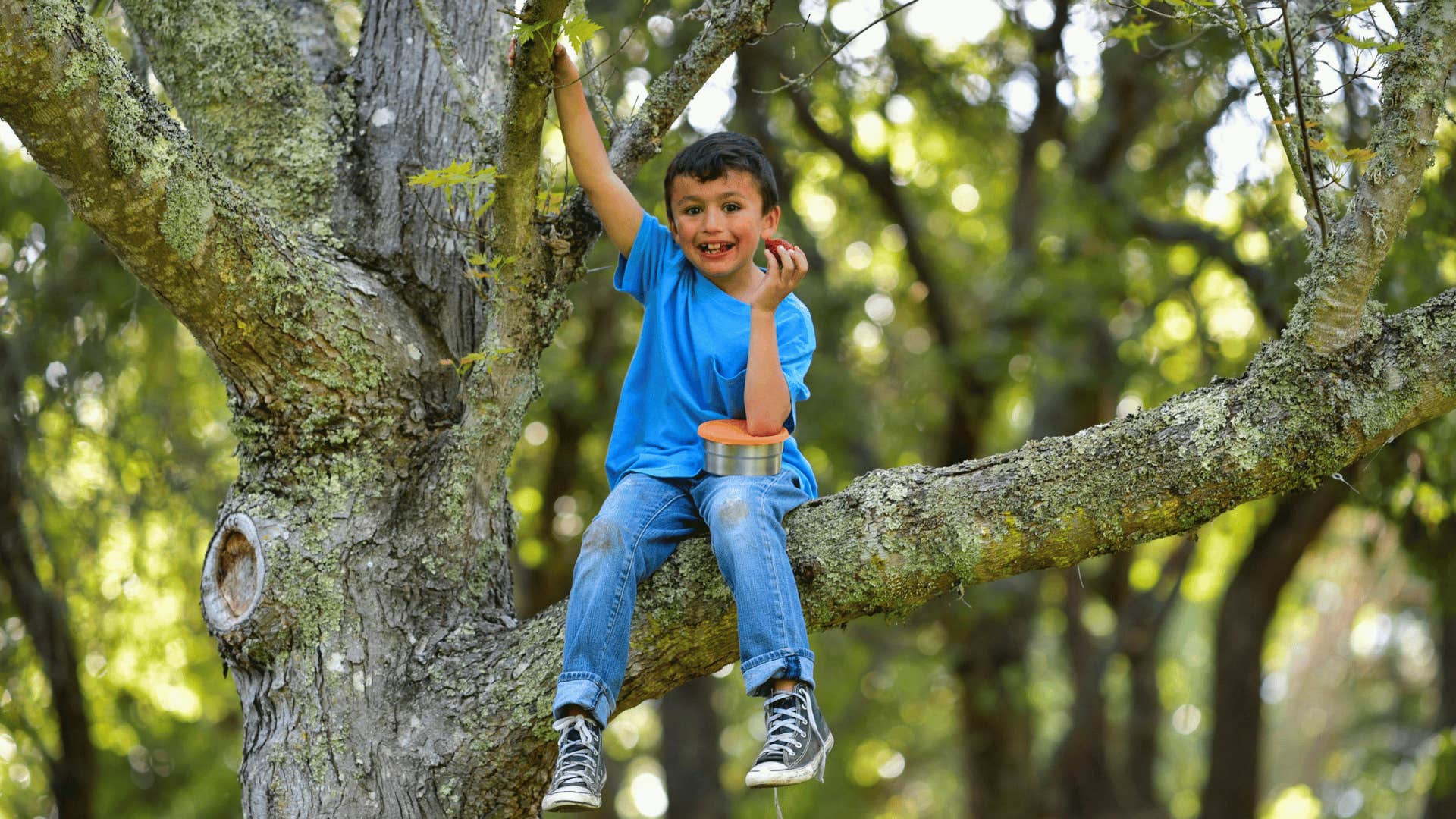
Question 1: Will this activity injure your son or someone else?
 Sandra Harris / Unsplash
This question is probably the most important one I need to ask myself while raising my boys. Being an only child, a girl, and raised by a very careful father, my instinctual response to things, from sliding down the banister to snowboarding on an icy patch, is “Stop!”
But part of being a kid is learning your own boundaries. My telling the boys to stop all the time isn’t really helping them come to their own conclusions about the world. The occasional skinned knee or bumps and bruises teach them lessons about life.
When I look inside myself, one of the main reasons I want them to be more careful is because I don’t want to deal with the aftermath of their incidents. And “I told you so” is so close to the tip of my tongue, I almost can’t help but say it when what they have attempted is so ridiculous.
Research in the International Journal of Environmental Research and Public Health found that children kept from risky play are more likely to struggle with independence and show decreases in learning, perception, and judgment skills. The bumps and bruises aren’t just war stories. They’re the curriculum.
Most of the time, I’m being too careful. And in more extreme cases, I tell them to put on a helmet. Besides, it’s the crazy stories we tell at family dinners for years to come that make us laugh and build connections.
Question 2: Can you let your son be in their joy just a little longer?
 Getty Images / Unsplash+
Do you wish you were a happier person? How do you think you learned to be so tightly wound? Well, you were probably punished, or at least yelled at occasionally, to settle down and stop being so joyful.
And as a mother, I get it because I sometimes get annoyed too. A child’s joy is so big, so loud, so annoying that as adults, we can hardly stand it. We tell them to “Be quiet! Sit down! Stop running around!”
And yes, sometimes it’s appropriate to do so. But if you ask yourself, “Can I let them be in their joy just a little bit longer?” maybe you will see that the difficulty you have when your child is in his joy is a reflection of yourself, a reflection of the sadness you felt as a kid when your joy was stifled.
A study in Humanities and Social Sciences Communications found that parental playfulness significantly and positively predicts children’s playfulness, and that the quality of parent-child interaction serves as a partial mediator in that relationship. When we let ourselves play, we permit our kids to do the same.
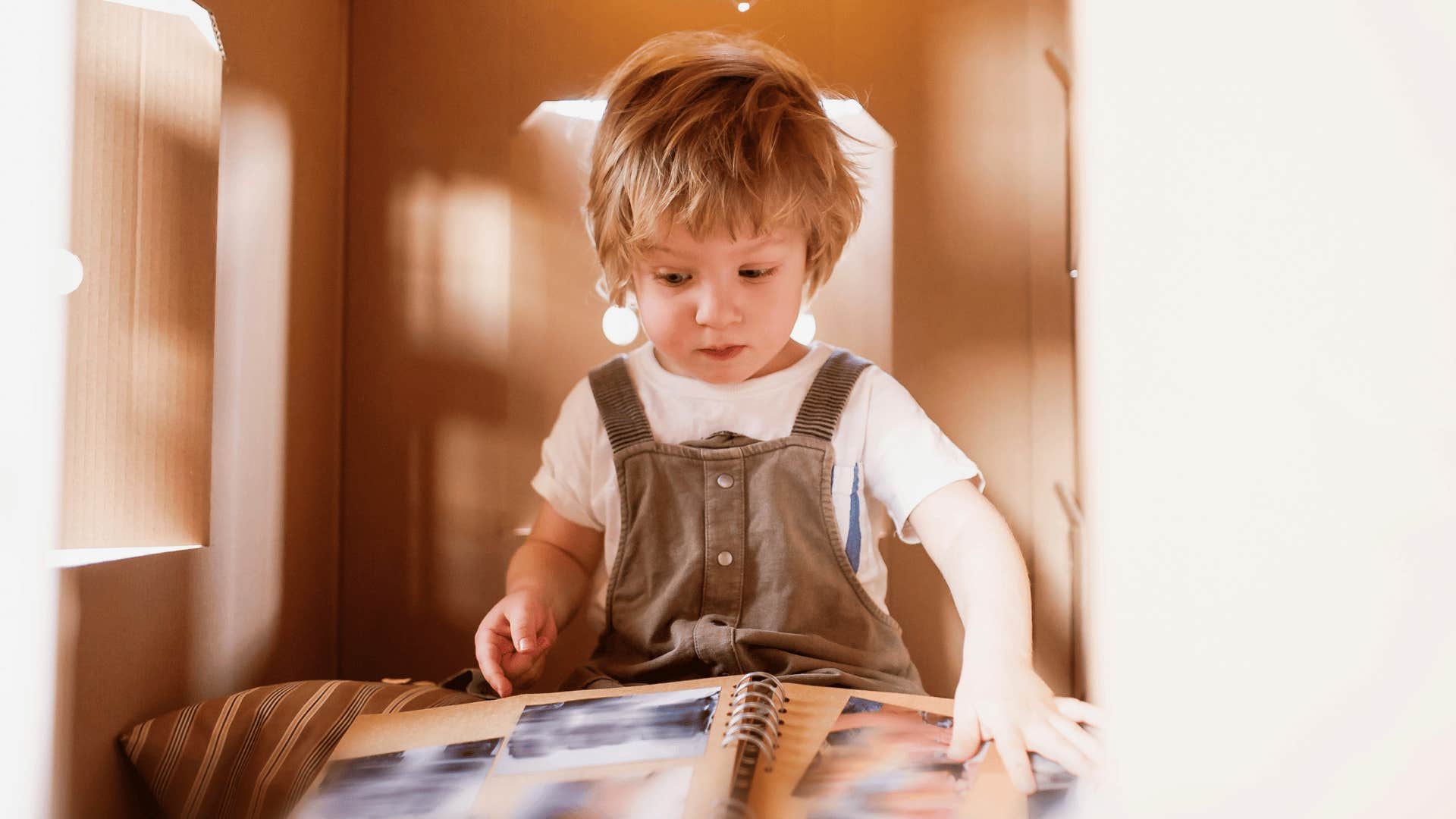
Question 3: Can you value your son's playfulness?
 Getty Images / Unsplash+
Along with their joyfulness, boys are inherently playful. And not only can that be annoying to a mother, it can be annoying to a wife when that behavior is also exhibited by her husband.
Many times, I’ve heard a woman scold her husband for being “another child” when really, the issue is that the woman is deeply uncomfortable letting her hair down and letting herself play. They have a special knack for being playful at just the wrong times. In their minds, they are breaking the tension. In our minds, they are being a prick.
The reason it upsets us so much is that we closed off playfulness in our hearts a long time ago. And generations of women have taught us that being irresponsible and playful is bad and keeps us from earning respect and power.
Playful parenting improves the quality of the parent-child relationship, and the warmth built in those unserious moments tends to carry over into the harder conversations. Can you let your boys play? Can you let the hardness within you soften? The boys are calling to our hearts to come out and play.
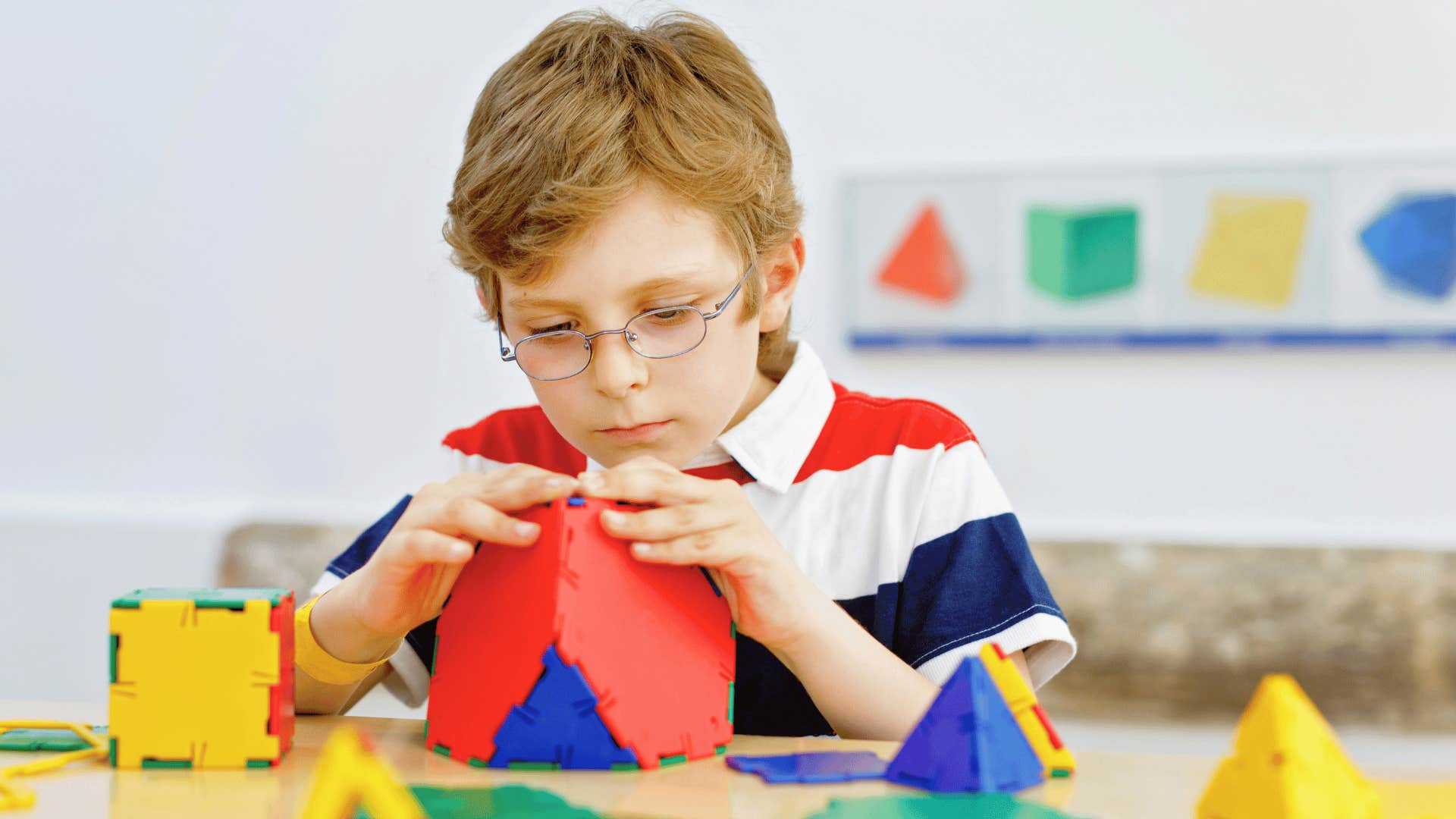
Question 4: Is your son a different kind of smart?
 Getty Images / Unsplash+
Men aren’t stupid, and neither are boys. They just think differently. Boys are just a different kind of smart than we are as adult women. And thank goodness they are! Because, for as much as men are labeled as stupid, women can be labeled nuts.
And when we can’t recognize all forms of intelligence in the world, including the fluid, simple playfulness of men, we are cutting ourselves off from a lot of enjoyment in our lives. Intelligence can show up in a variety of ways. Can you make a working slingshot/candle holder out of toilet paper rolls and duct tape? That takes some wild creativity.
Howard Gardner proposed in his 1983 book, Frames of Mind, that intelligence comes in many distinct forms, including spatial, bodily-kinesthetic, musical, and interpersonal. Schools tend to reward the linguistic and logical-mathematical kinds. The kid who builds a working slingshot out of toilet paper rolls is demonstrating spatial reasoning and creative problem-solving.
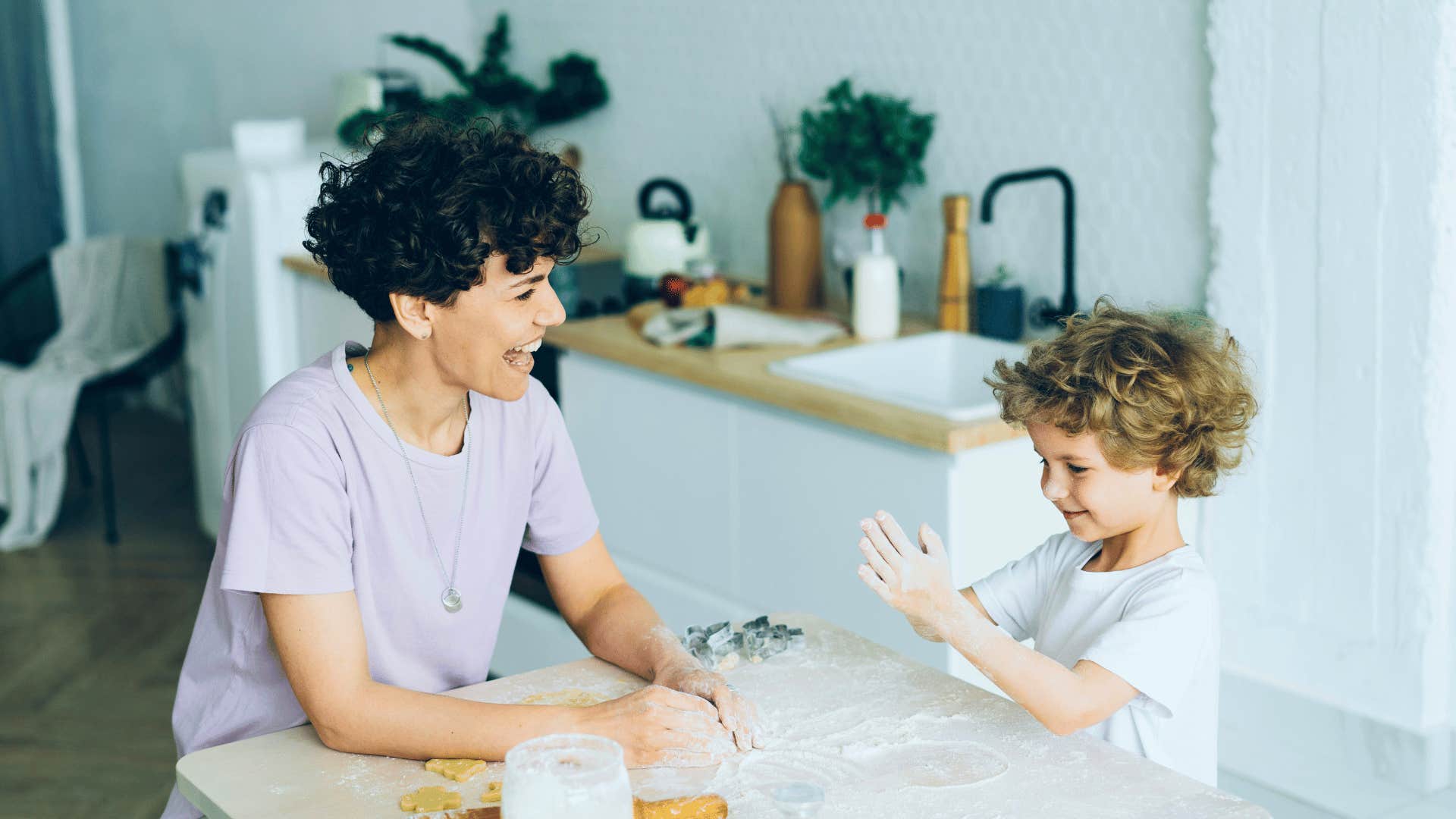
Question 5: Can you clearly articulate what you want to say to your son?
 Vitaly Gariev / Unsplash
Little boys aren’t supposed to be thinking about picking up their socks. But we expect them to. We expect them to notice the messes they are making around the house. And we expect not to have to tell them multiple times to do things. How would your life change if you could let go of the idea that you should only have to say something once? How would it change if you could let go of the idea that they should just do it automatically?
Grace Berman, a clinical social worker, advises parents to start teaching young children how to make decisions by giving them two options, then gradually shifting more responsibility to them as they grow. Will you feel like a broken record? Yes. But their learning takes time, and eventually there will be no more little socks to pick up.
Question 6: Can you find ways to praise your son?
 Getty Images / Unsplash+
All men love to make women happy, including our boys. When we can find ways to praise our boys, especially when we clearly ask for their help, and they give it, this does a tremendous amount for their self-esteem and our relationship with them.
I make it a point to ask my stepson, Jet, for help with things like bringing in the groceries, and then let him know how much I appreciate his help. Advice from Nemours KidsHealth recommends praising effort, progress, and attitude rather than results alone. Specifically, earned praise teaches kids to put in the work, push toward goals, and try again when things don’t go the way they hoped.
Question 7: Where can you be of service together?
 Curated Lifestyle / Unsplash+
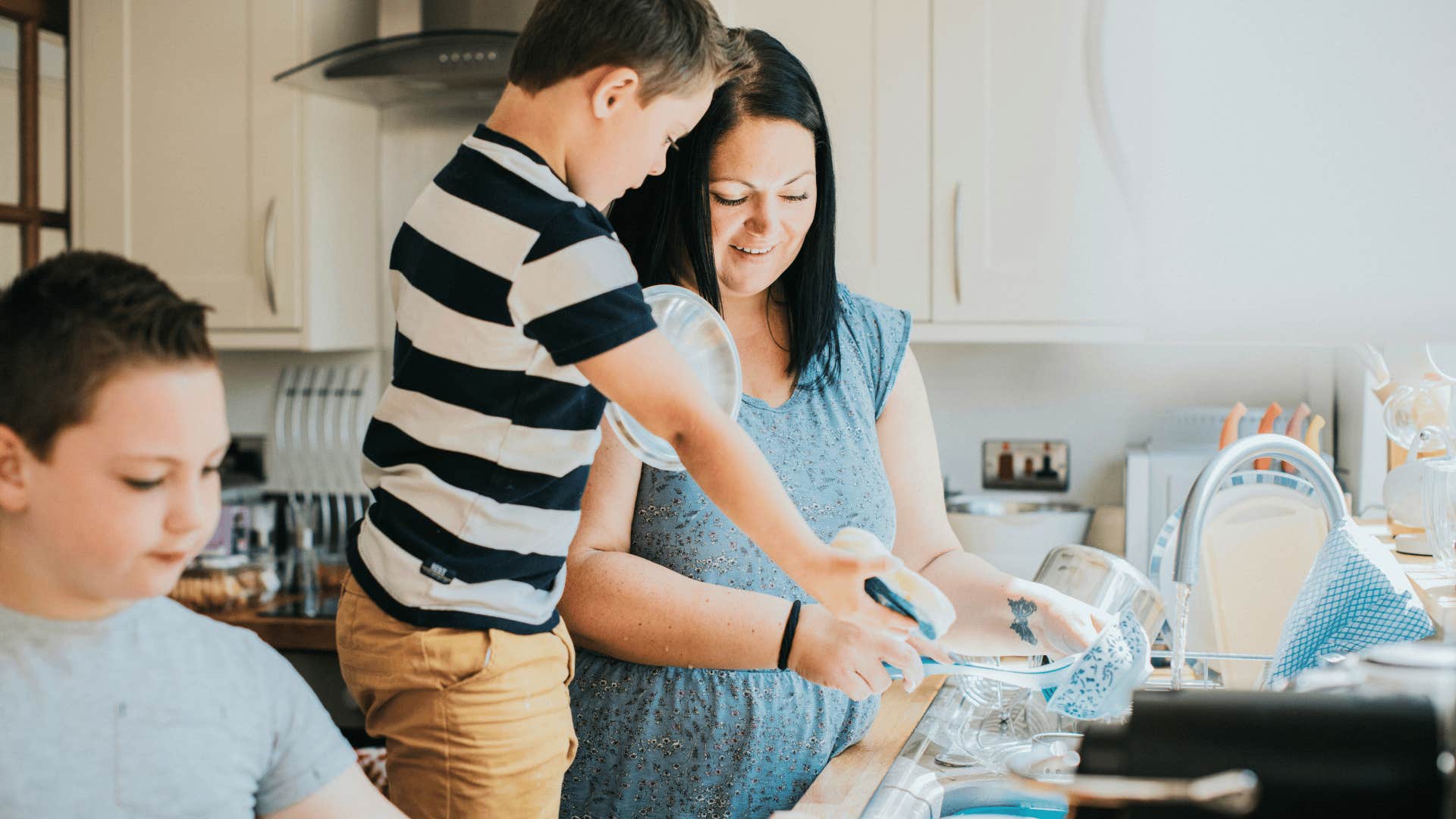
Boys are about doing. Our girls will enjoy sitting and chatting with us over a cup of tea, but boys are about doing things. If you want to spend real quality time getting to know your boys, find something you enjoy doing together. It’s in the doing that the engagement and deep connection come out.
Doing things with your boys could be an epic adventure, but it’s also really important to do real work together. Clean the gutters together. Rake together. Don’t expect them to do it all day, but for short amounts of time. Hold them to a higher standard for contributing and being a part of the work it takes to provide for the family.
Children in households with strong shared activities tend to have higher self-esteem, better communication with parents, and fewer behavioral problems. Doing real work together, then splitting a treat when it’s done, goes further than most people expect.
Question 8: Can you be vulnerable around your son?
 Vitaly Gariev / Unsplash
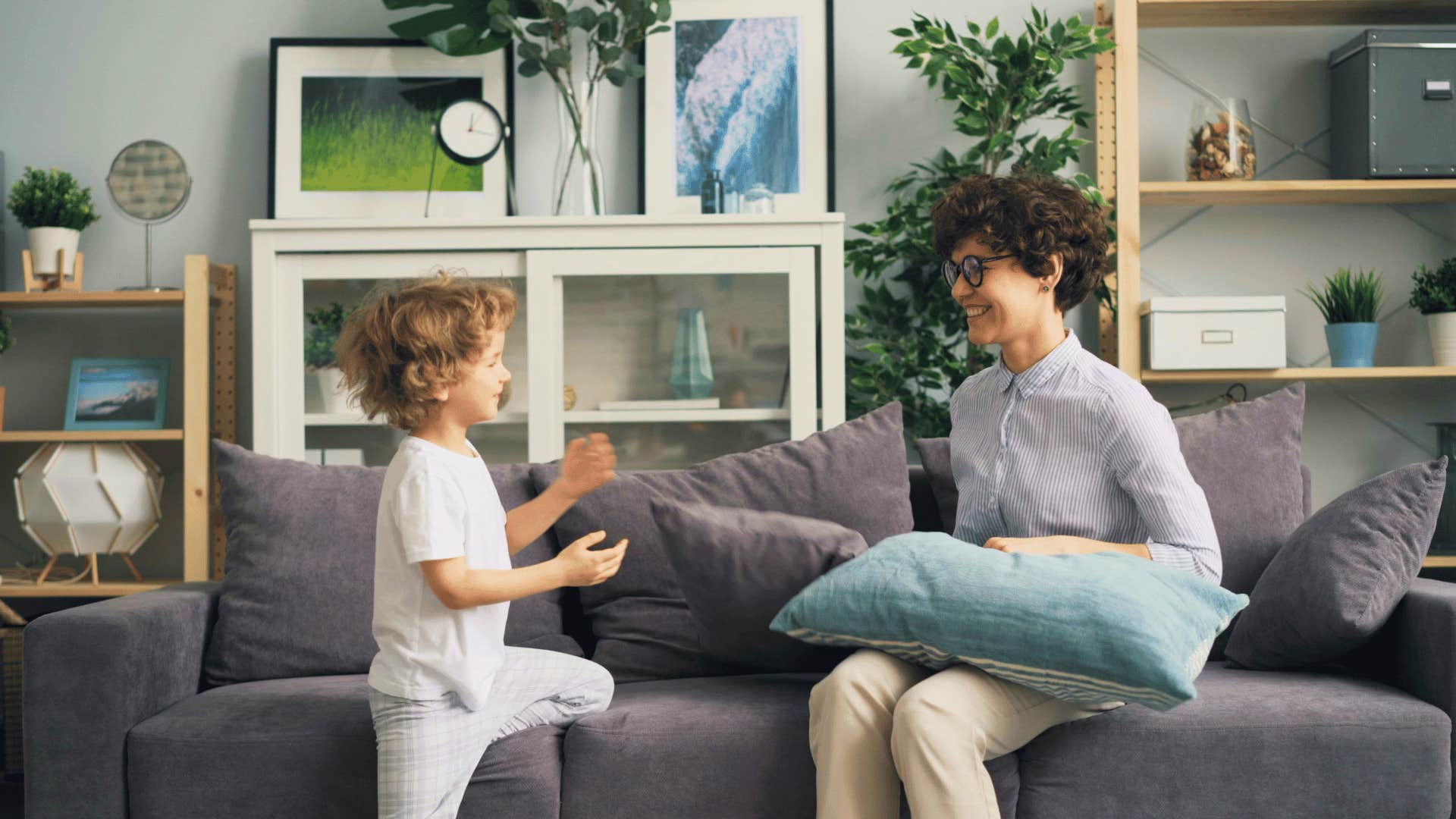
Most people have heard how important it is to let our boys feel their feelings and vulnerability. But do you know where he learns that? You and your partner.
Let yourself be vulnerable around your boys. Be honest about your feelings. Let yourself cry or even ask for a hug when things are tough. Allow yourself to be open when you’re struggling. There is a big difference between putting the weight on your children and simply allowing yourself to show your humanity in front of them.
Research from the University of Antwerp found that how parents handle their own emotions, and how openly they engage with their children’s emotional experiences, plays a significant role in children’s ability to develop healthy emotion regulation skills. Kids are not listening to what we tell them to feel. They are watching what we do when we feel it.
Question 9: Can you let yourself be a woman around them?
 Vitaly Gariev / Unsplash
I’m not really a girly-girl. But I’m letting myself get more and more comfortable with my femininity, and my boys need to see me enjoy it. So many women I meet are invested in a concept of motherhood that consumes their every waking breath.
But our children are watching how to be in a relationship by watching us in a relationship with our spouse AND ourselves. Sure, they might cry on date night when you leave, but showing them that you take care of yourself, dress up, enjoy a night out, wear a skirt, and do your hair is all very important to their self-esteem.
Using data from the German Socio-Economic Panel found that maternal life satisfaction is directly linked to children’s self-regulation, and that when mothers are thriving, the frequency and quality of shared activities with their children increase too. The most important thing you can do for your boys is not to be with them every second. It is to be someone they get to watch enjoying her life.
Sometimes life with my boys feels like it will never end. I’ve had a boy in my life for almost 9 years now, and it feels like a lifetime. But someday in the near future, I’ll look up at him, and I’ll see a man, and I’ll miss my little boy. So I want to make sure I enjoy every minute.
Ani Anderson is a master coach, speaker, business mentor, and author.
