
Kids Who Grow Up In Homes Where Being Tidy Is More Important Than Having Fun Usually Carry 6 Habits Into Adulthood
 Alex Green | Pexels
 The environment in which children grow up is critical to their emotional development.
Doing something as simple as household chores helps kids become confident and self-efficient. But sometimes, even the cleanest homes put kids at risk. That's especially true for children raised in households where tidiness is much more important than just being a kid.
When kids are raised in homes where tidiness is more important than having fun, they carry these habits into adulthood
1. They tend to clean obsessively
 SHVETS production | Pexels
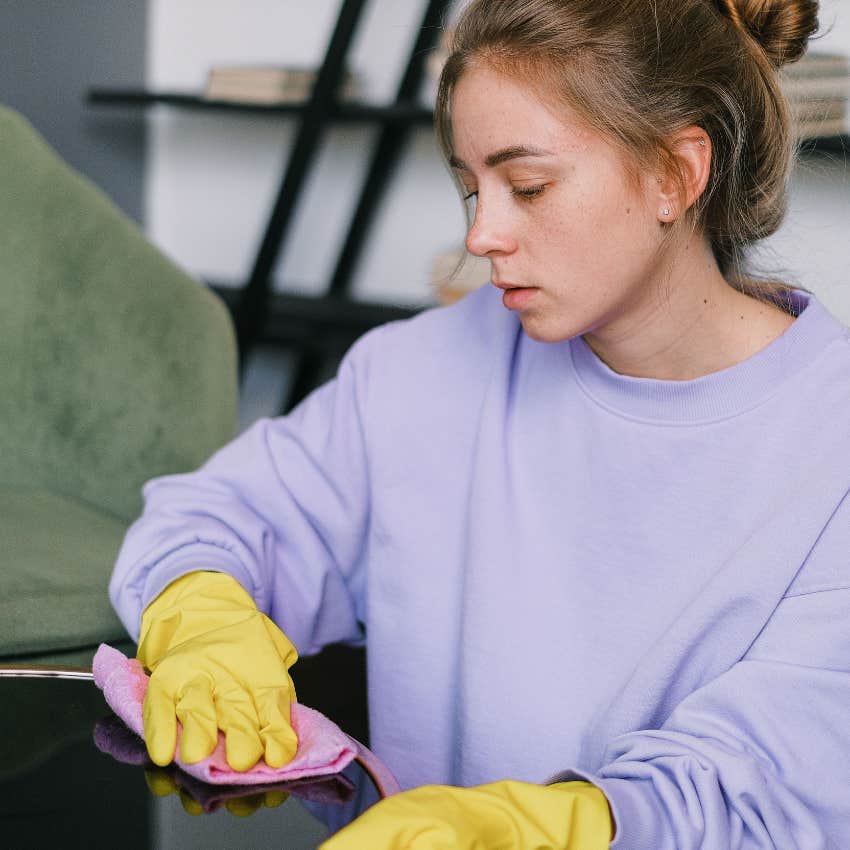
Children who are raised in environments where tidiness is held in higher regard than having fun come to learn that cleaning is the most important thing, even into adulthood. As adults, those tendencies can evolve into a compulsive need to clean.
Perhaps as children they viewed cleanliness as a way to please their parents. And while cleaning is a good habit to have, doing so compulsively is not.
In fact, compulsive cleaning is often a sign of obsessive-compulsive disorder. It doesn't mean a person who grew up like this actually has OCD as an adult, though they may still see cleanliness as a normal part of their daily routine.
2. They're anxious about managing their time
Cleaning and tidying are useful habits, and so is good time management. For kids who were raised in a household that focused on tidiness instead of playing outside and being a typical child, as adults, managing their time is one of their greatest concerns.
But sticking to a rigid schedule like this can create anxiety for kids. They learned from their parents that scheduling their time was top priority, and running late had consequences.
"We have become so attached to the time on the clock or our watch that we experience what psychologists are beginning to recognize as 'temporal anxiety,' a persistent unease about the passage of time... it fundamentally alters our psychological state, emotional availability, and capacity for connection," psychiatry professor Mitchell B. Liester explained.
3. They're highly critical of themselves
Children in overly tidy homes often found that their parental approval was only granted when they finished their chores. To go out to play and have fun was virtually impossible, as they were supposed to keep their home in order, exactly as their parents wanted.
As adults, when they have a chance to rest, it brings up feelings of guilt because that's exactly what their childhood ingrained into them. When they don't clean their surroundings up to the standards their parents set, they're quick to criticize themselves.
4. They're people-pleasers
Aside from anxiety and guilt that can stem from parents who prioritized tidiness about everything else, when they become adults, kids may also exhibit people-pleasing behaviors. While they may have learned self-reliance from keeping their surroundings neat, it's also led to perfectionist tendencies.
As children, they had to be perfect and comply with their parents' requests in order to please them. As adults, they still hold onto that mindset, seeing any little discrepancy as an inconvenience.
These adults are people-pleasers who, more often than not, were raised to earn their parents' love and attention by following orders. Because if they didn't, there would be consequences.
5. They're constantly organizing their surroundings
 cottonbro studio | Pexels
The tendency to always organize their surroundings may be a result of their upbringing. As kids, they had an incessant need to make their parents happy by doing their chores and never making a mess. As adults, they have good organization skills, but it's often a little much.
Being a good organizer doesn't necessarily mean a person also has obsessive tendencies, though it's often an indicator of OCD. "People with 'Perfectionism OCD' feel urges to make things 'just right.' They... might simply feel extreme levels of anxiety and discomfort if something feels out of place," NOCD writer Erica Digap Burson revealed.
6. They're overly critical of others
When it comes to adults raised in extremely tidy homes, the saying "the apple doesn't fall far from the tree" is incredibly relevant. Children made to keep their homes tidy and everything in place can grow up to become people who always criticize others who aren't on their perceived level.
If a tiny mess is present at a friend's home, they become judgmental and interrogate them on why it's not cleaned up. As children, their parents likely criticized them when things weren't up to their standards, so they took this unhealthy habit into adulthood.
Allison Peterson contributes to YourTango through her writing on love, lifestyle, and relationships.
