
If It Were Up To Gen Z, People Would Probably Stop Doing These 11 Things Altogether
 Anastasiya Pastushchak | Shutterstock
 Gen Z wants people to stop doing things that divide us and keep us struggling. They may be young, but they want to thrive, and they want to bring the rest of the world along with them.
It’s easy for older generations to stand on the sidelines and dismiss Gen Z as entitled and unrealistic, but their hope is for a better world. They're ready to make change and disrupt the status quo. That's what they're supposed to do.
If Gen Zers had their way, they'd want people to completely stop doing these things:
1. Making fun of safe spaces
 Nastyaofly | Shutterfly
Gen Z wants people to stop making fun of safe spaces altogether. Gen Z is more racially and ethnically diverse than past generations, as almost half of Gen Z members represent communities of color. More than one in five members of Gen Z identify as LGBTQIA+. Their focus on inclusion, accessibility, and equity comes from lived experience.
Gen Z wants safe spaces to be created and honored because they want to feel safe, full stop, end of sentence. Making fun of safe spaces goes beyond lighthearted teasing. It’s a way to shut people out, to deny them humanity, and loudly reinforce how unsafe they are.
People who make fun of safe spaces are only able to do so because they’re the ones in power. Gen Z’s commitment to creating safe spaces is about showing up for themselves and for anyone else who exists on the margins. Gen Z is doing the often painful yet transformative work of rebuilding the world as they want it to be.
2. Romanticizing hustle culture
 Perfect Wave | Shutterstock
Gen Zers know what everyone says about them, behind their backs and to their faces: they don't want to work, and when they do work, they don’t do it hard enough.
The truth is that Gen Z absolutely wants to work. They just want the terms and conditions to change. Gen Z sees toxic productivity for exactly what it is. They know that no job is worth compromising their well-being.
When it comes to finding a job, Gen Z places a premium on work-life balance, and not the kind of work-life balance their parents had. They want flexibility on the job. They want a four-day work week. They want wellness to be so much more than a buzzword, something companies actually provide.
Boomers have upheld the live-to-work mentality, and Gen X and millennials have defined their worth by their productivity, but Gen Z genuinely wants everyone to step back, take a deep breath, and think about what truly fulfills them.
3. Gatekeeping information
 Chay_Tee | Shutterstock
These young people might get judged for being chronically online, but they know how to harness the internet’s instant spread of information to improve their lives.
They use every available avenue to teach themselves essential information, and they prioritize sharing what they learn. TikTok is a way to actively push back against gatekeeping, not just a platform for dancing and going through their skincare routine with an audience.
They believe knowledge is power, and power shouldn’t be held by an elite few. Gen Z believes there’s more than one pathway to get a solid education.
College can teach them how to analyze literature from centuries ago and trade school can teach them how to fix a faulty carburetor, but Gen Z knows they can take what they’ve learned and teach each other.
4. Minimizing mental health
 fizkes | Shutterstock
Gen Z wants people to stop minimizing the need for mental health care. They stand in direct opposition to previous generations, who were taught to be tough, swallow their feelings, and pretend that everything was always okay.
Gen Z is vocal about their mental health struggles, and they expect accessible care in return. According to a multi-year study, 83% of Gen Z were more likely to report having anxiety and 86% were more likely to report depression than past generations. They are struggling, which is also why they’re actively pushing to change the conversation.
By talking about mental health, Gen Z is doing everything they can to destigmatize it. They’re showing the world how far they’ve come while emphasizing how far society has to go to meet the need for better mental health care.
5. Buying fast fashion
 maxbelchenko / Shutterstock
Gen Zers see the clear link between fast fashion and the imminent climate crisis we’re hurtling toward. The fashion industry is responsible for 40 million tons of textile waste every year, and it contributes almost 10% of global carbon emissions.
When it comes to clothes, Gen Z prioritizes sustainability and quality, which is why they are so committed to thrifting. Gen Z has grown up with fashion influencers flooding their socials. Their relationship to fast fashion is complicated, but the way they spend is something they’re willing to look at and reconsider.
Research from McKinsey shows that 40% of Gen Z rated environmental impact as “an extremely or very important factor” for their consumption habits. They might not be completely immune to the pull of fast fashion, but they continue to assess how to shop in alignment with their values.
6. Putting college on a pedestal
 PeopleImages.com - Yuri A | Shutterstock
Gen Z understands the value of higher education, but they don’t see the point in taking on crushing debt for it.
While older generations were taught that college is the only path to success, Gen Z’s eyes are wide open. They’re weighing the rising cost of college against the opportunities it could provide, and all they see is that a college degree still falls short.
According to Pew Research Center, 40% of Americans say that it’s not too important or not at all important to have a four-year college degree to get a well-paying job. 47% said that a college degree is only worth the cost if they don’t have to take out any loans to get it.
Going to college can be a mind-opening experience, but student-loan debt can weigh you down for the rest of your life. Gen Z can see the cracks in the facade. They’re ready to make their own way in the world, and they know there are alternate paths to success aside from college.
7. Ignoring climate change
 Ground Picture | Shutterstock
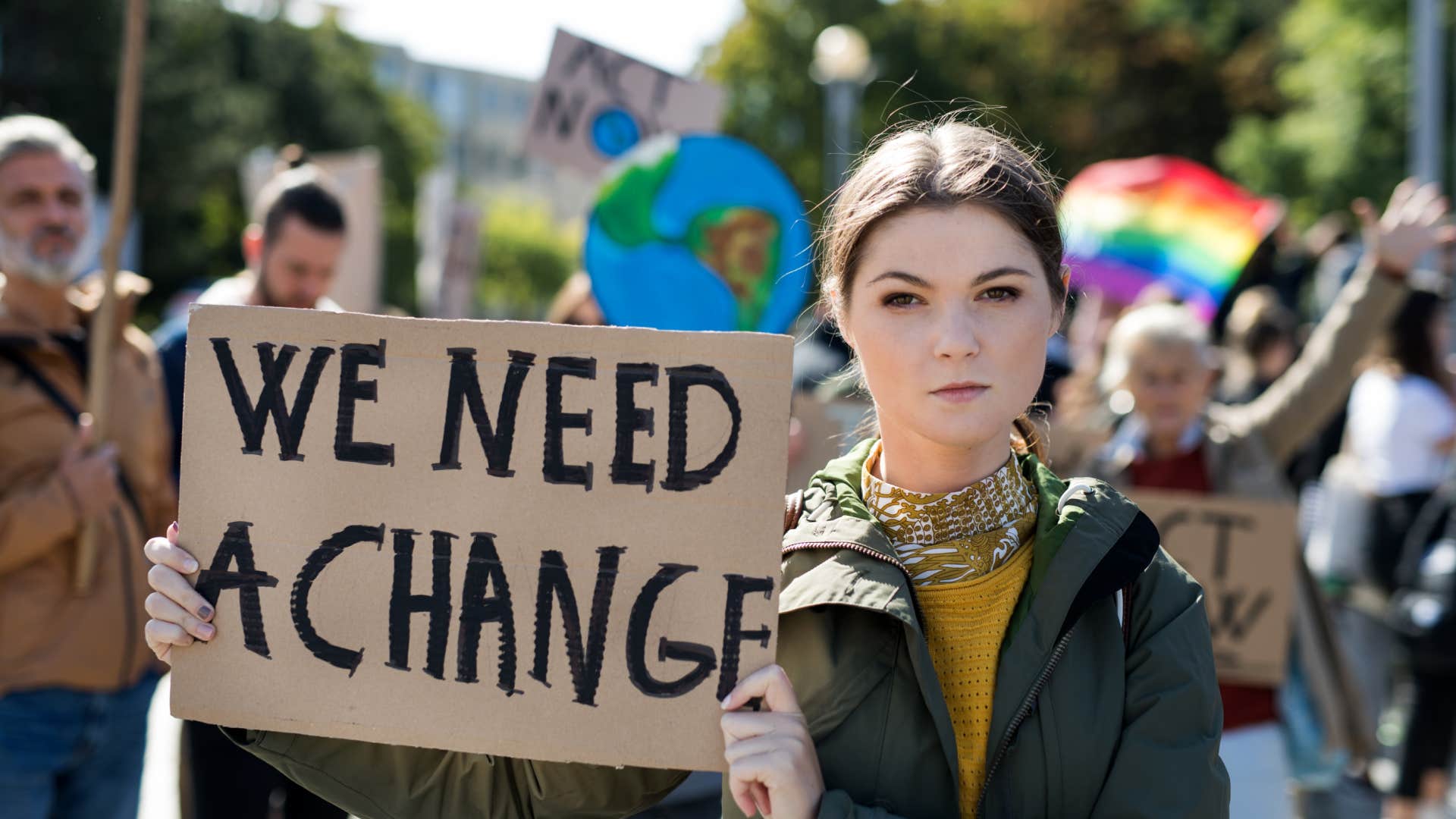
Gen Z wants people to stop ignoring climate change altogether. They feel immense eco-anxiety, and they want everyone else to take their concerns seriously.
According to an international study, 80% of Gen Z is worried about the climate crisis, but their emotions go way deeper than that. They feel sadness, anxiety, and anger. They feel powerlessness, helplessness, and guilt.
On a more local level, 70% of Gen Z in the U.S. think that climate change is an “immediate and long-term threat to the planet’s safety.” They believe the federal government could and should do more, including strengthening policies to reduce carbon emissions.
These young people also take individual responsibility for the environment, as 90% of Gen Z pays more for sustainable products. They support businesses that are actively working for change, showing that they’re fighting the good fight to save the only planet we can call home.
8. Calling sensitivity a weakness
 BearFotos | Shutterstock
According to Stanford University senior research scholar Roberta Katz, other generations have misunderstood Gen Z’s emotional availability.
“People were critical of what they saw as a generation that was too coddled and ‘soft,’” she explained. “Gen Zers were called ‘snowflakes’ and ‘unwilling to grow up.’ But much of that negative judgment came from a misunderstanding of what it is like to grow up in today’s world when compared with how their elders grew up."
While older generations frame Gen Z as too gentle for their own good, Gen Z knows that there’s innate strength in sensitivity. They genuinely care about the well-being of others. They place a premium on staying connected to their feelings and considering how their actions impact everyone around them.
Gen Z values authenticity, which is impossible to access if you’re cut off from your own emotions.
9. Marking success along traditional timelines
 GaudiLab | Shutterstock
Gen Z wants people to stop defining success along traditional, rigid timelines. They refuse to put any pressure on themselves to meet past generations’ expectations of how life should look. They are agents of change who know that there’s more to finding fulfillment than 2.5 kids and a white picket fence.
According to the 2024 Voices of Gen Z Study, they define success by the quality of their relationships and their sense of purpose. For Gen Z, a “great life” is a happy life, one where they can live comfortably and be close to their family and friends. Past markers of what made a successful life aren’t as important to them. They believe acquiring wealth and having kids matter less to their quality of life than fostering deep connections with people they love.
Gen Z wants people to stop measuring them against anyone else. They don’t believe in the outdated definition of what makes someone successful.
10. Promoting unattainable beauty standards
 Viktoria Nedyak | Shutterstock
Growing up on social media means Gen Z has spent most of their still-young lives looking at celebrities and influencers. They learned to measure their appearances against the seemingly flawless beauty of famous people, which was likely the result of a combination of cosmetic surgery and beauty product magic.
Gen Z is pushing up against the idea of perfection that they’ve been taught to value. They put more emphasis on authenticity than anything else. They reject filters and photo editing and embrace their full selves.
Instead, Gen Z is actively redefining what beauty is, and for them, beauty includes their flaws.
11. Criticizing self-care
 insta_photos | Shutterstock
Gen Z knows that from the outside, looking in, self-care seems frivolous, as though soaking in a bubble bath could solve all their problems. But Gen Z sees self-care for exactly what it is: A practice that reinforces radical self-love.
As life and transition coach Deborah Roth revealed, “Everything becomes a little easier, less stressful, and maybe even more fun when we carve out time and space for ourselves amid the whirlwind of life.”
She advised viewing self-care through the framework of a “four-sided model of mind, body, heart, and spirit.
“What can you do every day to support and nurture yourself in each area to stimulate your mind, nurture your body, honor your feelings and relationships, and reconnect with your spirit?” Roth asked.
“Imagine what might happen if everyone you knew made that same commitment to reconnect with and re-energize their divinely connected self-center,” she concluded. "What an extraordinary power grid we could create.”
Alexandra Blogier, MFA, is a writer who covers psychology, social issues, relationships, self-help topics, and human interest stories.
