
Gen Z Kids Were Taught 12 Things In School That Would Probably Make Boomers Roll Their Eyes
 Drazen Zigic | Shutterstock
 The generational wars never seem to abate, and education is always a hot topic between cohorts. Gen Z kids were taught several things in school that boomers can't seem to wrap their heads around.
Born between 1997 and 2012, what we know about Gen Z so far is that they are a digitally savvy, unique generation of young adults on the cusp of early adulthood, trading classrooms and universities for the workforce and professional endeavors. As digital natives who grew up online, their early education had to evolve to keep up with how quickly they could gather information and engage in activism.
Things Gen Z kids learned in school that boomers roll their eyes at:
1. There are always accommodations if you’re struggling
 Fast-stock | Shutterstock.com
From an increase in flexible online learning options to physical and mental health accommodations, Gen Z students have access to many more resources in the classroom than boomers did.
According to the Walton Family Foundation, almost half of Gen Z struggles with depression, which is nearly double the rate of millennial adults. Classrooms have been forced to shift to accommodate these struggling students.
While baby boomers might roll their eyes at the accommodations in classrooms for Gen Z students, the truth is that many of them need them, given the unhealthy habits and academic anxiety they've developed as a result of their taxing emotional and mental health.
2. Not everything you read online is true
 vectorfusionart | Shutterstock.com
Teachers today must moderate sourced material in their assignments in an effort to teach kids how to identify misinformation and non-credible sources. Students are also taught to be skeptical of online information from an early age, since they spend most of their time plugged into social media.
A study by Google suggests this shift in classrooms largely supports Gen Z’s ability to spot fake news and misinformation more effectively than baby boomers and millennials.
3. You don’t have to do anything you’re not comfortable with
 Fizkes | Shutterstock.com
It's hard to imagine anyone having a problem with a lesson like this, but some boomers see it as an example of the coddling of younger generations that they have an issue with.
However, creating spaces for all kinds of students to thrive and feel comfortable in the classroom is generally well-intentioned, as neuropsychologist Kenneth Schuster argues.
When anxious students are relaxed instead of fearful of classroom interactions, they’re more likely to tap into their curiosity and willingness to learn. That being said, it's also important for kids not to use discomfort as a crutch to get out of doing basics like homework and assignments.
4. See something, say something
 MAYA LAB | Shutterstock.com
Schools and administrators generally play a large role in combating bullying, according to a study published in the journal Aggression and Violent Behavior, but they’ve also been forced to reimagine prevention programs thanks to modern technology.
Many older generations learned to live with bullying in classrooms because there were no campaigns like “See Something, Say Something” and “STOMP Out Bullying.” As a result, boomers especially think a lot of bullying is just a normal part of life. Something that makes kids stronger.
Of course, that's a generalization that doesn't necessarily capture all Gen Z or boomer beliefs, but with popular media discourse about boomer blaming, as Jennie Bristow explained in her book “Stop Mugging Grandma: The Generation Wars,” they’re impossible to ignore.
5. Cursive isn’t as important as good ideas
 insta_photos | Shutterstock.com
Most older generations were forced to learn and practice cursive handwriting in school. Gen Z was never taught it and relies almost exclusively on technology and digital resources to write papers and complete assignments.
Cut from Common Core curricula across the country in 2010, cursive was no longer a required practice in classrooms for any student. The benefits of writing pen to paper and having good penmanship couldn't be denied for long, however, and in this case, the boomers were right. Many districts are bringing back cursive as a result.
6. Being unique is better
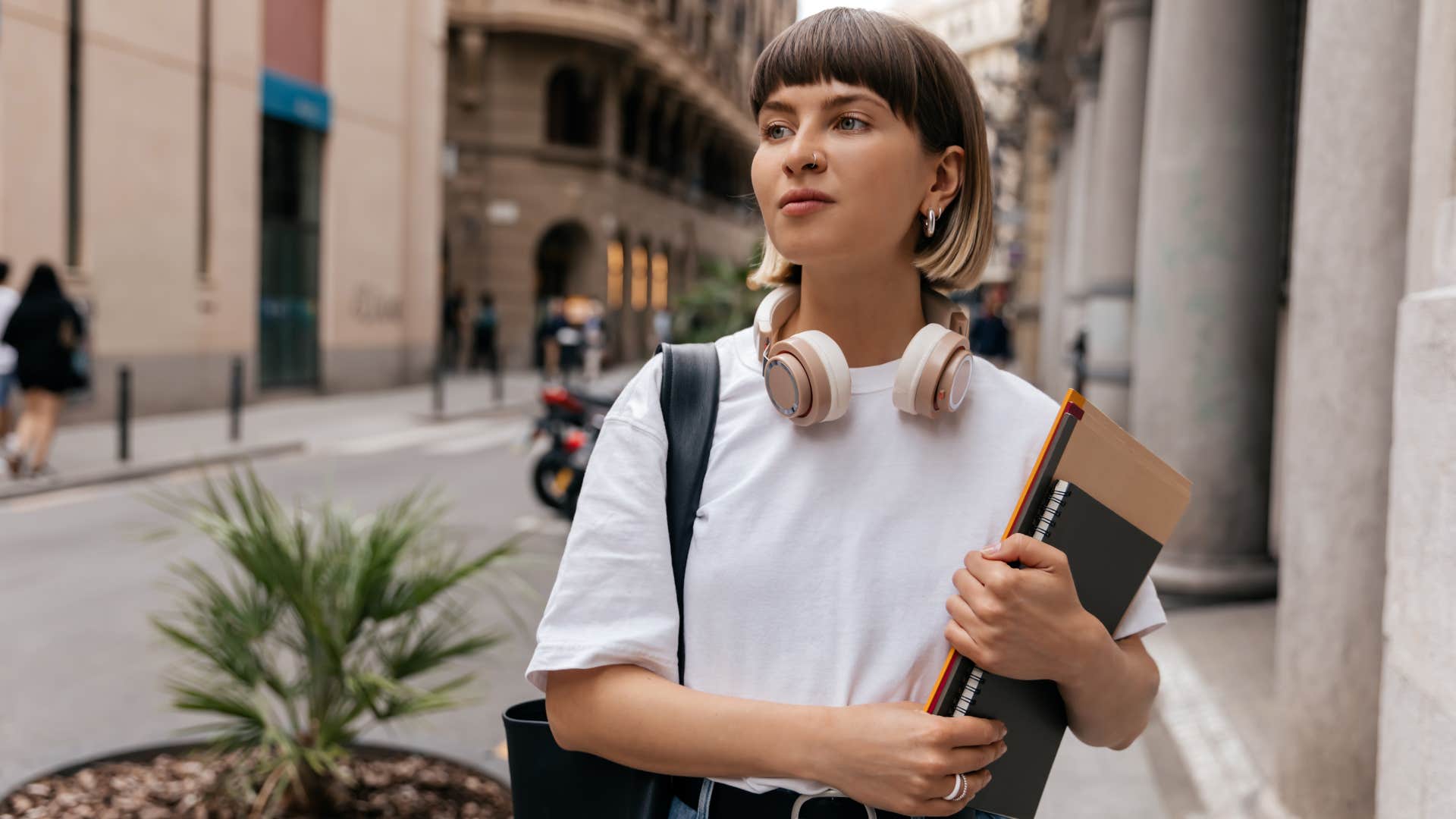 Photo Book Pro | Shutterstock.com
Gen Z likes to disrupt the status quo for many reasons, from their commitment to social activism to their openness to new-age expression and authentic, personalized identities.
While many baby boomers see Gen Z’s attitudes and identities as radical compared with their traditional values and upbringings, the young cohort has been taught to embrace uniqueness.
7. Taking care of your mental health is important
 buritora | Shutterstock.com
More than 57% of Gen Z students admit their mental health was even worse post-pandemic than in previous years, according to a survey conducted by Quizlet, affecting their classroom interactions and academic performance.
Of course, many millennial and boomer teachers still experience workplace hustle culture, struggling with burnout as often in classrooms as other corporate employees.
While they may be more conscious of catering to students’ mental health needs, for some boomers there’s also a sense of resentment towards the resources afforded to students nowadays.
8. Being a good test taker is linked to your success
 Gorodenkoff | Shutterstock.com
Students are feeling more academic pressure in the classroom today. According to an NYU study, they’re taking more STEM courses, AP classes, and standardized tests. Because college admissions processes use standardized test scores as a major determinant of student success, many students feel exam anxiety, which impacts their ability to genuinely learn and connect with the material.
OnlineU surveys even suggest that this emphasis on academic prestige influences Gen Z students’ college decisions, with 12% opting for a more prestigious school, compared to only 5% of Gen X and boomers at the same age.
While many teachers share a collective opinion that standardization has negatively impacted students’ ability to learn, its ties to district funding and teacher performance reviews make it unrealistic to challenge.
9. There’s something to learn from every culture
 Miljan Zivkovic | Shutterstock.com
According to a New York Times investigation, many people in older generations were radicalized by world events, and the political sphere later in life than Gen Zers. Gen Z has been exposed from an early age through social media and online news headlines.
Because they’ve been exposed to world events and headlines early in life, their openness to previously taboo classroom topics is much higher than that of boomers or late millennials.
Their teachers have been forced to accommodate those discussions, ensuring that misinformation is addressed and respect is demanded for other cultures and identities.
10. History repeats itself
 ViDI Studio | Shutterstock.com
Many Gen Z students were taught extensively about history through a biased lens. While some teachers taught strictly from the book, others recognized the influence of social media, misinformation, and biased online narratives, using this principle to spark suspicion in students.
Because many Gen Z students don’t have much understanding of what the world was like pre-technology, beyond what they learn from classroom and family discussions, they’re more likely to challenge societal norms and ideas.
For baby boomers, who were taught to accept these norms without question, unlearning them whilst being criticized by younger generations can spark some resentment, at the very least.
11. Creativity is just as important as science and math
 Ground Picture | Shutterstock.com
According to an Adobe report on Gen Z, many of these younger students are dedicated to learning and expressing their creativity in the classroom alongside more traditional subjects like math and history.
Nearly 50% even describe themselves as more creative than previous generations, partly because of greater access to technology.
Not only are there more full-time arts teachers and courses in classrooms today, emphasizing the importance of creativity for modern-day students, but there’s also more research on its benefits for academic achievement.
12. Speak up for what you believe in
 BongkarnGraphic | Shutterstock.com
A survey by the United Way of the National Capital Area found that Gen Z leads the pack in youth activism, with nearly 33% of respondents saying they’re regularly involved in activism and social justice work.
From online initiatives to protests, Gen Z is more involved than many older generations were, partially because of technological accessibility.
With schools at the epicenter of many current Gen Z social issues, teachers and administrators can nurture their students’ voices and activism, urging them to speak up for what they believe in, sometimes in ways that can disrupt the typical classroom environment.
Zayda Slabbekoorn is a senior editorial strategist with a bachelor's degree in social relations & policy and gender studies who focuses on psychology, relationships, self-help, and human interest stories.
