
People Who Spend A Little Too Much Time Scrolling Usually Start Losing The Energy To Do 6 Everyday Things
 Stock Unit | Shutterstock
 People who spend too much time getting lost in a social media scroll eventually run out of energy for normal everyday things. And that's definitely a warning sign that it's time to set some limits.
Scrolling feels good in the moment, because that's what it's designed to do. Over time, it can impact everything from physical and mental health to overall well-being. Scrolling takes the place of things that were once enjoyable, like spending time with friends and creative hobbies. The phone becomes a gateway to the distraction we're conditioned to crave when life gets hard.
Everyday activities people who spend too much time on social media lose the energy to do:
1. Interacting with strangers
 Jose y yo Estudio | Shutterstock.com
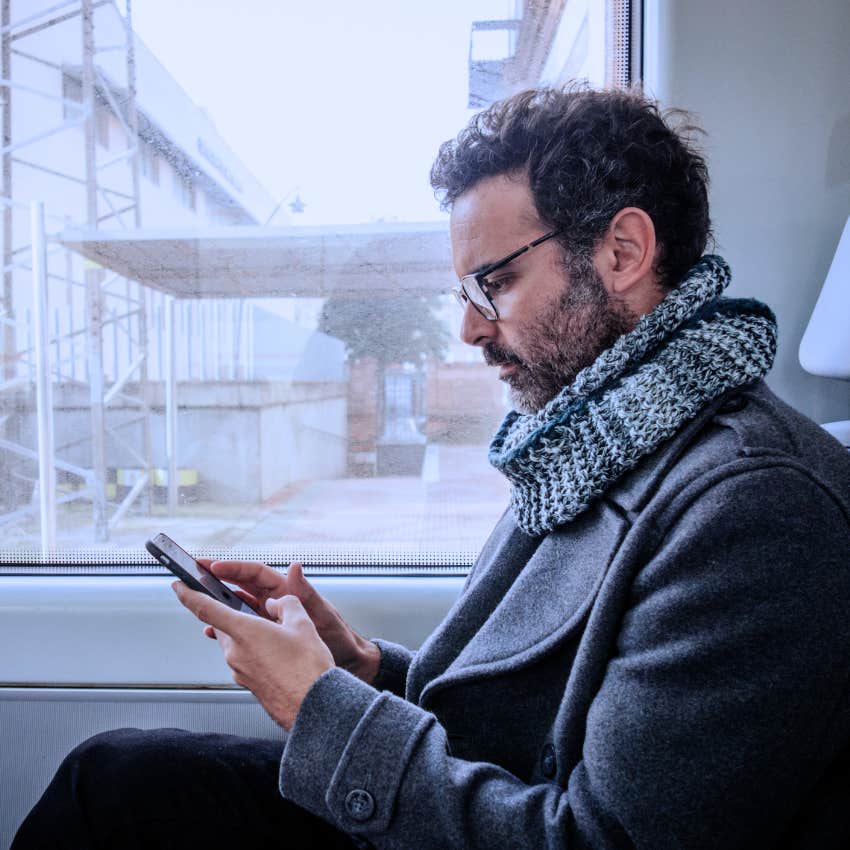
In today’s world, it’s not uncommon to walk into a grocery store or coffee shop and see everyone in line scrolling on their phones. It’s become a way to avoid engaging.
Plenty of people even believe that these interactions will be more uncomfortable and awkward than they truly are, and actively avoid them by turning to screens. Really, though, staring at a phone just distracts us from the social connection we need to feel secure and happy.
2. Creating things of their own
When we consume more than we create ourselves, it can sabotage our sense of self. Suddenly, we compare ourselves to what we see on our feeds and take on a misguided perception of our lives and personalities.
That’s why creating things at home, whether that’s in a practical sense or an artistic one, becomes harder for a lot of people who spend a ton of time online. It’s also why insecurity, both emotional and financial, lies at the heart of consumerism. We use screens to distract from feelings of worthlessness and fear, not realizing they’re making it harder to break the cycle of consumption.
3. Reading books
 Melnikov Dmitriy | Shutterstock.com
Doomscrolling puts people in an anxious state where slowing down enough to consume analog or long-form content feels impossible. That’s why, as a 2025 study found, so many people tied to their phones and algorithms are drawn to threatening content.
So, while people disconnecting from their phones and reading books, even if it’s just a single chapter per day, promote better cognitive health and longevity, people stuck in doomscrolling loops continue to shorten their attention spans and put themselves at risk of experiencing the consequences of highly toxic content.
4. Experiencing small moments of joy
Doomscrolling tends to prompt anhedonia, or a loss of pleasure in things that used to bring people joy. Whether it’s small parts of their daily routines or hobbies they used to turn to for respite, people sucked into doomscrolling spirals find it harder to appreciate joy in their daily lives.
Continuing to expose themselves to negative content online only amplifies their stress levels and depletes their emotional energy. Of course, they struggle to appreciate small joys in their lives because their nervous systems are stuck in survival mode after spending too much time on their phones.
5. Falling and staying asleep
While it seems counterintuitive that we need a certain level of energy to fall asleep, many of the habits and routines that protect the quality and duration of our sleep do. Whether it’s reading before bed, letting our minds rest offline, taking showers, or curating a bedtime routine in some other way, the people who rely on their phones for distractions from anxiety or stress before bed are actually sabotaging their sleep.
As a 2022 study found, bringing our phones into bed disrupts our sleep-wake cycle, making it harder for us to not only fall asleep, but to wake up feeling refreshed. These are the people who always feel tired until their head hits the pillow, and who ultimately end up struggling the next day with morning anxiety and fatigue.
6. Completing a task uninterrupted
 Mix and Match Studio | Shutterstock.com
Too much screen time can quickly sabotage your attention span. Most people talk about this side effect in young adults and children, but the truth is, doomscrolling and clinging to your phone's instant gratification can be just as harmful for adults.
That's why, for some people, spending a little too much time on their phones might be the reason why they can’t get through a single task or chore without going back to check their feed. They need the dopamine hit of scrolling, even if they’re not aware of it, which is why their to-do lists tend to get longer and longer, and their desire to do anything else disappears.
Zayda Slabbekoorn is a senior editorial strategist with a bachelor’s degree in social relations & policy and gender studies who focuses on psychology, relationships, self-help, and human interest stories.
