
Why Anxiety Suddenly Feels Worse In Your 50s Even If You’ve Always Been Fine Before, Says Research
 Hryshchyshen Serhii | Shuttershock
 Imagine you’ve had a particularly rough day. Maybe you got a flat tire and ended up stuck on the freeway for an hour. Maybe you accidentally deleted a project you’ve been working on for weeks, or a blizzard kept you from visiting a friend who’s only in town for that day.
Would you reach for a cup of chamomile tea served up in your favorite mug? Or maybe curl up on the couch and watch reruns of your favorite show? Or wrap yourself in your favorite cozy, moth-eaten sweater even Goodwill would reject? Or grab your childhood teddy bear?
My parents lived next door to a woman who collected teddy bears. They found out when she asked them to keep an eye on her house while she was away on business. This corporate executive didn’t just have a few teddy bears — she had a room dedicated to what was likely hundreds of bears. They ranged in size from thumb-sized miniatures to a giant, larger-than-life teddy bear that sat up in the corner of the room.
My parents never expected this very corporate, high-achieving businesswoman to have such a hobby. I’m guessing her co-workers also had no idea. I’m also guessing she got comfort from these bears.
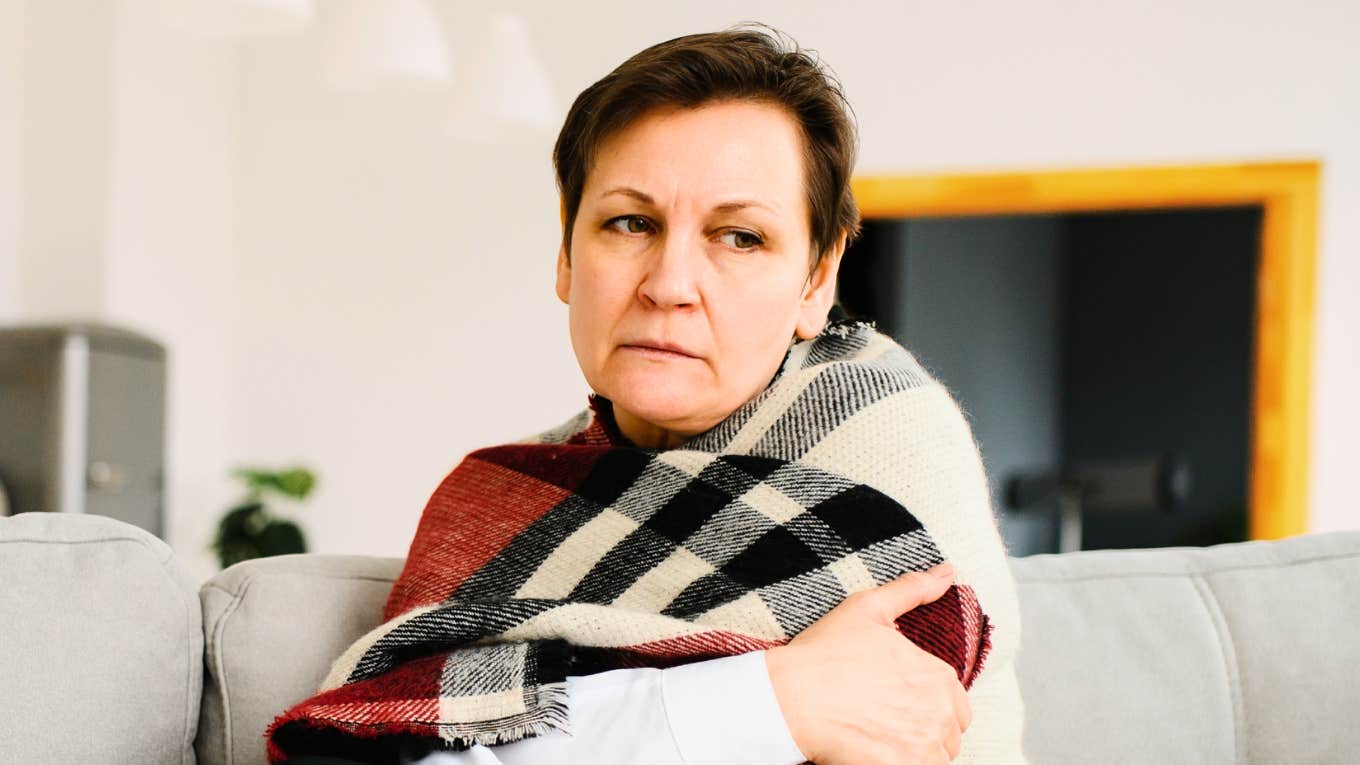
As an adult, hugging a stuffed animal when you’re upset would earn you a lot of raised eyebrows and people finding excuses to walk away. Yet, just because you’re older doesn’t mean you don’t need soothing. A large UK study found that anxiety levels were highest for people between the ages of 40 and 60, with peak anxiety levels specifically in the 50–54 age group. Brain changes and lifestyle both contribute to these results, researchers found.
This becomes a vicious cycle when older adults who have a tough time regulating their anxiety also find that it wears away their ability to self-soothe. And the cycle repeats itself. Your nervous system doesn’t care how old you are. It still wants to feel safe. In fact, it’s innate.
Self-soothing behaviors are hard-wired into us. And if you’re a Baby Boomer like me, you were likely raised in an environment with messages like, “toughen up,” “act your age,” or “don’t be so sensitive.”
Instead of looking for ways to comfort yourself, you found ways to push through and tamp down the need to be held. It’s why no one talks about it. It’s not being childish to want to soothe yourself.
Why does anxiety suddenly feel worse in your 50s, even if you've always been fine before?
 Aleksandra Poshekhova / Unsplash
Emotional regulation starts in childhood
If you can relate to this, research shows you may have never built a solid foundation for self-soothing, anxiety tolerance, and the ability to manage and regulate your emotional states — known as “affect modulation.” You cannot dial emotions up or down in response to what’s happening around you. As a result, you become overwhelmed, and that's why anxiety can often feel worse as we age into midlife.
Someone with good affect modulation can feel anxious about a situation, recognize it, and bring themselves back to a calmer baseline — through breathing or other relaxation techniques.
In childhood, holding on to a teddy bear may have been your affect modulator. In adulthood, you want to find more socially acceptable ways to calm yourself so others don’t start to question your mental health. (Although what you do in the privacy of your own home is your own business.)
Research shows you can easily soothe yourself when the world seems like a swirling mess of angst:
Hug yourself: If you’ve said to a loved one, “I need a hug!” you’ll get this tip. Hugs may be the closest thing to an instant mood lifter. A six-second hug triggers neurochemicals, including oxytocin, which helps us bond to others, slows the heart rate, and reduces stress and anxiety.
But what if you’re alone? Good news: touch is not only soothing when it comes from another person, but self-hugs work just as well, science tells us. For example, hugging yourself or simply placing a hand over your heart can ease anxiety.
Sing a song or hum a tune: Yoga that uses vocalizations like a buzzing bee or “om” for meditation can seem a bit woo-woo, but there’s a scientific benefit to it. Humming, chanting, or singing helps calm down your nervous system. Here’s how it works: your vagus nerve leads from your brain down your neck, chest, and abdomen. Activating this nerve tells your brain all is well.
So when you sing or hum, your voice box activates the vagus nerve, works its way through your system, and once your brain gets an “all clear,” slows down your breathing. You choose the tune — and singing on key is optional. You literally just need the vibes.
Rock on: Nervous presenters often rock back and forth on stage — or maybe you’ve found yourself doing it. It’s a nervous habit with a rationale behind it. The rocking motion — whether sitting in a chair or standing in front of an audience — activates the vestibular system, responsible for balance and spatial orientation.
This, in turn, activates the parasympathetic nervous system, which counteracts stress and anxiety. It’s how rocking back and forth creates a relaxation effect and is easiest to achieve sitting in a rocking chair. You don’t have to wait until you’re 90 to enjoy the benefits.
Wrap yourself in a heavy blanket: I’m a fan of this tactic and have used a weighted blanket on and off for years. Weighted blankets can feel like a hug — and appear to offer similar benefits. They’ve been used to help reduce insomnia at night and reduce daytime symptoms of fatigue, depression, and anxiety.
A Stockholm study confirmed they help reduce insomnia and daytime symptoms of fatigue, depression, and anxiety — and other research backs this up. The concept is based on deep pressure stimulation (DPS), a therapeutic technique using firm, tactile pressure to calm the nervous system. It works by lowering cortisol while increasing serotonin and dopamine.
Sniff a peaceful scent: Ever open a can of Play-Doh or a box of crayons and have the scent instantly return you to your childhood? That’s because — unlike sights and sounds — the olfactory system bypasses the part of the brain these other systems must first go through. It’s a direct line to your memory and emotion centers.
In one study, men and women experienced increased moods of happiness and less anxiety when presented with fragrances that triggered personal memories. So keeping that nearly empty bottle of your late mom’s Estée Lauder’s Youth Dew on hand may be all you need to turn your day around.
Along with self-soothing, finding these and other ways to experience more positive than negative emotions in everyday life goes beyond enjoying the moment. Emotional regulation skills may not only help you feel better today but can also link to how long you’ll live, studies suggest.
So sip your chamomile tea on your porch while firing up your rocking chair. You’ll be happier, live longer … and make the neighbors wonder what you’re up to.
Linda Melone is a writer specializing in health, fitness, and aging after 50. A former personal trainer, her work has appeared in TIME, AARP, Shape, Self, MSN Health, The Huffington Post, and other national publications.
