
11 Ways Certain People Can Get Immediate Respect Without Saying A Single Word
 Dean Drobot | Shutterstock
 We all want to be respected, whether in our personal relationships or in a professional environment. But respect isn't something that's given away freely, at least when it's authentic. We can't force others to respect us; instead, we have to earn their respect and there are a few certain people who get immediate respect. Somehow, they do it without saying a single word.
You may think that commanding respect requires you to be loud and take up space, but in reality, you can gain respect by doing the opposite. As you'll notice from the list below, respect flows naturally when someone is confident without arrogance and kind without an agenda. This is how they do it.
Here are 11 ways certain people can get immediate respect without saying a single word
1. They have clear self-respect
 PeopleImages | Shutterstock
The way in which we let people treat us is woven together with how we treat ourselves. Without self-respect, which the APA defines as "a proper regard for one’s values, character, and dignity", we can't expect others to respect us. Without it, people struggle to maintain their boundaries and hold themselves accountable to their values.
In order to have self-respect, you have to believe in your own worth, which is often easier said than done. While it cannot be forced, building a stronger sense of self-respect can be done with small, actionable steps.
For example, Instead of tearing yourself down for making mistakes, acknowledge that those mistakes are just a small part of who you are and they may even help you on your way to becoming who you are or building your dream life. You can also flip the script on negative self-talk by congratulating yourself on your accomplishments. Focus on your strengths and accept your growth points, while also being willing to work toward positive change.
2. They listen to others
 PeopleImages | Shutterstock
Earning respect has less to do with always voicing your opinion (or being right) and more to do with letting others share what they think. Knowing how to listen is often thought of as a "soft skill" and thus disregarded, but soft skills like this are crucial to earning authentic respect.
Being a good listener helps you create strong connections with colleagues in the workplace and with friends, family members, and romantic partners. You can improve your listening skills by being fully present and giving your undivided attention to the conversation you're having. This is an important aspect of active listening, which research shows has many benefits both interpersonally and at work, and is a skill that can be developed.
Active listening also includes reflecting on what's being said without casting judgment, and affirming the person who's speaking, even if you disagree with them. When you know how to listen effectively, people will come to you for guidance and respect you and your opinions.
3. They respect schedules, theirs and others'
 G-Stock Studio | Shutterstock
They say time is a resource that no one has enough of. That's why respecting people's time goes a long way in getting them to respect you, too.
In the workplace, this means starting and ending meetings on time. Make an effort to be concise and clear in what you're communicating. Save your co-workers time by recognizing which meetings are crucial versus meetings where the information can be summed up in an email.
In your personal life, maintaining your schedule means being reliable and predictable for those who care about you. You show up when and where you say you will and keep others in mind while planning out your week or weekend. Respecting people's time this shows that you care about them, and will lead them to respect you as well.
4. They display confident body language
 fizkes | Shutterstock
The way we present ourselves sends a message about how we see ourselves. Slouching, crossing your arms, hunching your shoulders, and fidgeting are all signs that you're nervous, insecure, or uncomfortable in your own skin. In contrast, people who get immediate respect show signs of confidence with their body language.
That doesn't mean they go around "power posing" in order to intimidate others or seem dominant. In fact, those highly respected people have no need to go around proving their dominance and are often so compelling because of how naturally relaxed they look.
Work on your posture by standing up straight and pulling your shoulders back. Tilt your chin upwards and relax the muscles in your face. Let your outside appearance reflect your inner strength — and your inner calm.
5. They make comfortable eye contact
 Prostock-studio | Shutterstock
Another aspect of commanding respect without saying words depends on the way you look at people. When you enter a room, do you look down? Do you let your eyes scan from person to person, as though you can't decide who to focus on? If so, you're relaying the idea that you don't know where you belong or you're worried about feeling judged.
When you talk to someone, give them space, but research insists that you should look them in the eye. The researchers suggest that "direct gaze has a self-referential power." In other words, looking someone in the eye shows that you respect yourself enough to show respect to others, too.
To help, try softening your gaze, so that you're not staring as much as connecting with them. Respect is earned by showing that you're present and aware, which comes from looking at people directly.
6. They have a firm handshake
 fizkes | Shutterstock
We've all experienced the discomfort of shaking hands with someone who's not totally comfortable with themselves. Their hand tends to stay slack, leading to the dreaded limp handshake. Others approach a handshake too aggressively, as if they have something to prove.
As reported by the University of Illinois at Urbana-Champaign, one neuroscience study proved the importance of a confident handshake. As Sanda Dolcos, one of the lead researchers, noted, a strong handshake "not only increases the positive effect toward a favorable interaction, but it also diminishes the impact of a negative impression…Be aware of the power of a handshake."
Having a firm handshake lets people know that you're confident and capable, and cultivates mutual respect. And one of the core traits of people who get immediate respect is the way they show respect to others.
7. They know how to pause
 Ground Picture | Shutterstock
We already know how important active listening is, but what do we do when it's our turn to speak? The best course of action is to take a pause. Wait a few seconds to say your piece.
What's unique about people who earn immediate respect is that they are comfortable in that pause, allowing them to think before they speak. They fill the empty space by taking a deep breath in and out, smile, and maybe comfortably shift position.
This may take practice, especially if you grew up in a busy household where everyone spoke at once or interrupted. So take your time. By the time you're ready to talk, the person you're with will be anticipating just how intelligent and insightful whatever you're about to say is, which will make them respect you.
8. They're deeply kind
 fizkes | Shutterstock
There's a big difference between being nice and kind. Nice people are often overly-accommodating and don't know how to hold firm boundaries. Kind people know that they can do the most good for the most people by refusing to be stepped on, metaphorically, by others.
To get started, start small. Practicing small acts of kindness boosts our sense of worth, happiness, and connection, and it also makes you seem like someone worthy of respect. The American Psychological Association's Healthy Minds poll found that 93% of Americans reported doing something kind for someone else. But being kind isn't always shown by what we say. It's also in what we do.
According to the APA, 68% of people held the door open for someone else, 33% said they donated goods to charity, 19% gave their seat up for someone who needed it, and 17% paid for someone else's tab at a restaurant. These little things go a long way when it comes to respect, so go out of your way to be kind to others, and you'll earn their respect.
9. They exhibit emotional control
 fizkes | Shutterstock
Learning to have control over your own emotions, especially in heightened environments, is a key part of earning respect. While some may think they need to show their toughness, stand their ground against minor offenses or show dominance in order to elicit respect from others, the opposite is true.
Think of the boss who yells at their team. Does their explosive anger make their employees respect them or does it sow the seeds of doubt about their boss's capabilities? Now, think of a leader who reacts to tension by projecting a calm energy. They're the ones who garner respect.
Make people respect you by regulating your emotions. According to Harvard Health, of emotional regulation strategies include practicing deep breaths, being mindful and staying in the present and practicing cognitive behavioral strategies like CBT and others.
10. They follow through on promises
 Rawpixel.com | Shutterstock
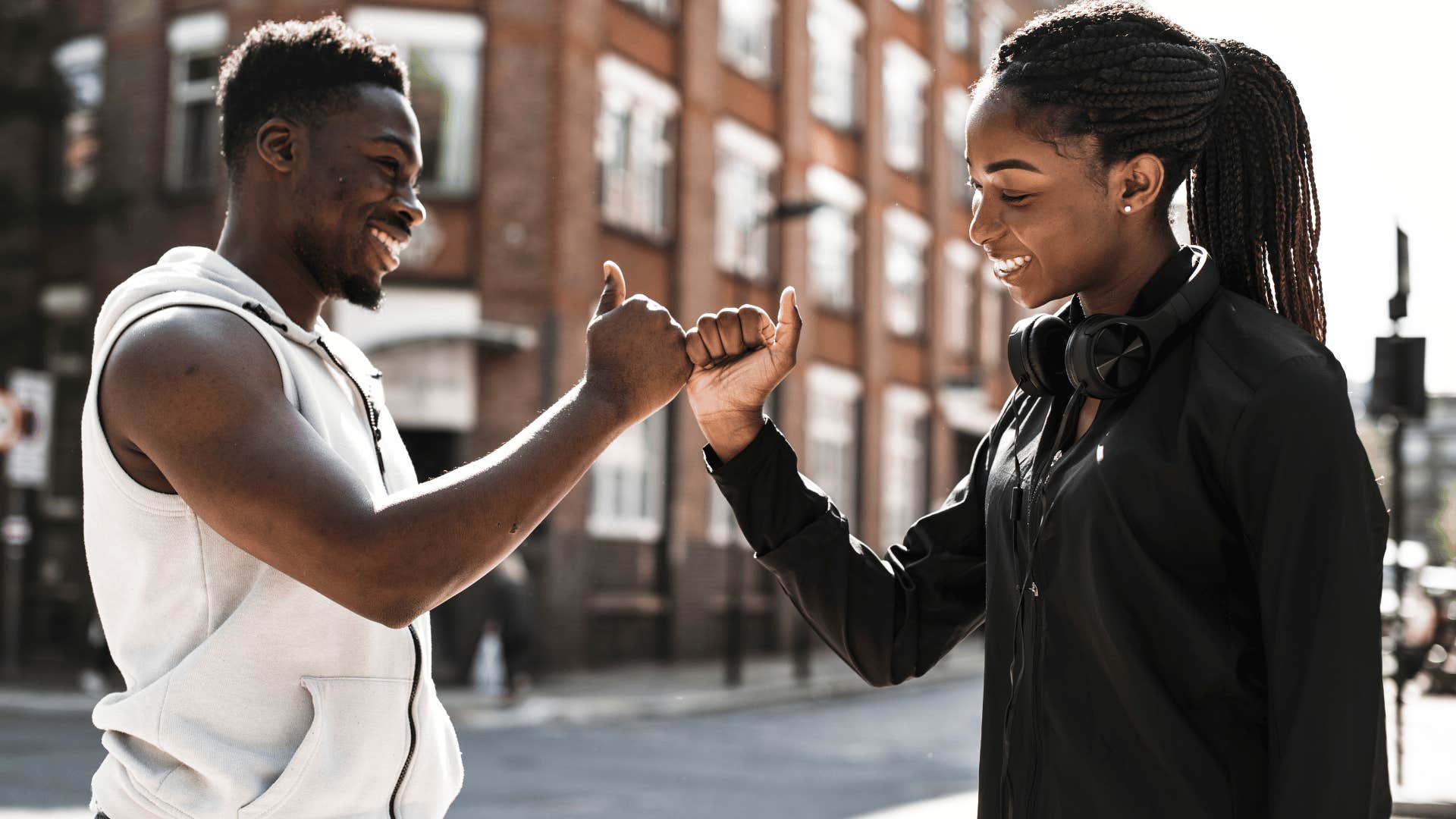
Trust and respect go hand in hand and both are earned by being consistent and showing up for people in the ways you say you're going to. No one likes a broken promise. Not keeping your word will erode someone's trust, and lead them to respect you less and less.
That's why people who get immediate respect follow through on what they say they will do. If they can't make it, they don't delay updating others as to a change of plans with no shame, blame or defensiveness.
The first step to being able to follow through on promises is to avoid making promises you know you likely won't want to keep. Hold yourself accountable when you can't meet someone's expectations by owning your mistakes.
11. Cultivate your compassion
 Roman Samborskyi | Shutterstock
There's a strong connection between empathy and respect, especially at work. One research study found that leaders who display empathy for employees help foster a happier and more supportive work environment, both of which increase the respect given and received on the job.
Sixty-one percent of workers polled in that research reported that having an empathic boss allowed them to be more innovative in how they approached their tasks; 76% said that when their team leaders were empathic, they felt more engaged, which is another sign of respect.
Being compassionate is always beneficial, as it allows us to see the world from other perspectives, which is a core factor of respect. And respecting others is key to earning it as well.
Alexandra Blogier is a writer on YourTango's news and entertainment team. She covers social issues, pop culture analysis and all things to do with the entertainment industry.
