
People Who Often Create Fake Scenarios In Their Head Usually Have 6 Hobbies That Calm Their Minds
 Yuricazac | Shutterstock
When times are dark, it's easy to disappear into a make-believe world in our own minds. This can be extremely comforting, at least until the bubble bursts and we're sat back in a desk or stuck in traffic.
Getting too caught up in the fake scenarios in our minds can be detrimental to our health, making them maladaptive, as the experts say. To combat this, serious daydreamers often find hobbies that calm their minds.
Six hobbies that calm the over-active minds of people who tend to daydream fake scenarios:
1. Meditation
 DimaBerlin | Shutterstock
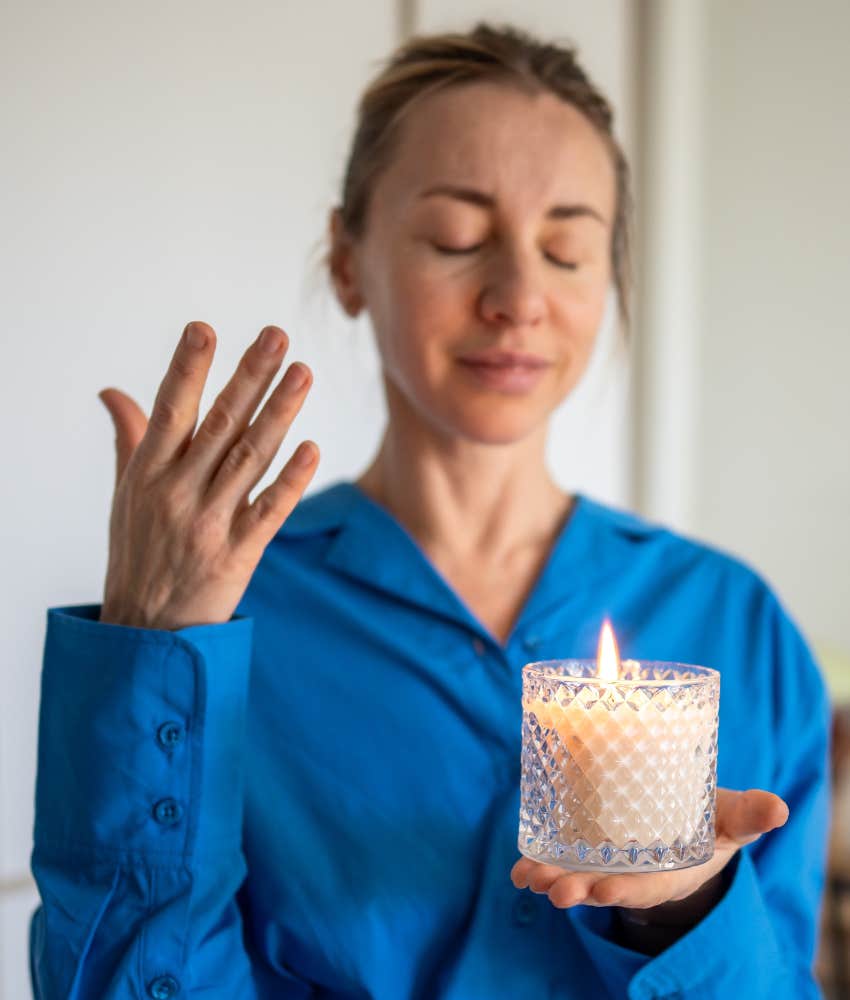
Meditation is an incredibly helpful tool for anyone to try. When meditating, a person is meant to create space for their mind to become clear of chatter. Usually this is done while they focus on their breathing. Usually, while meditating people want to be practicing diaphragmatic breathing, where you are filling your lungs with as much air as possible and strengthening your diaphragm.
The Mayo Clinic suggests meditation as a stress reliever, "During meditation, you focus your attention and quiet the stream of jumbled thoughts that may be crowding your mind and causing stress. Meditation can give you a sense of calm, peace and balance that can help both your emotional well-being and your overall health."
Other people find guided meditations highly helpful, and there are plenty of apps that can help serious daydreamers find these for free. And who doesn't love a free hobby?
2. Yoga
A lot of what is practiced in meditation is also practiced in yoga, especially the type often called Yin Yoga. Yoga originated in ancient India as a philosophical Hindu, Buddhist and Jain tradition. Today, Yoga is practiced worldwide as a spiritual and/or philosophical practice, a good way to exercise, and a way to achieve mindfulness.
Harvard suggests yoga as a relaxation technique to reduce stress, "The physical aspects of these practices offer a mental focus that can help distract you from racing thoughts." The skills someone can learn from praciticing yoga carry out into their daily lives, too, once they've been practiced regularly. For example, someone who practices yoga may react better when someone hurts their feelings or even if they stub their toe.
This can come in handy when these daydreamers catch themselves disappearing into fake scenarios in their minds. Yoga grounds people in the here-and-now.
3. Journaling
No, keeping a journal is not only for the teenage girls in all of the 90s sitcoms. Journaling is a great way to get out any thoughts that one may not feel they are able to go to anyone with. Journals are for everyone, and you don't have to let anyone read it, especially not your annoying little brother.
Journaling helps reduce stress. It gives one a positive outlet that a person may not have without judgment and it can be a way to check yourself when your mind is busy imagining worst-case scenarios.
4. Reading
 Yulai Studio | Shutterstock
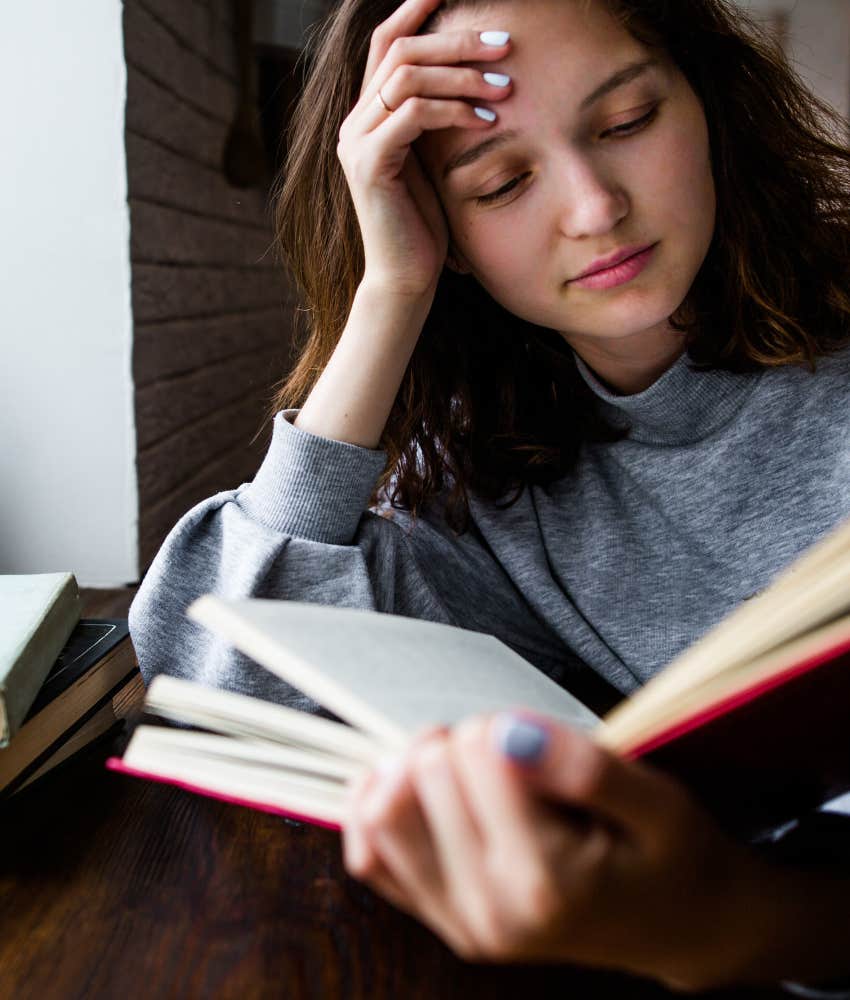
For people who find themselves disappearing into nightmare-like daydreams, jumping into a book for a few hours is a great way to keep the mind busy. Books give us a place to escape to that isn't harmful for our mental health to run to an escape.
Dr. David Lewis at the University of Sussex found that reading for as little as six minutes a day could reduce stress levels by 68%. Escapism is exactly what fake scenarios in our heads were made for, so why not pick up a book and read a really well-developed one instead?
5. Knitting
Before you scroll away, grandma hobbies are so in right now! The Cleveland Clinic even said in their article, How ‘Grandma Hobbies’ Can Help you Relax, "Dr. Albers said studies have shown that grandma hobbies, such as knitting, which include slow repetitive movements, can be relaxing."
Think about it. When a person is knitting they're pretty much just doing the same movement over and over and over again. Doing the same thing for a while just gets you on auto-pilot and it's comforting ... until you mess up a stitch (trust me, I crochet, it's devastating). Other alternatives might be cross-stitch and embroidery!
6. Painting
Many people wouldn't even think about considering painting because they don't think they're good enough. But consider this: who cares? If a person is doing something specifically to calm down and stress relief, does the end product being good really matter?
Ultimately, creative hobbies are fun, and they give a person a specific kind of mental engagement that forces a person to concentrate on what they're doing so they can't focus on their stressors. So even if a painting doesn't come out as beautiful as a Van Gogh, if it's lessening a person's stress, people probably think that's pretty beautiful.
Lyss Micalizzi is a writer covering human interest and pop culture, with a master’s in Literature and Culture, a bachelor’s in English Literary and Textual Studies, and over six years of writing and social media experience. Their work is driven by the belief that stories are what make us human.
