
People Who Are Totally Stuck In The 20th Century Usually Say 10 Casually Offensive Things And Think They're Compliments
 insta_photos | Shutterstock
 Have you ever received a compliment and ended up feeling worse about yourself? Even if that person probably meant for it to be appreciative and lighthearted, sometimes it lands wrong. Especially if that person is old-fashioned and stuck in the last century.
It may not have been their intention to hurt you, but certain phrases that used to be seen as compliments often sound offensive. Words carry such a big impact that even if these phrases were said to be kind, they still carry potential for harm.
People who are stuck in the 20th century tend to say these casually offensive things, thinking they're compliments:
1. 'You're so articulate'
 fizkes | Shutterstock
At first, this might sound like someone is praising how someone speaks and expresses their thoughts, but depending on who the speaker and receiver are, can be seriously offensive. It can be condescending, as if the person was expected to be low-IQ.
In a study published in the Journal of Business and Psychology, researchers found that women tend to experience negative outcomes when faced with condescending individuals compared to men. Women were also seen to speak fewer words after a man spoke condescendingly to them, compared with if a woman did it, but men's willingness to speak was seemingly unaffected by the same interactions.
There is also an historical and racialized element here. White people used to condescend to Black men and women by saying this, making clear that the speaker didn't expect intelligence and thoughtful language from them. All in all, it's best to avoid throwing this compliment out randomly, as it feels very 20th Century condescending.
2. 'You've lost so much weight'
 Monkey Business Images | Shutterstock
While this compliment is usually said with the best intentions by someone who consideres weight loss to be a good thing, it can often end up carrying a lot more baggage than intended. The other person can immediately feel offended that their weight is being looked at and pointed out, and may even think that the other person is trying to imply that being thinner is better.
"Commenting on people's weight, whether as a compliment or a critique, can contribute to body dissatisfaction, disordered eating, weight stigma, and even reinforce societal beauty standards that are harmful to mental health," explained licensed psychologist Rachel Needle.
"So the next time you're tempted to comment on someone's body, pause and consider: Is there something deeper, something more meaningful, that you can acknowledge instead?"
It can end up reinforcing these outdated beauty standards regarding weight and how a person's appearance should be, rather than focusing on their personality and who they are outside of their body.
There's also a possibility that they've lost weight because they experienced a trauma or tragedy, or even that they're ill. By commenting on their weight, you may be creating a highly uncomfortable environment.
3. 'You're not like other girls'
 GaudiLab | Shutterstock
Usually, this is seen as a compliment that a man will give to a woman as a way to differentiate her from other women. However, rather than being something that can make a woman feel good, it ends up suggesting that other women are the problem. This phrase suggests that most women are dramatic, superficial, rude, or some other trait that's considered undesirable.
"These 'not like other girls' antics tend to lean into historically [misogynistic] ideas about womanhood and femininity. They do this by reducing other women to stereotypes they believe men despise and positively contrasting themselves to those stereotypes," insisted cognitive psychologist Amber Wardell.
It simply plays into internalized misogyny and implies that there's some sort of right way to be a woman, while also causing unnecessary competition between women at the hands of a man. A more empowering compliment would be pointing out a specific personality trait in that specific woman without dragging other women into it or attempting to bring them down just to uplift that one woman.
4. 'You're aging so well'
 Prostock-studio | Shutterstock
People may mean well when they say this, attempting to point out how youthful and vibrant another person is. But because it's one of the unfortunate phrases that people who are stuck in the last century say that can come across as meaning, "You look old but not in a bad way!"
There is nothing wrong about aging, of course! In fact, it's a beautiful thing. It shows that you've lived a life, and considering many people don't have the luxury of growing old, it should be something to cherish instead of something to run away from.
"Aging, in many respects, is a self-fulfilling prophecy. The more we are told we are old, the more we believe we are. The older we feel we are, the older we act. The more we discriminate against older people, the more we reinforce the negative stereotypes and ageism. It is our choice to believe that we are feeble and dependent or strong and independent," pointed out philosopher Elaine Dundon.
We should instead be celebrating someone's strength and value that only becomes stronger the older they become, rather than being critical. And if they look happy and vibrant, try just saying that, instead.
5. 'I love how you just don't care what people think'
 Prostock-studio | Shutterstock
At first, this phrase could be seen as someone trying to uplift another person's confidence by pointing out that they seem unbothered by the things that others may think of them. But depending on the tone and context, it can end up feeling like a jab instead.
It's almost as if someone is being encouraged to feel embarrassed for the way they carry themselves instead of being proud that they're living an unconventional life and not fitting into a box. It's like saying, "You're weird and you don't care that you're weird!"
A better compliment would be to point out their strong sense of self and fearless attitude, instead of putting these implications that they're being criticized. "I love your style!" or "I admire how you honestly and thoughtfully share what you think" are much kinder ways to say this.
6. 'You're so brave for wearing that'
 Pixel-Shot | Shutterstock
This may sound like a bit of encouragement and trying to uplift an individual with what they're wearing, but it can suggest that what they're wearing is so out there and maybe even inappropriate that it's "brave" for them to have worn it in the first place. This is a very 20th Century thing to say, but now we know better.
This kind of compliment is often just a critique more than anything else. It's as if the person is defying expectations just by the clothes they chose to put on that day.
When someone decides to step out of their comfort zone and wears something they normally wouldn't, the best thing you can tell them is "You look good" or "I like your outfit." There's no need to say anything else or make them feel uncomfortable in what they have on.
7. 'You're smarter than you look'
 Gorodenkoff | Shutterstock
Oh, wow. If someone says this, they're just looking for trouble.
There's simply nothing flattering about telling someone that they're smarter than you originally thought they were. It implies that the person looks like they're stupid or uneducated, and that is a wild thing to even imply.
Sometimes it's treated as being a surprise or something to be impressed by, feeding into the stereotype that the more attractive a person is, the less competent and smart they must be.
It's such an outdated and harmful way of thinking. A person would rather be acknowledged for their intellect without being made to feel bad about it in the process. Intelligence is diverse across all types of people and how they look and present themselves. It isn't just something that only a certain type of person has.
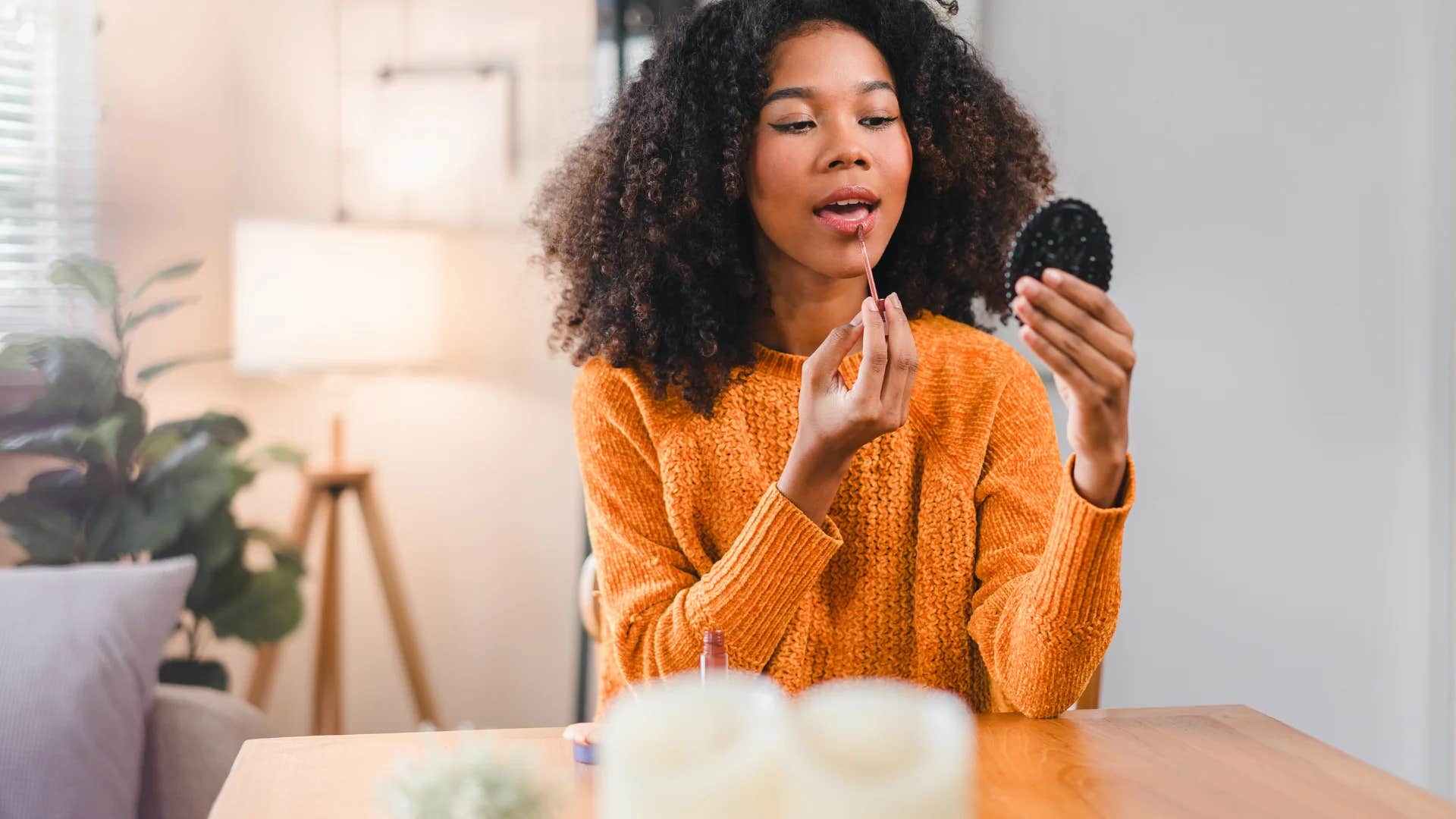
8. 'You're prettier without makeup'
 kenchiro168 | Shutterstock
There might be some well-intentioned appreciation behind telling someone that they look better without makeup, but it also implies that they don't look good in makeup or that their makeup is applied poorly. Also, it's nobody's job to determine what makes someone else look pretty.
Makeup is fun, and to dismiss someone from wearing it is to deny them a chance at self-expression. It's simply their choice and a backhanded compliment that they look prettier without it only reinforces this idea that there's something wrong with putting on a little bit of eyeliner or some concealer.
According to well-being coach Shira Taylor Gura, to avoid this, people should compliment something specific to the makeup a person wears, not their appearance. They can say something as simple as "I love that eyeshadow look. It really highlights your eyes."
But whether someone would prefer to be bare-faced or wear a full-face of glam, it's their decision and should be respected. If you have nothing nice to say, just keep it to yourself.
9. 'You don't come off as someone who struggles'
 Josep Suria | Shutterstock
This phrase implies that someone who's struggling needs to look a certain way. It can end up feeling dismissive of what someone is going through, and just because they seem put-together and steady, they simply can't be the type of person who's dealing with real problems.
While it may come off as complimenting someone's composure, it can end up invalidating their experience to the point where they don't feel inclined to share vulnerable aspects of their life.
The truth is, many individuals are just really good at putting on a mask to the rest of the world. They suffer in silence, whether it's because they don't want to burden others or because they just don't know how to talk about their issues.
10. 'You're nicer than I thought'
 IRA_EVVA | Shutterstock
There are a lot of people out there who have this aura about them that might be off-putting to others. However, the worst thing that you can do is actually acknowledge that and disguise it as a compliment.
It may seem flattering because you're saying that someone is actually nice despite previous preconceived notions, but it just shows that you were making baseless assumptions about a person before you actually met them.
This phrase just ends up putting more of the negative impression that you had of them rather than the positive. Especially for women and people of color, this backhanded compliment is often used against them and can be such an alienating and criticizing way to show appreciation for someone.
Nia Tipton is a staff writer with a bachelor's degree in creative writing and journalism who covers news and lifestyle topics that focus on psychology, relationships, and the human experience.
