
6 Everyday Tasks From The 80s & 90s That Sound Like Pure Punishment To Gen Z
 Master1305 | Shutterstock
 Growing up in the 1980s and 1990s was way different than a Gen Z childhood. You couldn't instantly look something up or order dinner from your phone and have it show up at your door. If you wanted to know where you were going, you had to actually open a paper map.
For Gen X, none of this necessarily felt difficult, it was simply life. You learned how to do things because there wasn't always another option. To Gen Z (and even some millennials), some of these everyday tasks from back in the day sound pretty awful.
Gen Z thinks these everyday tasks from the 80s & 90s sound like punishments:
1. Looking up a phone number in a giant phone book
 Ron Lach / Pexels
Imagine needing someone's phone number and having no way to Google it. You can't text a friend for the number or find it in you DMs. Instead, you could reach for the phone book and it wasn't exactly a small little booklet. In small towns they were a few hundred pages so imagine how thick they had to be in Los Angeles, New York or Chicago!
You'd flip through page after page of names, trying to find the person or business you needed. Then you'd write the number down or, if you were really committed, you'd memorize it. For Gen Z, the idea of having to physically search through hundreds of pages just to find a phone number probably sounds ridiculous and that's before considering the fact that phone numbers weren't automatically saved anywhere.
Your contacts list back then was a little booklet where you kept numbers, a Rolodex or your own memory. People learned the numbers of their parents, grandparents, friends, neighbors, and sometimes even their favorite restaurants.
As a member of Gen Z, I have to imagine there was also a strange amount of social anxiety involved in making a phone call, but Gen X people say there wasn't because you had so much practice. It was just part of life. You couldn't just text someone and wait for a response. You had to dial the number, listen to it ring, and hope the right person picked up and that sounds pretty rough for most Gen Zers.
If you called the wrong number? You had to deal with that too.
2. Using a paper map to figure out where you were going
Getting lost used to be a much more realistic possibility. There was no GPS calmly telling you to turn left in 500 feet, no blue dot showing exactly where you were, and there certainly wasn't an app recalculating your route every time you missed an exit. Just a friend or your parent in the front seat scolding you for not paying attention.
There was a map and sometimes, that map was enormous. You'd unfold it in the car and suddenly have a giant piece of paper covering your entire lap. Someone in the passenger seat might try to figure out which highway you were supposed to take while the driver attempted to follow directions they had written down beforehand.
Miss a turn? Good luck. You might have to pull into a gas station and ask someone for help.
For Gen Z, the idea of navigating this way can sound almost impossible. People actually had to know where they were going before they left, in great detail. Road trips required planning. You might write down the route, highlight roads on a map, or call someone at your destination and ask for directions. If you got completely turned around, you couldn't simply open an app and fix the problem.
Of course, paper maps weren't always terrible. They could help people develop a surprisingly strong sense of direction because they actually had to pay attention to roads, landmarks, signs and neighborhoods. There was definitely something stressful about realizing you had no idea where you were and knowing your only solution was figure it out.
3. Rewinding a VHS tape before returning it
 Ron Lach / Pexels
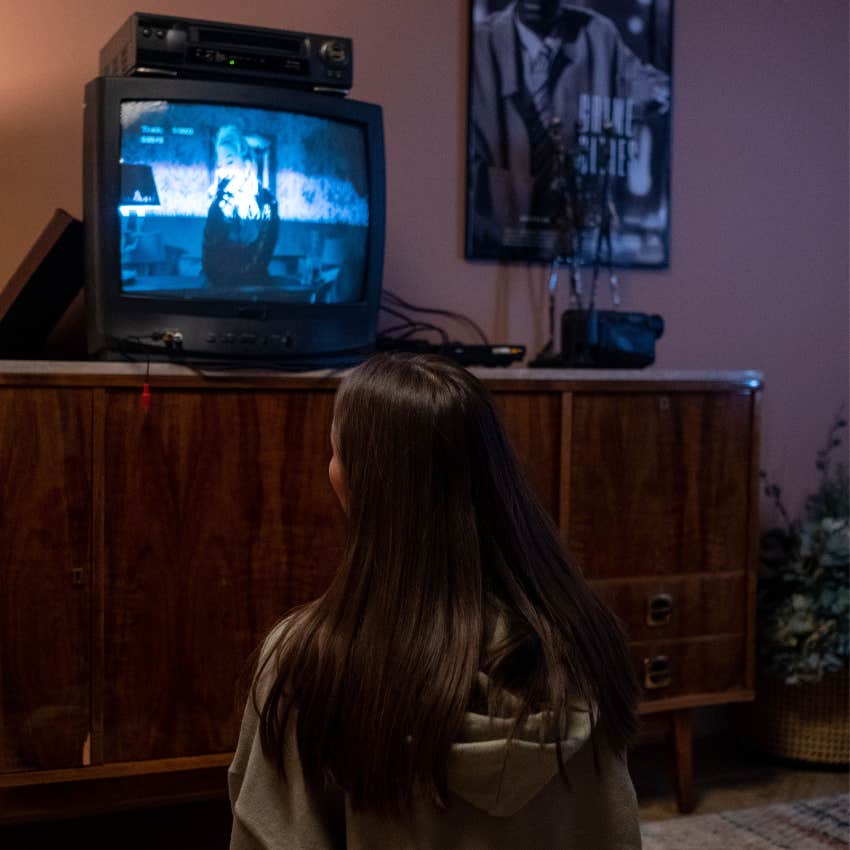
For anyone who grew up with streaming services, the entire concept of watching a movie that's on a literal tape is absolutely wild. The concept of rewinding a movie can sound almost comically inconvenient, but renting a VHS tape came with responsibilities. You didn't just watch the movie, you had to rewind it. Otherwise, you might have to pay a fee.
That meant sitting there after the movie ended while the VCR made a whirring sound as the tape slowly returned to the beginning. If you forgot, the next person to watch that tape was going to find themselves staring at the end credits instead of the beginning of the movie. Worse, sometimes they may put it on in a place you left off that's a total spoiler.
Today, you can open a streaming service and scroll through thousands of movies without leaving your couch. For Gen Z, that makes the idea of paying money to temporarily borrow one movie (and maybe not even the movie you went to the video store to rent), physically carrying it home, watching it, rewinding it, and then taking it back sound like an incredible amount of work for two hours of entertainment. Honestly they're not completely wrong.
4. Waiting for photos to be developed
Taking pictures used to require a surprising amount of patience. You could take the photo, but you couldn't immediately see it. There was no checking the screen afterward, retaking it 14 times, deleting the blurry ones, or editing the lighting before posting. You simply took the picture and hoped it turned out. Then you took the film to be developed. Sometimes that meant waiting days before finding out whether the picture was actually good.
Imagine taking a photo of your friends and not knowing whether anyone was blinking until much later, when that glossy 3"x5" or 4"x6" was in your hands. That also meant people tended to be more selective about what they photographed. Film wasn't unlimited and it could get pretty expensive to buy the film and pay for development.
That sounds completely foreign in a world where people can take hundreds of photos in a single afternoon without giving it much thought. But, on the up ide, you put thought and love into them and they didn't need to be perfect for you to absolutely love them.
Of course, the downside was that plenty of photos didn't turn out. If someone moved, the flash was weird, the picture was blurry, or half of someone's face was cut off, you didn't know until it was too late. Not to mention the bright red pupils which still don't make sense even to Gen Xers themselves.
But there's something kind of charming about that uncertainty. Sometimes you developed an awkward, blurry picture years later and still loved it because it captured a moment you had completely forgotten.
5. Calling someone's house and asking if they're home
For Gen Z, one of the strangest parts of life before cell phones might be the idea that you didn't necessarily have direct access to a person, you had access to their house. If you wanted to talk to your friend, you called their landline. Then someone else might answer and you had to figure out what to say. I
f you're lucky, you felt comfortable saying, "Hello, Mrs. Smith, this is MeShanda. Is Lisa home?" If not, you might have stumbled over your words. Then you waited. Sometimes you could hear the noises of their home in the background until your friend put the receiver to their ear.
There was no texting and waiting for a response or seeing someone's name pop up on your screen or asking via text if they had time to chat. You had to actually initiate a conversation, and every time there was a risk of them not wanting to talk.
Today, communication is much more private and convenient, but people who grew up with landlines developed certain social skills simply because they had to. They learned how to introduce themselves, how to politely ask for someone, how to have conversations without hiding behind a screen, and they learned the terrifying childhood experience of hearing a friend's parent say, "Who is this?"
6. Entertaining yourself when you were bored
 MART PRODUCTION / Pexels
There was a time when being bored didn't automatically mean reaching for a phone. You might have had a television, a few video games, or some magazines but eventually, those options ran out. Then you had to figure something out. You might go outside, ride your bike, call a friend, draw, read, build something, rearrange your room for absolutely no reason, or simply sit there and complain that there was nothing to do.
Boredom wasn't always something that needed to be fixed immediately, it was just part of the day. Without an endless stream of videos, notifications, games, and social media feeds, people's attention had more opportunities to wander. A child might stare out a car window for twenty minutes. A teenager might spend an afternoon listening to the same album and reading all the lyrics and notes on the jacket cover. Friends might sit around someone's house doing almost nothing and somehow have a great time.
That doesn't mean growing up without smartphones was automatically better. Technology has made life easier in countless ways, but constant entertainment also means people rarely have to sit with boredom anymore. B
oredom can sometimes be useful. It gives your brain room to wander. For people who grew up in the '80s and '90s, that was simply part of childhood. For Gen Z, it can sound like the ultimate challenge.
MeShanda Deason is a writer with a BFA in Creative Writing from Stephen F. Austin State University and minors in Business Communication and Literature who covers storytelling, culture, identity, and human connection across editorial, journalism, and marketing spaces.
