
Men Who Pull Away When They Feel Overly Pressured Usually Had These 11 Experiences When They Were Kids
 TheVisualsYouNeed | Shutterstock
 It's no surprise that childhood trauma and experiences often affect adult well-being, relationships, and mental health later in life, but from person to person, those outcomes can look wildly different. For example, some men who become avoidant and withdrawn when things feel stressful may be the same ones who lean into collaboration later in life. Usually, it's all dependent on how they learn, heal, and grow from their childhood circumstances.
Men who pull away when they feel overly pressured usually had certain experiences when they were kids. From having parents who made their love transactional to being pressured to meet unrealistically high expectations, these men spent their entire childhoods navigating pressure. And now, as adults, they lean on the same misguided coping mechanisms in their pursuit of comfort and peace.
Men who pull away when they feel overly pressured usually had these 11 experiences when they were kids
1. Their parents made love conditional
 threerocksimages | Shutterstock
As psychotherapist Kaytee Gillis explains, kids who grow up with parents who make love conditional learn that they're only worthy of basic affection and attention when they have something to offer. Whether that's excelling in every aspect of their lives, meeting their parents' needs, or making a compromise that works in their parents' interests, men who pull away when they feel pressured have integrated their self-worth into obligation.
Not only does this encourage men to make their own relationships transactional in adulthood, but it also chips away at their self-esteem and encourages behaviors like avoidance to cope.
2. They were punished for making mistakes
 Ekateryna Zubal | Shutterstock
According to a study from the University of Cambridge, many kids are subjected to harsh punishment as kids are at a greater risk for developing mental health problems as adults. Whether that's constant anxiety or avoidant tendencies, it's kids who felt the need to tiptoe around their own parents that enter adulthood with deep, internal, emotional struggles.
Men who pull away when they feel overly pressured usually had these experiences with parents when they were kids. They were expected to be "perfect" and never make mistakes, so as adults they struggle to accept discomfort or newness without worrying about consequences.
They weren't taught to lean into challenges and reframe mistakes as "opportunities for growth." They were taught to be afraid of the "not knowing" and uncertainty.
3. They were held to unrealistic expectations
 Prostock-studio | Shutterstock
Many kids who were expected to meet unrealistic expectations in academic environments and take on a million obligations with extracurricular activities enter adulthood with a sensitivity to pressure. As kids, they lived in a state of constant stress and anxiety, trying to "prove" themselves worthy of love, and as adults they use independence to cope.
They pull away when they feel overly pressured and make up for childhood pressures by avoiding too much responsibility. Of course, everyone has their own means of coping, but many men with this kind of specific childhood trauma are still affected in unsuspecting ways today.
4. Their caregivers were emotionally unstable
 BearFotos | Shutterstock
Whether it was having emotional breakdowns at home over little things or making the family's shared space feel constantly volatile, kids who had to "walk on eggshells" around their parents may have a complicated relationship with pressure and intense emotional burdens now. In many ways, these kids learned to survive by neglecting their own emotions and becoming overly concerned with their parents.
They were people-pleasers for a sense of security and made sure they did everything "perfectly" to avoid outbursts, and as adults that pressure still remains. It's no surprise that men who pull away when they feel overly pressured had these experiences when they were kids. They were burdened with constant pressure as kids, and now, their adult independence allows them to run from it, even if it comes at the expense of healthy relationships and maturity.
5. They were rarely praised
 DimaBerlin | Shutterstock
Hearing praise often boosts kids' resilience into adulthood, giving them the confidence and self-assuredness to accept discomfort, pressure, and change, even when it's difficult. However, men who pull away from pressure and avoid discomfort in adulthood often had adverse experiences with praise as kids. Not only were they rarely praised, but they were also often offered pressure and coldness in the place of warmth.
While it might seem insignificant, parental warmth actually plays a huge role in adult children's lives and well-being. If they weren't offered it early in life, they begin to frame relationships around obligation, rather than intimacy and connection. Men who avoid commitment and pull away when they feel overly pressured simply don't know how to make space for it, because they never learned how to.
6. They were raised around constant conflict
 fizkes | Shutterstock
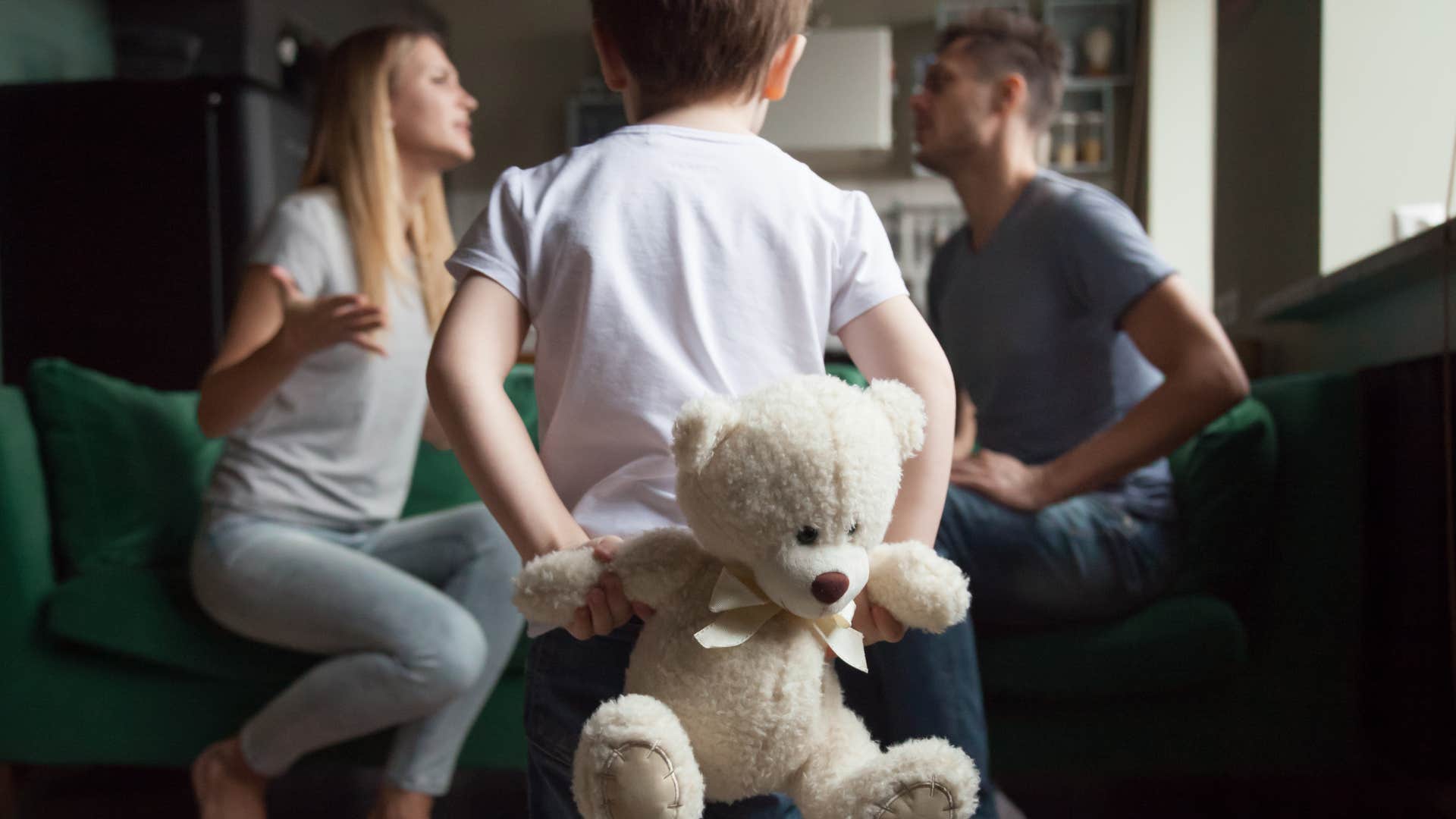
Being in a household defined by constant conflict or around parents with emotionally reactive behaviors can often negatively affect childhood development. Not only does it put them at risk for developing mental health problems with age, but it also encourages them to associate "love" in relationships with conflict, cruelty, and avoidance.
Especially for parents who don't resolve arguments or treat their partners with empathy while arguing around their kids, it's no surprise that pressure-driven, anxious conversations encourage adult children to run. Either they're used to tolerating misbehavior, or they're immediately triggered by the complicated emotions an argument or conflict brings up.
7. Their needs were minimized and overlooked
 Anastasia Shilova | Shutterstock
Unmet childhood needs can often encourage adult children to tolerate bad behavior in their relationships, use misguided coping mechanisms, and fall into avoidant routines. As relationship coach Annie Tanasugarn explains, these unmet needs create "holes" in emotional development for these kids, making operating daily life a challenge.
When they're faced with discomfort, pressure, and stress as adults, they may immediately shut down or run. Without the confidence, self-assuredness, and security that come from a childhood where needs were met and emotions were validated, they struggle to know where to turn.
8. Their feelings were constantly invalidated
 Motortion Films | Shutterstock
According to psychology professor Susan Krauss Whitbourne, parental invalidation from a young age can often spark mental health problems like BPD in adults later in life. From encouraging kids to operate from a place of emotional dysregulation to making their sense of self feel unstable, parents who put their own needs and struggles above showing up for their kids often pull away when faced with tension as adults.
They don't have the emotional intelligence or the secure foundation of self-esteem to lean into discomfort. Instead, they've been taught to suppress emotions and run from discomfort, largely because their parents didn't care enough to support them emotionally.
9. Their parents micromanaged their schedule
 VStock_A | Shutterstock
In contrast to many kids who feel parentified by absent parents in childhood, those with helicopter parents often have their independence shattered from a young age. They're reliant on parents and guardians to solve all their problems for them and to reaffirm all their decisions, so when they're faced with pressure in adulthood, they struggle to act independently.
Men who pull away when they feel overly pressured usually had these experiences when they were kids. They've been expected to rely on parents or conform to their every need for so long that now, in adulthood, they feel uncertain and helpless navigating difficulty and discomfort.
10. They were responsible for younger siblings
 fizkes | Shutterstock
According to a 2022 study, older siblings in tumultuous relationships and homes are far more likely to develop anxiety disorders from the unbalanced burdens they take on. Not only are they expected to be strong, mature, and independent in caring for their younger siblings, but they're also expected to overlook and minimize their own feelings.
In adulthood, when these sibling relationships often feel strained and tense, these men may be more likely to live isolated routines. They prefer to cling to their autonomy and independence as a means of control, coping with the lack of control and constant anxiety they experienced as kids.
11. Their household was overstimulating and stressful
 Ann in the uk | Shutterstock
From having emotionally reactive parents to existing in an environment riddled with financial burdens and stress, men who pull away when they feel overly pressured often had these overstimulating and stressful experiences growing up. They never knew what to expect, so their nervous system was always on high alert.
As adults, with the power to avoid things that bring up similar feelings of anxiety and run from situations that make them feel the same kinds of pressure, they may feel fleeting kinds of comfort and security. However, this kind of avoidance only amplifies their life stress, as a study from the Journal of Consulting and Clinical Psychology suggests.
Zayda Slabbekoorn is a senior editorial strategist with a bachelor's degree in social relations & policy and gender studies who focuses on psychology, relationships, self-help, and human interest stories.
