
If You Weren't Taught 11 Basic Life Skills, Your Parents Messed Up Big Time
 Trzykropy | Shutterstock
 When you become a parent, you know you'll have a lot of responsibilities, like providing food and shelter. What many parents fail to realize is that there are basic life skills they need to teach, too. Ones they likely never imagined. Sadly, lots of parents mess this up and send kids into the world ill-prepared.
Becoming a self-sufficient adult isn’t easy, but it's an essential part of an adult's well-being. But it's little easier when your parents guide you trough things like how to show gratitude and, well, how to clean a toilet.
If you weren't taught 11 basic life skills, your parents messed up big time
1. How to make appointments
 Drazen Zigic | Shutterstock
In theory, making calls to set up appointments is simple, but many young adults never learned how to handle that part of their lives. When phone anxiety is combined with the complexity of the healthcare system, scheduling doctor’s visits can feel more complicated than it really is.
Managing your schedule and following through on the more administrative aspects of adulthood is a learned skill. If your parents made all your appointments for you, they didn’t do a good job imparting that small yet crucial life skill. Most of the time, it was just easier for your parents to do it for you rather than push you to do it.
Your lack of proficiency in that arena can make you avoidant, so you don’t visit the doctor regularly. Ignoring minor health issues can be detrimental further down the road. Some young adults are taking telephobia classes, it's gotten so bad!
2. How to listen to others
 Flotsam | Shutterstock
Your parents made a huge mistake if you weren't taught to listen when others speak. It might seem like a small skill, but being a good listener is essential in almost all relationships.
After all, listening involves much more than just sitting quietly and nodding along. It’s more than just waiting for your turn to talk. It's asking questions and making sure you're understanding correctly so you know you're truly understanding.
You can’t fully know another person without hearing what they say, and good listening skills should be on every parent's list of things to focus on when raising kids.
3. Proper table manners
 J K Daylight | Shutterstock
If you weren’t taught table manners, your parents didn’t raise you very well. Everyone has their own measure of what they deem polite, yet knowing basic etiquette lets you share a meal without turning other people’s stomachs.
The world has changed drastically since Emily Post, the queen of manners, wrote her book “Etiquette” in 1922. While the details of proper etiquette have evolved, the core elements of consideration, respect, and honesty remain the same.
Some table manners are more intuitive than others, like chewing with your mouth closed, using a napkin, and asking for out-of-reach items to be passed to you. Regarding more modern dilemmas, like phone etiquette, today's Emily Post recommends turning your phone off, storing it away, and waiting until you’ve left the table to check it.
“Bring your best self to the meal,” Post concludes.
4. How to shake hands properly
 Inside Creative House | Shutterstock
You can’t make a second first impression. It sounds like a cliche, but a solid handshake sends a powerful message about your personality upon meeting someone new. Shaking hands properly is a more delicate situation that many people realize, and if you weren’t taught that small skill, you may need to start practicing it now.
According to a study reported by the American Psychological Association, a handshake provides valuable information that can benefit people or harm their first impressin. Researchers measured various aspects of handshakes among men and women, assessing strength, vigor, duration, eye contact, and completeness of grip.
The study concludes that a firm handshake is directly correlated with a favorable first impression, noting that “those with a firm handshake were more extraverted and open to experience and less neurotic and shy than those with a less firm or limp handshake.”
5. How to cook basic meals
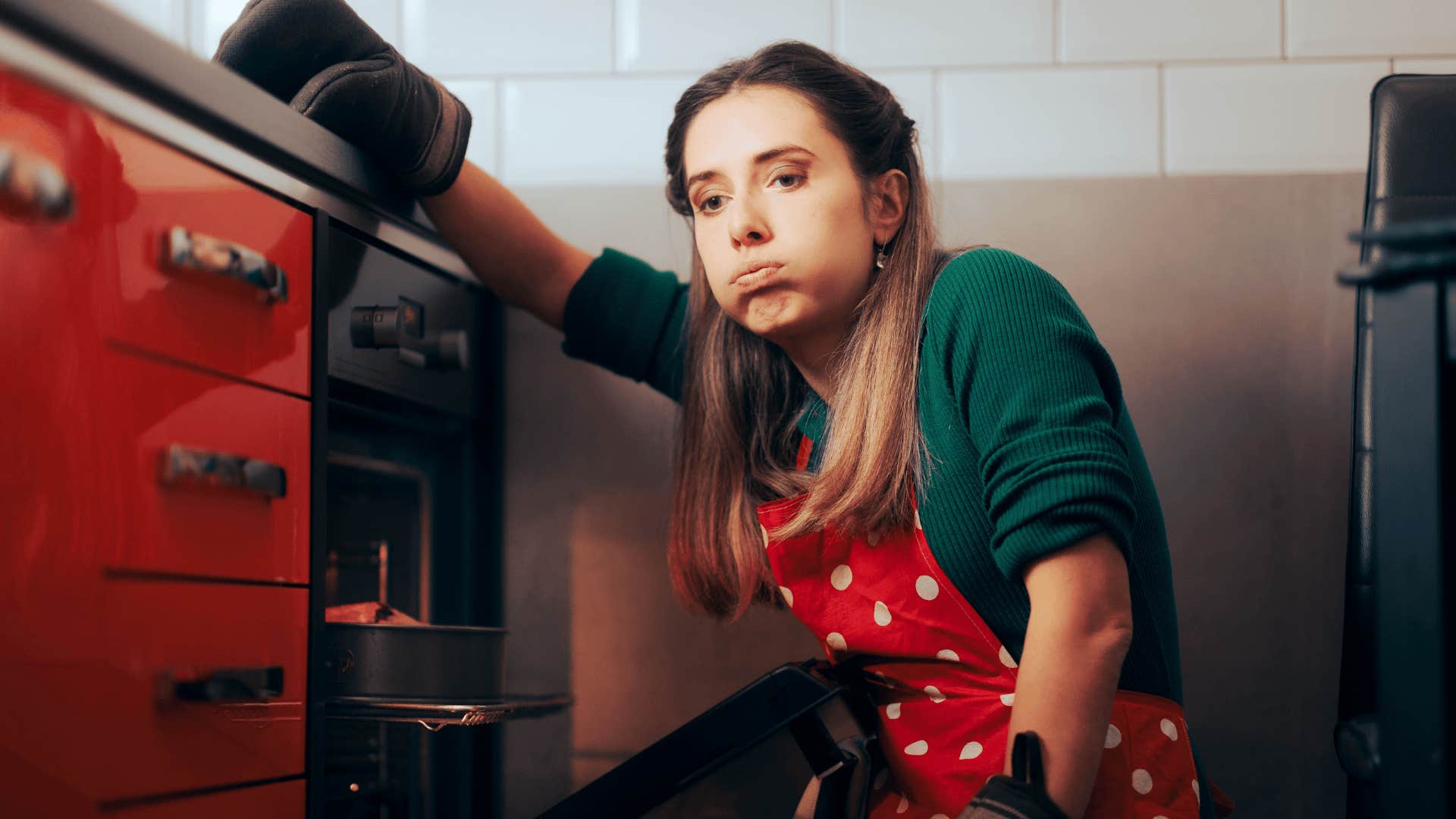 Nicoleta Ionescu | Shutterstock
If you don’t know your way around a kitchen, your parents messed up. Being able to feed yourself well is part of being an adult, and this is true for both men and women.
Knowing basic kitchen skills shows that you can take care of yourself. It shows you’re an independent, self-sustaining person who doesn’t survive on peanut butter sandwiches. It shows potential partners that you aren't looking for someone to "parent" you in a relationships.
You don’t have to be a Michelin-star chef, but you do need to master a few recipes. Food does more than just nourish our bodies; it also nourishes our souls. Sharing meals with other people is a love language, so knowing your way around the kitchen is essential.
6. How to do laundry
 Stock-Asso | Shutterstock
Doing laundry is one of those tasks that seems more straightforward than it is, but if you weren’t taught how to do it, your parents messed up big time. All too often, parents take on continued responsibility for washing their kids’ clothes, even when their kids have become competent teenagers who can clean up after themselves.
For every young adult who was never made to do their laundry, they make a mistake of doing a load of lights with one bright red sock mixed in, turning everything pink. Or else they put the detergent in the fabric softener dispenser and their clothes come out coated in soap.
They're not alone. The American Cleaning Institute (yes, that's a real organization!) reports that 64% of parents whose kids are going to college are concerned their kids don't know how to properly use cleaning products.
So, yes, you're a step ahead if your parents showed you the difference between stain remover and regular detergent. If you know when to use cold and hot, and how to make sure things actually get clean, you're already a winner.
Pitching in around the house is a valuable way for parents to teach their kids to be responsible for themselves. Learning to do laundry is an especially valuable skill, as it demonstrates that you care about your clothes and how you present yourself to the rest of the world.
7. How to save money and be financially secure
 Pormezz | Shutterstock
Talking about money is still considered a taboo subject, which is why so many people struggle to gain a sense of financial literacy. If your parents didn’t teach you how to budget and save money, they didn’t do a good job raising you.
According to the Financial Education Evaluation Toolkit, young adults between 19 and 29 face major financial decisions despite lacking experience and financial knowledge. This transitional period puts them at risk of making ill-informed decisions that can negatively impact their future economic stability.
One financial study found that people who take a personal finance course in college increase their investment knowledge, which makes them more likely to increase their savings. Education creates access, and finances are no different.
8. How and when to tip service workers
 Rommel Canlas | Shutterstock
Behind every hot take on how out-of-control tipping culture has become, a service worker is trying to support themselves from whatever chunk of change strangers feel generous enough to give them. In many states, people who receive tips, like servers, get paid below minimum wage. Without tips, these folks wouldn't have any take-home pay.
Part of adulthood is recognizing that we’re all connected and that our actions impact us. You might save a few dollars by not leaving a tip, but you also have to consider what message you're sending to the person bringing you food, so you don’t have to cook.
Entitlement doesn’t look good on anyone, but moving through the world with a generous mindset will open doors you didn’t even know were closed. The Greater Good Science Center even notes that there is a lot of documented science behind the benefits of being generous!
If you believe in manifestation, generosity is a great place to start. If your parents taught you to prioritize generosity, this is just one area where you can exercise this.
9. How to own your mistakes and apologize
 carballo | Shutterstock
We live in a world where perfection is prioritized, even though it’s impossible to achieve. This societally held perfectionist mindset is detrimental, preventing people from trying new things and accepting their fallibility.
According to the Institute of Child Psychology, “children receive minimal exposure to the stress of making mistakes,” putting them in the category of being “failure deprived.” When kids don’t learn to handle mistakes, they feel extreme duress when facing simple challenges.
It might be painful for parents to stand by and witness their kids making mistakes, but “pain is where children and adults experience growth and is the catalyst for molding integrity and character. “
“One of the most empowering gifts we can give our children is to actively talk about how important making a mistake is,” the Institute of Child Psychology explained. “When we talk about the power of making mistakes, it stops mistakes from becoming a shameful experience and instead shines the light on the potential embedded in a mistake.”
You got especially lucky if your parents modeled this for you by talking about what they learned from mistakes. When they apologized to you, in particular, you learned a profound lesson about being a stand-up human being and accountability. The benefits of learning how to apologize through modeling are truly endless.
10. How to care for shared spaces
 GaudiLab | Shutterstock
One of the biggest, and most important lessons a kid needs to learn before going to college or out into the world is how to care for shared spaces. Too often, young adults enter the world without realizing how all the dishes get clean or how their laundry ends up in the hamper. This is a big way parents mess up, often thinking it's easier to clean up after their kids than teach them how to do it (and then enforce them doing it).
Of course, they know intellectually how stuff gets clean, but somehow they don't connect their behavior to the overall cleanliness of a space. That's why they need to start learning this basic life skill from their parents early. This list of key home-care skills includes: Cleaning up your dishes right after you make them, putting laundry in the hamper (and putting those items away after washing), scrubbing the toilet when you've made a mess of it (or at least weekly!), rinsing the sink after brushing teeth or shaving, and so much more.
Parents do their kids a major disservice when they neglect to teach them to be responsible for their belongings. Of all the challenges kids face when they head out into the world, they should know how important it is to leave places better off than they found them.
11. How to show gratitude
 AYO Production | Shutterstock
Most parents teach their kids to say “please” and “thank you,” but their education in expressing gratitude often stops there. If you weren’t trained to appreciate and acknowledge what you’ve been given, your parents messed up. You need this skill and it takes practice to get good at it.
For children to express gratitude, they must develop skills like perspective-taking and emotional knowledge.
Researchers from UNC-Chapel Hill have determined that the experience of gratitude has four distinct parts: “What we notice in our lives for which we can be grateful, how we think about why we have been given those things, how we feel about the things we have been given, and what we do to express appreciation.”
Expressing gratitude requires us to step out of our own experience and reach across the divide to connect with others on a deeper level.
Alexandra Blogier, MFA, is a staff writer who covers psychology, social issues, relationships, self-help topics, and human interest stories.
