
If Your Dad Has These 11 Odd Habits, He's More Lonely Than He Admits
 Krakenimages.com | Shutterstock
 While strong relationships with social circles and regular family contact are often associated with less loneliness in aging parents, alongside natural life transitions, aging, and disconnection, loneliness isn’t uncommon amongst families as people get older. Whether it’s missing their adult children or struggling to maintain a community of social connections, when loneliness thrives, personal hobbies, habits, and daily routines shift.
Many of these behaviors, like texting more often or spending more time watching TV, are symptoms of loneliness, but if your dad has these odd habits, he’s lonelier than he admits. These rituals and routines keep him stuck in a cycle of loneliness, amplifying emotional turmoil and sabotaging any room for connection to ease feelings alone.
If your dad has these 11 odd habits, he’s more lonely than he admits
1. He leaves the TV on all the time
 nimito | Shutterstock
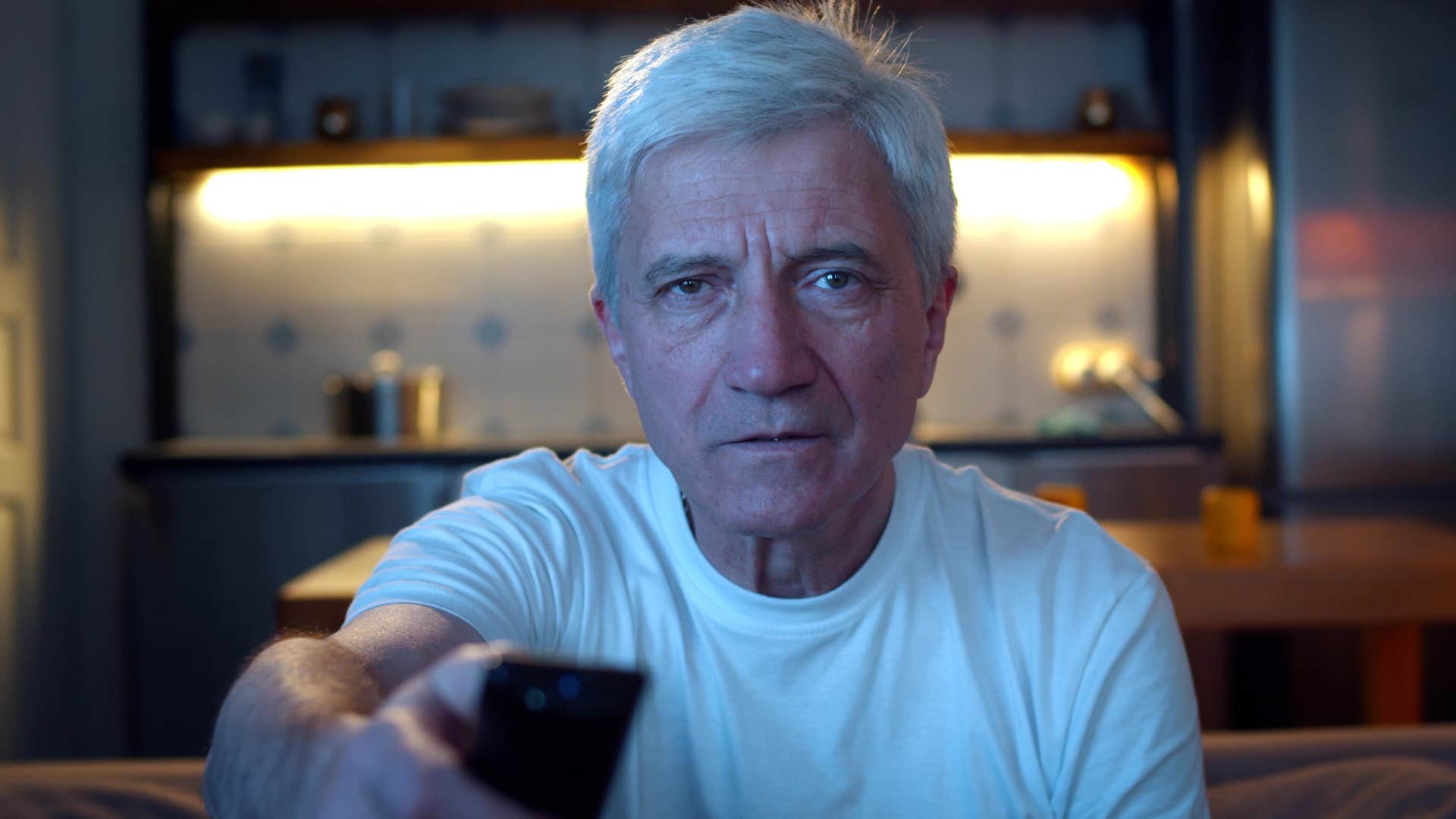
People struggling with loneliness often use background noise and leisure TV watching as a way to cope with their isolation. Whether it’s a sense of connection with stories on screen or a way to fill the quiet that bothers them at home, this screen time can actually help aging adults cope.
If your dad has these odd habits, he’s lonelier than he admits, but as long as he’s balancing screen time with social connection, it’s not necessarily a bad thing.
2. He checks in over text more often
 mimagephotography | Shutterstock
Especially as their kids get busier and parents have to start scheduling quality time with their kids, it’s not surprising that their phones become the center of the relationship. They text more often, call their kids, and use social media to stay connected, even if they’re only coping with a deeper kind of loneliness under the surface.
While it might provide a fleeting sense of comfort to fathers struggling with loneliness to use their phones for superficial connections, a study from Acta Psychologica argues that this kind of screen time only amplifies isolation. It sparks a cycle of struggle that can be even harder to break free from without support.
3. He always offers help
 Prostock-studio | Shutterstock
Even if it’s fixing random things at your home or offering to run errands when you’re visiting, if your dad has these odd habits, he’s more lonely than he admits. He’s always trying to spend more time together and make himself feel “needed” to the adult kids he misses, even if he’s not entirely conscious of it.
According to a study from the Journal of Adolescence, feeling “needed” is important for psychological well-being at any age. For parents grappling with disconnection from their families, it’s even more important — especially when the loss of their intense parenting identity comes with adult children's autonomy.
4. He makes space for sentimental conversations
 imtmphoto | Shutterstock
A study from the Gerontologist found that loneliness often sparks a feeling of meaninglessness in life that’s especially hard for aging parents to grapple with. They’ve always found meaning in a parenting identity or in taking care of their kids, so when keeping up with this relationship becomes a distant choice, they feel more alone and isolated.
That’s why it’s not surprising that a sentimental attitude follows aging adults alongside their loneliness. They are searching for meaning, even if it’s in nostalgia, bringing up old memories, or seeking out more intentional quality time with their adult children.
5. He becomes overly interested in your life
 PLotulitStocker | Shutterstock
Whether it’s following up to wish you luck on a work meeting you mentioned in passing or checking in more often about your life, if your dad is more lonely than he admits, he’ll become overly interested in your life.
Considering loneliness can be as consequential for long-term health as other bad habits, they have to find ways to cope, even if they don’t make sense. They start relying on their phones for connection, and even making their kids feel guilty with random texts, all to find a bit of solace from the isolation that defines their daily lives.
6. He sticks to a strict routine
 shurkin_son | Shutterstock
While loneliness interventions and coping strategies may help to ease a person’s struggle, the only way to truly deal with isolation and loneliness is to deal with the core issue. Whether it’s feeling disconnected from their families or struggling to build community, the only way to grapple with loneliness at its core is to find ways to mediate these larger issues.
So, if your dad has odd habits like sticking to an incredibly strict routine and prioritizing it above all else, he may be grappling with his loneliness in fleeting moments, but unless he gets realistic about the core issue causing him anguish, nothing will change.
7. He seems more energized when company is around
 Aleksandra Suzi | Shutterstock
There’s a reason why social connection is inherently linked to happiness, mental health, and general physical well-being — it adds a lot of value to our lives. So, if your parent is struggling with loneliness, they’re not only missing out on the joy of social connections and relationships, but they’re putting their whole well-being at risk.
That’s why spending time as a family or having quality time together with his friends is often energizing. They’re an escape from the quietness of isolation and the struggle of loneliness, even if they’re waiting around the corner. So, if you notice your dad is far happier and noticeably energized when other people are around, chances are he’s more lonely than he admits.
8. He rarely asks for help
 Camand | Shutterstock
Despite offering it to other people all the time, fathers struggling with loneliness find it difficult to seek out support and help themselves. Even though asking for help can bolster their relationships and create new avenues for social connection, they tend to bottle up their struggles to avoid worrying others or becoming a burden.
The anxiety that loneliness often sparks in people’s daily lives can play a role in this isolation. According to a study from Aging & Mental Health, anxious people often worry about becoming a burden to the people in their lives more than others, causing them to suppress complex feelings and isolate themselves, even when they’re struggling.
9. He talks more about the past
 BearFotos | Shutterstock
Nostalgia and living in the past tend to be common coping mechanisms for people struggling with loneliness, even if it keeps them living outside of the present moment. If your dad has certain odd habits, like sending more nostalgic photos or posting more about his childhood, chances are he’s more lonely than he admits.
The past, when he felt better and had more social connections thriving without much effort, feels comfortable, instead of leaning into the future, where things feel uncertain and scary. Especially for aging men who often struggle with asking for help and leaning into vulnerability, suppressed emotions can also add to the chaos of this isolation.
10. He shows up early to everything
 fizkes | Shutterstock
If your dad starts to show up earlier to family gatherings and holiday events, he might be more lonely than he admits. Especially if these things are some of the only social times he looks forward to, he might show up early to get out of the house and soak up as much of the connection as possible, even if he’s not entirely conscious of it.
While “digital bridges” to social connection through their phones can ease feelings of isolation in the moment, they’re just not the same as spending time with friends and family in person, especially to this generation of aging adults who thrive alongside face-to-face communication.
11. He stays up late
 Lysenko Andrii | Shutterstock
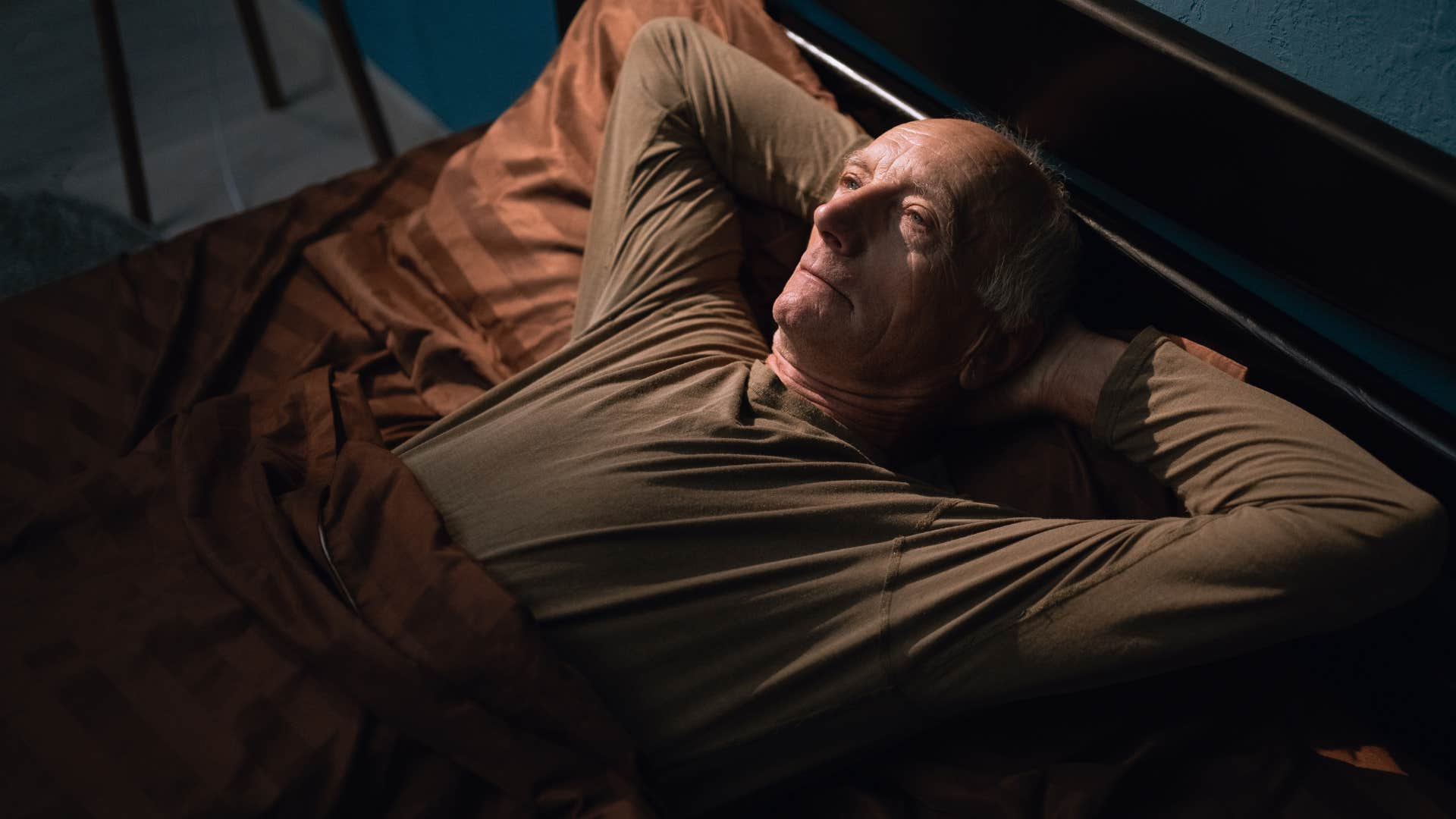
Avoiding the quietness of bedtime and distracting themselves with mindless entertainment at night are common amongst people struggling with loneliness. They’d prefer to lean on distractions for as long as possible, tiring themselves out before going to bed, so the quietness and isolation of falling asleep isn’t too agonizing.
While this odd habit may be hard to catch on to for adult children not spending a lot of time with their parents, it’s a “red flag” that they can occasionally notice from late text messages and holiday rituals.
Zayda Slabbekoorn is a senior editorial strategist with a bachelor’s degree in social relations & policy and gender studies who focuses on psychology, relationships, self-help, and human interest stories.
