
Parents Whose Kids Have Zero Manners Usually Get 6 Specific Things Wrong
 Savicic | Shutterstock
 Parents are responsible for teaching their kids good manners. That doesn't mean they are pros at the lessons, though.
Kids aren't born knowing they shouldn't talk with their mouths full. Their overtired, running-on-empty parents have to teach them, and it's understandably not always a priority. If parents keep putting off the task or keep making the same mistakes when trying to teach them, their kids will never learn these important social norms, and they'll grow into adults who don't always make the best dinner companions.
Specific mistakes parents whose kids have no manners keep making:
1. They don't model good manners for them
 AJR_photo | Shutterstock
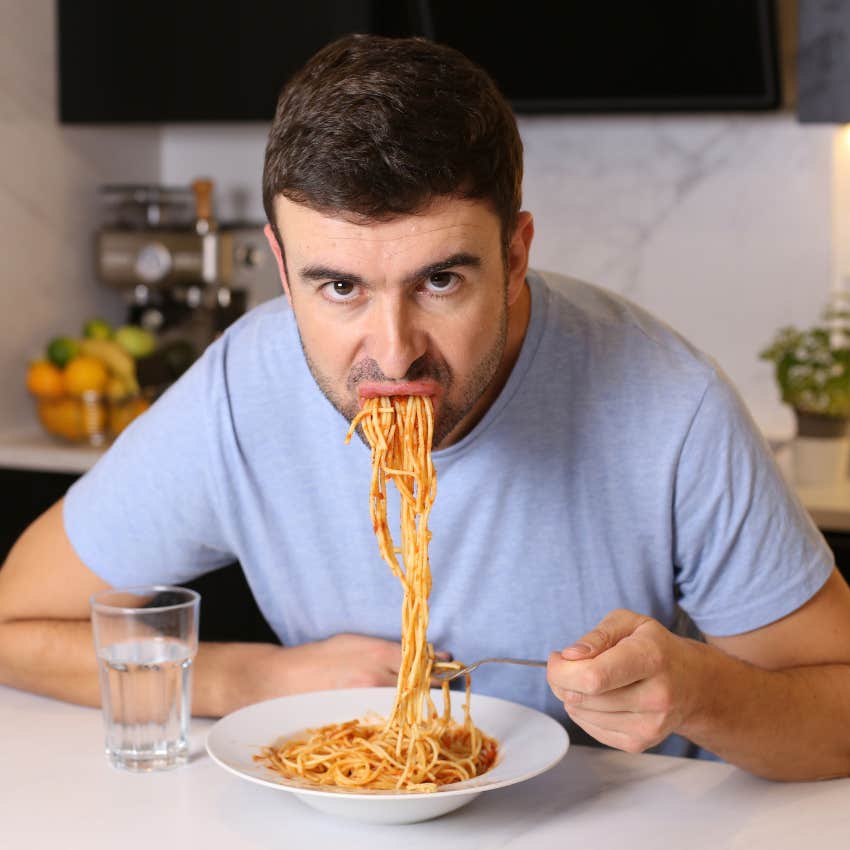
Using their phone at the dinner table. Talking over their spouse. Not covering their mouth when coughing. These are all small moments, but they add up. Children watch what their parents do, and they mirror.
According to the American Academy of Pediatrics, "Children learn by watching everyone around them, especially their parents. When you use manners and good coping strategies, you teach your children to do the same." So if a parent is trying to teach their children good manners but practices bad manners themselves, they are setting themselves up for failure.
2. They don't explain why good manners matter
Children are learning about themselves and what it means to be human every single day. They may understand that manners matter to their parents because their parents make a big deal about them, but they may not understand why manners matter in general.
Child development expert Gayle Whitworth explained that it's important to "Share which manners are most important to your family values." Explaining why manners matter shows children that those manners should matter to them, too.
3. They have other important people around their kids that don't reinforce the lessons
 Miljan Zivkovic | Shutterstock
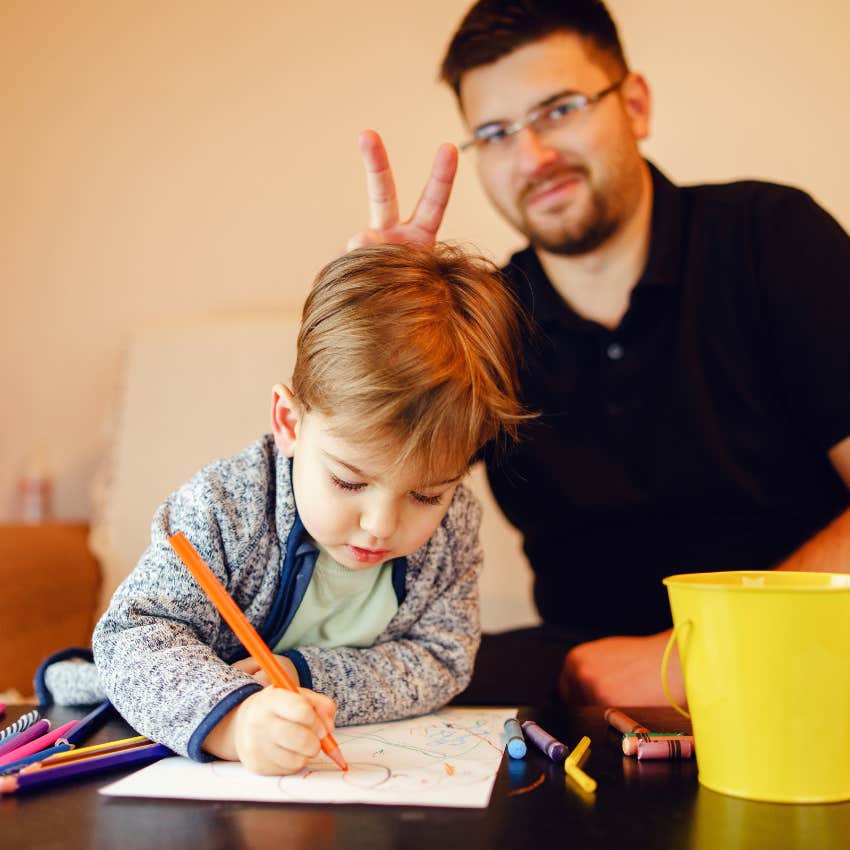
Everyone has a silly uncle or a younger cousin who doesn't worry about whether a child is behaving well. In fact, if a child acts crudely, they will probably laugh, encouraging the bad-mannered behavior.
This is a problem because teaching manners is a community effort. We all know the old saying, "It takes a village to raise a child." Children being raised around family and friends who do not support the development of good manners will be to their detriment.
4. They aren't consistent in correcting bad manners
Teaching children is all about repetition. This is one of the reasons why children love doing things over and over (and over) again. Children have incredible muscle memory, and that includes the muscles in their brains.
Psychology professor Vanessa LoBue, Ph.D., stressed that repetition is integral to learning for young kids. She explained, "When kids ask to watch the same movie they’ve already seen a hundred times or read the same book before bed for the 10th night in a row, it might just be their way of learning the storyline. And although it might be boring or even annoying to do the same thing over and over and over (and over and over) again, this extra practice might be just what children need to learn new things."
5. They aren't praising their progress
People grow much more from praise for work they did well than from criticism for work they failed on. This is no different for children.
Dr. Joseph Shrand, an instructor of psychiatry at Harvard Medical School, shared, "Do not dwell too much on the behaviors or manners they are still working on. It is much more rewarding to be amazed at who your child is than disappointed in who they are not."
6. They believe the problem is other people's kids
 George Rudy | Shutterstock
It's only natural for parents to put their kids on a pedestal and point fingers at those ill-mannered kids at school or the rowdy neighborhood kids down the street. It doesn't exactly help with teaching them to say please and thank you, though. It's hard to hold up a mirror and see your own faults, but at some point parents have to realize that if it walks like a duck, and it talks like a duck, the duck is probably in their house.
This thought process is so pervasive that the University of California, Berkeley reported that in the 2023 National Parent Survey on Raising Good Kids, 38% of parents reported their children lying to them and 42% reported their children being disrespectful of others. Meanwhile, 85% said that children today are not honest and 83% said that children only care about themselves.
Seems to be a duck afoot.
Lyss Micalizzi is a writer covering human interest and pop culture, with a master’s in Literature and Culture, a bachelor’s in English Literary and Textual Studies, and over six years of writing and social media experience. Their work is driven by the belief that stories are what make us human.
