
Someone Who Was Emotionally Neglected As A Kid Usually Has To Unlearn 10 Things In Adulthood
 Krakenimages.com | Shutterstock
 Growing up in an emotionally neglectful household (Childhood Emotional Neglect, or CEN) takes its toll on you. As a psychologist specializing in CEN, I see the painful, long-lasting effects. When, as a child, no one notices enough what you are feeling or what you need, you receive covert messages that follow you throughout life.
Silent, unintended, and usually invisible, these messages take root early and well. As you form relationships and fall in love, they prevent you from valuing yourself. The only way to reduce their power over you is to realize they are there and how you got them. And to make a conscious choice to stop letting them hold you back and push you down.
10 beliefs emotionally neglected children have to unlearn as adults:
1. It’s not good to be too happy or too sad
 Prostock-studio | Shutterstock
As a child, you naturally had intense feelings, as this is how all children are wired. Exuberant one moment, intensely frustrated the next, you needed someone to teach you how to understand and manage your emotions.
What you got instead was a covert message that your emotions were excessive. What you learned was to dampen your feelings, not the skills you needed to manage them, as explained by Sara R Berzenski, California State University.
2. You are overly sensitive
As a child, you felt upset when things made you upset. You naturally felt angry when you were hurt. What you needed was for your upset feelings to be soothed by a loving parent, so you could learn to soothe yourself.
What you got was a message that your feelings were a weakness. What you learned was to judge yourself for having them.
3. Your needs and preferences are irrelevant
As a child, you had needs, just as all children do. You had things that felt important to you and things that felt good or bad to you.
You needed someone to notice or to ask what you needed or wanted so you would feel you mattered. Frances K. Grossman, Ph.D's research on adult survivors of childhood emotional abuse and neglect supports that when no one asked you enough, you learned instead that your preferences don’t matter.
4. Talking about a problem will unnecessarily burden other people
5. Crying is a weakness
 Krakenimages.com | Shutterstock
All humans cry and for a reason. Crying is a way to release and process your emotions, as shown in studies conducted by Professor Asmir Gračanin. As a child, you cried sometimes (maybe often). What you needed was for this to be okay.
Instead, your family didn’t know that crying has a purpose, so they ignored your tears or shamed you for having them. Perhaps they never showed tears themselves. You learned that crying is negative and should be avoided.
6. Others will judge you for showing your feelings
Were you judged for showing feelings in your childhood home? This powerful message has been carried forth with you.
“Hide your emotions from others” is the message, “or others will think less of you.” Or worse, they will use your feelings against you.
7. Anger is a negative emotion and should be avoided
As a child, of course, you often felt angry. But this feeling is a natural part of life. As a child, what you needed was help to name, understand, and manage your anger.
Perhaps instead, your anger was squelched or overwhelmed by another’s. Maybe you were punished for showing it. Kimberly Shipman of Kempe Children's Center suggests that what you learned was that anger is bad and you should suppress it.
8. Relying on another is setting yourself up for disappointment
Children need help, period. So do adolescents and adults. As a child, you needed support, direction, suggestions, and assistance.
You could see your parents were not up to that. You learned it is best not to ask for help in general because you are setting yourself up for a letdown, as demonstrated in research led by Doris Y L Leung, Ph.D..
9. Others are not interested in what you have to say
As a young child, you had endless wonder at the world around you. As you grew, you had endless things you wanted and needed to ask and say.
Yet talking was not valued in your family, and you were not asked or listened to enough. What you learned is that your questions and words are not valuable, and you should keep them to yourself.
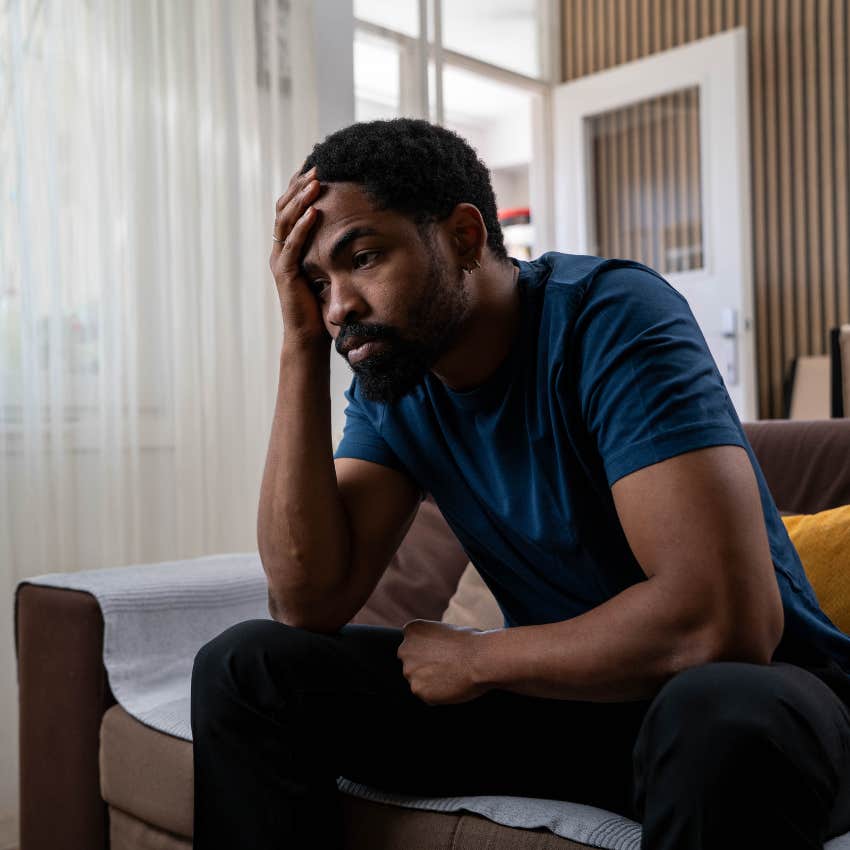
10. You are alone in the world
 Nenad Cavoski | Shutterstock
As a child, you needed to feel that an adult had your back and no matter what happened, there was support and help for you.
Instead, when you needed something, you discovered your adult(s) were busy or not aware. What you learned was you were all alone.
These lessons all seem so real and true when you grow up receiving them in a subliminal, global way. But do not forget they are merely lessons of your family, not truths about you. The fact you learned them does not make them right.
The truth. Strong feelings connect us to ourselves and each other, and being able to have them is a sign of health and strength.
Knowing your own needs and preferences and expressing them is a key to living a happy, fulfilled life.
- Talking about your problems helps you solve them.
- Crying is a healthy way of coping.
- Letting others see your feelings helps them know you better.
- Anger is an important message from your body that empowers you.
- Mutual dependence is a form of teamwork that makes you stronger.
- What you have to say is important, and you should say it.
- And last but not least, you are human. You are connected; you are important. And you are not, in fact, by any stretch, alone.
Jonice Webb, Ph.D., is a licensed psychologist and best-selling author of two self-help books. She specializes in childhood emotional neglect, relationships, communication issues, and mental health. Dr. Webb has appeared on CBS News and NPR, and her work has been cited by many publications.
