
Parents Whose Adult Kids Want To Go No-Contact Usually Say 8 Phrases In Casual Conversation
 Jenoche / Shutterstock
 Personality differences can account for some tension between parents and their adult children, but many issues that lead to those children going no contact with those parents are far more nuanced and complex.
Some of the phrases even well-meaning moms and dads use with their grown kids only add fuel to the fire. Even if they seem perfectly normal to these parents, they may create divisions that are hard to recover from.
If a parent's adult children want to go no-contact with them, it's likely they often say these phrases in casual conversations with them
1. ‘This is how you repay me?’
 Miljan Zivkovic | Shutterstock.com
Healthy relationships should never feel transactional, especially between parents and their children. However, when a parent says, “This is how you repay me?” or “After everything I’ve done for you,” when they’re upset, it inherently makes children feel like they need to prove something.
Putting a roof over your kids’ heads and food on the table is noble, and especially hard in today’s world, but it’s not something kids should need to repay. Even in adulthood, they don’t owe their parents inconvenience and blind loyalty, especially when they don’t feel supported in the least bit.
2. ‘I wouldn’t do that if I were you’
Unsolicited advice is often more common in our closest relationships, because we feel responsible for helping the people we love to feel better. However, in moments where an adult child just wants to vent about their feelings and feel validated, the last thing they need is someone trying to fix their emotions.
Especially when it comes with a passive-aggressive tone or subtle judgment, as it does in a phrase like, “I wouldn’t do that if I were you,” this advice can seem unwarranted and frustrating. Their children are likely to start keeping their struggles to themselves and hiding their complex emotions from parents, feeling unheard and unsupported by the people they should feel safest around.
3. ‘Just calm down’
When someone vents to the person who’s supposed to be their safe space, the last thing they want is to feel like their emotions are being dismissed or invalidated. While it might seem harmless on paper, that’s exactly what a phrase like just calm down does.
Even if there’s a generational disconnect in conversations about mental health and being open about complicated emotions at home, adult children don’t want to feel pressured to suppress their struggles for the sake of someone else’s comfort. Especially for Gen Zers who are actively working to destigmatize mental health concerns, it’s not surprising that this is one of the reasons why they might create space.
4. ‘You never answer the phone’
Constant communication, and worse, unannounced visits, can create a lot of tension for an adult child who’s just trying to live their life. Yes, it’s difficult to cope with the disconnection and space that naturally happens when adult kids grow up and move out. However, that doesn’t mean that expecting constant availability from their kids is acceptable or healthy for any parents.
While every family dynamic is different, more frequent communication is often associated with worse relationship quality, according to a 2021 study. Adult children don’t want to be stifled by their parents, and they certainly don’t want to be guilted for not always answering the phone.
5. ‘I’m your parent, I can do whatever I want’
 Fizkes | Shutterstock.com
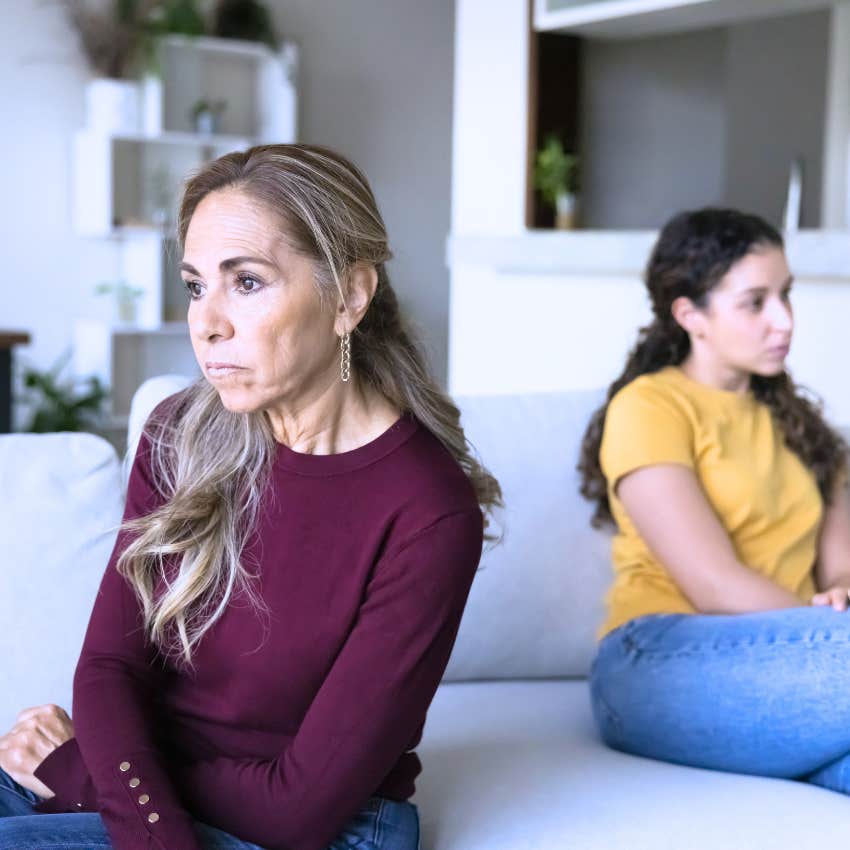
When boundaries are crossed or even completely disrespected by a parent, their adult children naturally feel unsupported. They're likely to feel unheard and invalidated in their identities by an overbearing parent who can’t let them live their lives without trying to control their choices.
These parents need to feel wanted and important, and unfortunately try to cope with their child's growing independence through control. However, in the long run, this usually only strains the relationship and pushes their kids further away.
6. ‘You clearly have better things to do’
When parents use guilt trips to try to enforce closeness with their adult children, they might be attempting to soothe their own insecurity and loneliness, while unintentionally pushing their kids away. Saying something like, “You’re leaving already?” or “You clearly have better things to do,” can make their kids feel attacked and pressured to stay.
The longer this goes on, and the more pressure kids feel to comfort their parents’ emotions, the more space they need. Some even consider no-contact with parents, tired of feeling like they’re doing something wrong or personally attacking their parents for just living their own lives.
7. ‘That was so long ago’
Especially with younger generations of adult children today, talking through childhood trauma in order to heal themselves is essential. For people who go to therapy regularly, these are the kinds of conversations they need to have with their parents, and when they completely shut them down, it creates a wall of resentment.
Parents who refuse to listen to their kids’ emotions or experiences early on push them away. They invalidate their children's feelings about experiences that still affect them to this day. They essentially remind their kids that their own comfort and correctness are more important than mending the relationship. For many, that’s a dealbreaker.
8. ‘That never happened’
 Krakenimages.com | Shutterstock.com
Whether a parent denies something silly or serious that happened to their child when they were younger, adult children who feel gaslit by phrases like this learn it's best to separate themselves from their parents. They don’t feel heard, but they also don’t feel supported, even around topics that are clearly important to them.
Even when you don’t agree or share the same opinions, there’s magic in just supporting how someone feels and being there for them. Regardless of the type of relationship, these are the ones that thrive.
Zayda Slabbekoorn is a senior editorial strategist with a bachelor’s degree in social relations & policy and gender studies who focuses on psychology, relationships, self-help, and human interest stories.
