
Parents Think Presents Make Kids Happy — But Research Says This Matters Way More
 Roman Samborskyi | Shutterstock
 Hand-wringing about the commercialization of Christmas is as much a part of the Christmas tradition as hanging up stockings and decorating a tree. And yet, it continues unabated, with each Black Friday an avalanche of deals larger than the previous year’s and kids being sold the mythology that equates being good with getting toys.
Parents, in particular, should and do wonder about what the culture of mass consumption is doing to their kids, particularly given the frenzied pitch it reaches during the holidays. “We know that materialism is just a recipe for misery,” says Christine Carter, Ph.D., a sociologist and Senior Fellow at UC Berkeley’s Greater Good Science Center. So, what can a parent do to fight back? Giving experience-based instead of material-based gifts is a great place to start.
Parents think presents make kids happy, but research says giving experiences matters way more — here's how:
1. Establish family traditions
Connect your traditions to the values you want your kids to associate with the holiday, instead of the default materialism of unwrapping presents. Don’t just give them an experience; explain that it’s because you, as a family, value multiculturalism and adventure.
“If you look at the research, absolutely you should get those experiences instead of stuff,” Carter says. “What we experience when we open a present, aside from the sort of surprise element of it, is not really a positive emotion.” In other words, opening new things activates the reward system in our brains on a surface level; it’s not a mechanism that can provide deeper, longer-lasting feelings of happiness.
Receiving physical gifts for Christmas inevitably leads to hedonic adaptation, a phenomenon in which, regardless of how good or bad something makes us feel, we eventually become accustomed to it and return to our previous level of happiness. This happens because the immediate effects of the precipitating event (e.g., discovering how to play with a new toy) fade over time.
And even the effects that remain (e.g., getting to play with that toy whenever you want) become part of the “new normal.” Another word for this phenomenon is the hedonic treadmill because buying gifts to make your kids happy is like running on a treadmill: it makes you tired, but it doesn’t get you anywhere.
2. Don't make the experience something you’ll struggle to get through
 Max kegfire via Shutterstock
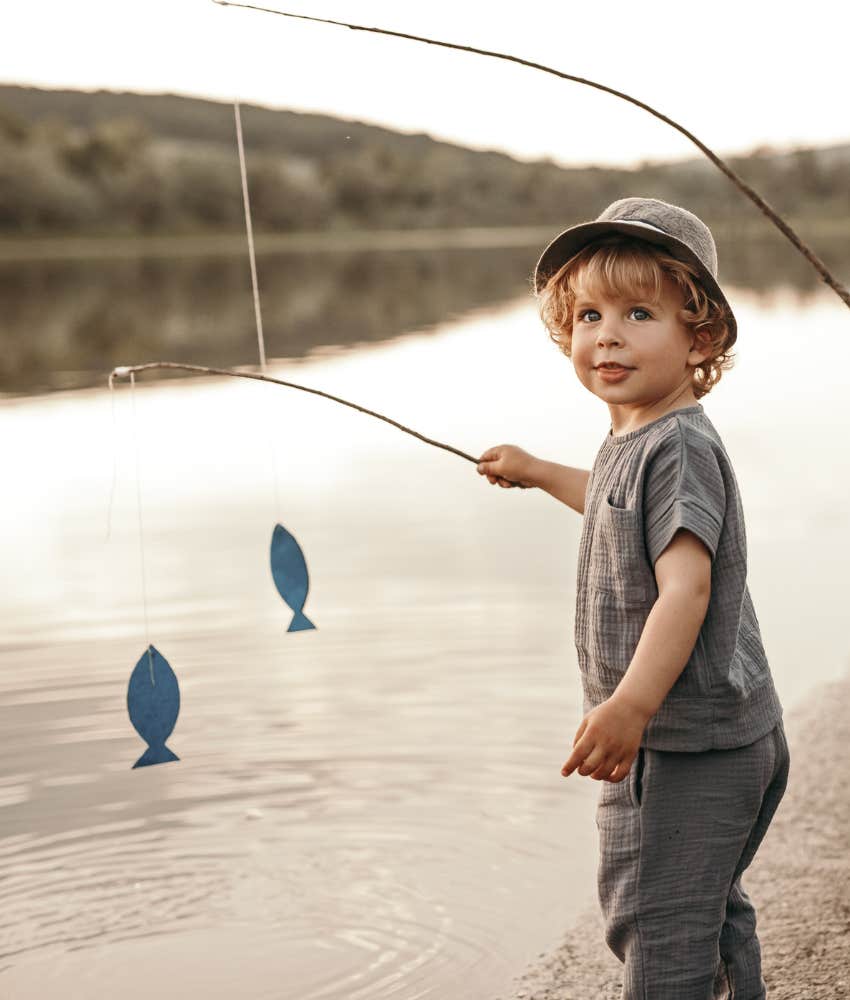
If you’re going to be exhausted and stressed the entire time you’re at Disneyland, your kid will sense it, and it will harm their experience. You’ll both be happier if you pick something that you both can enjoy.
Consumer research supported how gifting experiences elicit entirely different neurochemical reactions that are experienced as genuinely positive emotions, such as happiness or joy. The simple reason is that experiences end before we have time to adapt to them. It’s counterintuitive — wouldn’t the gift that stayed around long enough provide happy feelings for a longer period of time? — but proven by numerous studies.
3. Once kids are old enough to do things by themselves, give them more latitude
For instance, if your teenager wants to visit a friend on the other side of the country, pay for the flights, but let them save up for souvenirs. Carter says that, in addition to happiness and joy, experiences can also bring us more meaningful things: “love and connection, shared character strengths, curiosity about something, these have huge benefits.”
Research on the impact of experiential learning explored its vast social benefits. The study explained how learning through experience "contributes to developing crucial competencies for addressing complex societal challenges."
4. Give material gifts that are connected to the experiences, so your kids can still unwrap something
 PeopleImages.com - Yuri A via Shutterstock
If your kids love to ski, you can get them a ski pass — the experience-based gift — along with new goggles or gloves, whatever material items they need to enjoy their time on the mountain.
Of course, remaking your holiday traditions is easier said than done, particularly when popular culture preaches the opposite message and your kids are old enough to be used to more materialistic holiday seasons.
“We just know that materialism is a recipe for misery,” Carter says. By ditching material presents and giving experiences instead, you can remake the holidays into a time of year that you and your kids look forward to each year and look back on with a greater sense of appreciation.
Cameron LeBlanc is a graduate of Emory University and Columbia Journalism School. He spent several years as an educator, including two terms as an AmeriCorps volunteer, before becoming a journalist.
