
Parents Who End Up Estranged From Their Adult Kids Often Display These 12 Behaviors
 TheVisualsYouNeed | Shutterstock
 Part of becoming an adult is learning how to be emotionally independent, which often includes deciding which relationships feel healthy to maintain and which ones no longer do. While family bonds are often expected to last forever, that is not always how things play out. Many adults eventually create distance or become completely estranged from their parents when the relationship consistently feels dismissive, draining, or emotionally unsafe.
As children, we rely on our parents for emotional support, validation, and guidance. When those needs go unmet for years, the damage adds up. Estrangement between parents and their adult kids usually develops after repeated patterns of behavior that leave adult children feeling unseen, unheard, or disrespected. Parents who end up not speaking to or seeing their kids into adulthood often display these behaviors.
Parents who end up estranged from their adult kids often display these 12 behaviors:
1. They dismiss their kids' feelings and lives
 NTshutterth | Shutterstock
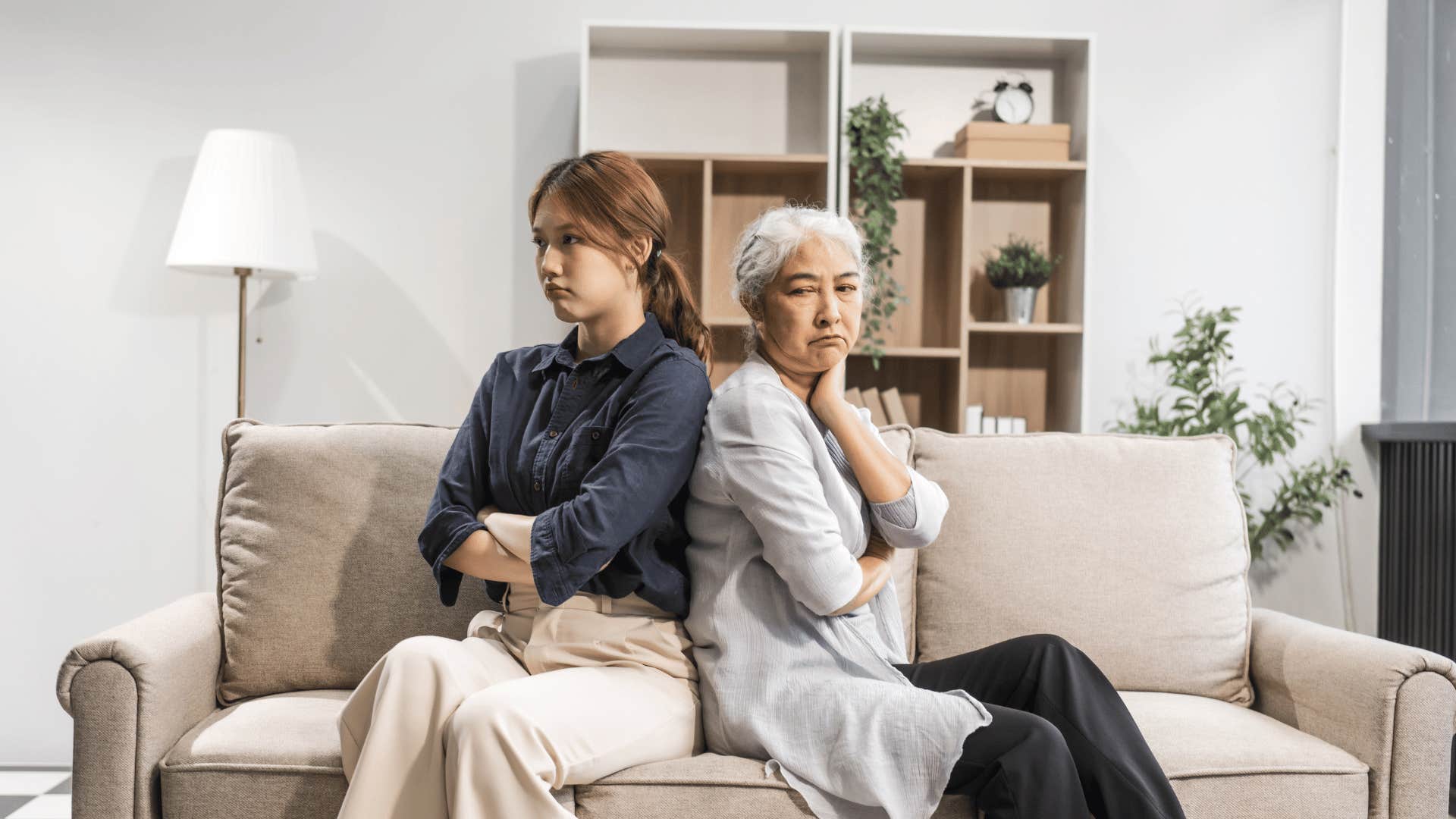
When parents don't pay attention to their children's needs or neglect to show interest in their children's lives, it usually means they don't have a close bond.
Being dismissive is a sign of an uninvolved parenting style. This type of parent was likely very hands-off while raising their kids. They rarely set rules or made demands of their children, like enforcing that they do household chores or finish their homework.
Dismissive parents were indifferent to their kids, ignoring when they needed guidance or care. They often overlooked things that were important to their kids, like sitting on the sidelines at their soccer games or showing up to watch the school play.
Kids with dismissive parents often become adults who want very little to do with their family of origin. They don't go home for holidays because they never had a close bond to begin with. They don't share any personal news with their parents because they know it will just be brushed aside.
Research from Harvard’s Center on the Developing Child shows that when parents consistently fail to respond to their children’s emotional needs, it can cause them to feel less attached and make close relationships feel unsafe well into adulthood. Psychology experts also note that emotionally uninvolved parenting is strongly linked to adult children distancing themselves from family relationships later in life.
Even if parents don't realize they're dismissive, it can still cause their kids extensive emotional harm.
2. They make everything about themselves
 wavebreakmedia | Shutterstock
Another trait parents exhibit when they're not close with their adult children is self-centeredness.
When their kid calls to check in, they talk about their problems without asking how their kid is doing. This kind of emotional dumping depletes people's energy and capacity for empathy, so their kids call less to protect their own peace.
Parents who take up a lot of space often don't provide an equitably supportive space in return. Self-centered parents see their lives as more important than anyone else's, including their kids, which sadly can make their kids decide they don't want to extend the effort to stay in touch.
3. They stay emotionally unavailable
 fizkes | Shutterstock
Emotionally unavailable parents don't always realize how damaging that trait can be to their children's long-term development.
According to a 2017 study on psychological health, when parents have accepting and supportive attitudes, their children develop stronger emotional regulation skills. In contrast, when parents lack emotional availability, their kids struggle to express and process their feelings because they weren't taught how to do so.
Researchers found that the positive effects of having emotionally available parents extended beyond childhood. Children who receive emotional support from their parents through adolescence and young adulthood continue to feel attached to them and care about them.
Yet the bond between parents and their adult kids can rupture if their relationship was built on ignoring emotions and not providing space to discuss difficult issues.
4. They withhold affection
 imtmphoto | Shutterstock
Another trait that can weaken the bond between parents and children is being unaffectionate. Humans are social creatures, which means we need physical touch and direct expressions of love and care to survive and thrive.
A 2013 study from UCLA found that parental affection and warmth protect children from the toxic effects of stress. Researchers reported that when a child in an adverse situation has a nurturing parental relationship, it benefits their overall well-being. They also noted that having a loving relationship with one's parents can impact adverse health outcomes later on in life.
Everyone shows love in different ways, but not showing it at all sets kids up for struggle. Parents who are cold or emotionally inexpressive run the risk of their kids cutting off contact once they grow up.
5. They refuse to validate their kids' experiences
 fizkes | Shutterstock
An adult child who's decided to go no-contact or low-contact with their parents usually chooses estrangement as a final resort. They've tried to bridge the gap between themselves and their parents, but their parents refused to recognize that they'd done anything wrong.
It takes self-awareness and inner strength for an adult child to approach their parents and ask them to be accountable for their hurtful behavior. When parents tell their kids their childhood wasn't so bad or that it wasn't their fault, their kids are less likely to want to stay connected.
Parents who don't validate their children's experiences most likely don't have a close bond with them, and until they do their own self-discovery, their relationship will probably remain distant.
6. They ignore or cross boundaries
 ViDI Studio | Shutterstock
When a parent consistently pushes up against boundaries, it's an indication that they're not listening to or honoring their child's needs. Their boundary violations might seem small or innocuous, yet over time, they build up until maintaining a close relationship feels untenable for their kids.
While reinforcing boundaries can feel especially difficult to do with your own family, you have a right to set them. Just because your mom wants to ask about your dating life or criticize your eating habits doesn't mean you have to allow it.
Research published in the Journal of Family Psychology shows that when parents repeatedly ignore or cross boundaries, adult children are more likely to emotionally withdraw and limit contact over time. Additional research found that boundary violations weaken trust and closeness, making adult children more likely to create distance to protect their own mental health.
Parents who disrespect boundaries usually don't have a close connection to their adult kids.
7. They overlook their kids' achievements
 Ground Picture | Shutterstock
While an essential part of being a present parent is to support your kids when they're experiencing hardship, it's equally important to be there when they win.
Whether they aced a presentation at work or finally got the promotion they were hoping for, people want their parents to be proud of them, regardless of their age. By celebrating their successes, parents provide their kids with approval and admiration.
Parents who gloss over the milestones their kids achieve shouldn't expect to stay close to them for very long.
8. They stay overly critical
 fizkes | Shutterstock
Being overly critical is another trait displayed by parents who aren't close to their adult kids.
They might nitpick and point out bad habits or judge the way their kids choose to be parents, themselves. They may bring up past grievances that they still haven't forgiven their kids for.
Research published in the Sage Journals shows that adult kids who experience criticism from their parents tend to feel less emotionally close and distant. It also shows that ongoing criticism from close family members eats away at self-worth and leads people to emotionally withdraw as a way to protect themselves.
No one likes being told that they're wrong all the time, as that kind of criticism chips away at a person's sense of self-worth. By focusing more on their past mistakes than on who their kids are as adults, parents put up a wall that's hard to break down.
9. They try to control their adult kids' decisions
 fizkes | Shutterstock
Being controlling goes hand-in-hand with having a critical attitude, and it's another way that parents distance themselves from their adult children.
It's one thing for parents to have a say in what their kids do when they're young, but once they're adults, they should be free to make their own decisions. Even if a parent disagrees with their children's choices, expecting them to change their lifestyle is unrealistic.
When parents put pressure on their adult kids to live according to their rules, it's a clear sign that their bond won't remain close for very long.
10. They rely on guilt to stay connected
 Chay_Tee | Shutterstock
It's highly likely that parents who rely on guilting their adult children don't have a close bond. When a parent's main form of communication is laying on the guilt, their kids will probably avoid being in touch with them, if only to side-step being made to feel bad.
Research shows that guilt-tripping is a form of emotional manipulation that leads people to emotionally withdraw and avoid contact over time, especially in close family relationships. Guilt-tripping falls under the category of low-key emotional manipulation, so it's no wonder that a grown adult would cut out contact with someone who uses it as a tactic.
11. They refuse to apologize or take responsibility
 Rido | Shutterstock
Parents who end up estranged from their adult kids often struggle with apologizing, even when real harm was done. Instead of saying "I'm sorry," they deflect, minimize, or insist their intentions mattered more than the impact. Over time, that refusal to own mistakes makes honest conversations feel pointless.
For many adult children, estrangement doesn't come from wanting perfection. It comes from wanting acknowledgment. When parents consistently avoid responsibility, it sends the message that the child's pain is inconvenient or unimportant.
This pattern also puts adult kids in a no-win position. If they speak up, they are labeled dramatic, ungrateful, or overly sensitive. If they stay quiet, the hurt never gets addressed. Eventually, distance feels like the only way to stop reopening the same wound.
A sincere apology can repair a lot. Refusing to offer one often does the opposite.
12. They rewrite the past to protect themselves
 Kateryna Onyshchuk | Shutterstock
Some parents cope with discomfort by rewriting family history. They downplay conflicts, deny events outright, or insist things "weren't that bad." While this may help them avoid guilt, it deeply damages trust.
Adult children who feel gaslit about their own experiences often stop trying to explain themselves. When every conversation turns into a debate about what really happened, emotional safety disappears.
Research has found that being repeatedly told your version of events is wrong leads to emotional exhaustion and withdrawal, which helps explain why many adult children choose peace over constant self-doubt. This behavior also blocks healing. If a parent cannot acknowledge reality as their child experienced it, there is no shared ground to rebuild on. The relationship stays stuck in defensiveness instead of growth.
For many adult kids, walking away is not about holding a grudge. It is about choosing peace over constantly having their reality questioned.
Alexandra Blogier is a writer on YourTango's news and entertainment team. She covers social issues, pop culture analysis, and all things to do with the entertainment industry.
