
Kids Raised By Parents Who Normalize 10 Things Often Grow Up To Be Weak Human Beings
 pics five | Shutterstock
As my favorite parenting philosophy goes: "Prepare your child for the road, not the road for your child."
With that said, I've outlined some common things even the most well-meaning parents shrug off, me included, that end up hurting their kids. My intention isn't to point fingers but to raise awareness. What may be ingrained in our culture isn't always in the best interest of our kids.
Kids raised by parents who normalize these things often become weak adults:
1. Worshipping their children
 antoniodiaz | Shutterstock
Many of us live in child-centered communities. We're raising our kids in child-centered homes. Our children love this, of course, because our lives revolve around them. And for the most part, we don't mind either, because their happiness is our happiness. It thrills us to do for them, buy for them, and shower them with love and attention.
But I think it's important to keep in mind that our children were made to be loved, not worshipped. So when we treat them like the center of the universe, we create a false idol; we shouldn't worship at the altar of our kids.
2. Believing their kids are perfect little angels
 Photo Book Pro | Shutterstock
One thing I often hear from professionals who work with children (counselors, teachers, etc.) is that parents today don't want to hear anything negative about their kids. When concerns are raised, even concerns voiced out of love, the knee-jerk reaction is often to attack the messenger. The truth can hurt, but when we listen with an open heart and mind we stand to benefit. We can intervene early before a situation gets out of hand. It's easier to deal with a troubled child than repair a broken adult.
3. Living vicariously through their children
 StrDr stock / Shutterstock
We, parents, take great pride in our children. That's human. When they succeed, it makes us happier than if we'd done it ourselves. But if we're overly involved and invested in their lives, it gets hard to see where they end and we begin. When our children become extensions of us, we may see them as our second chance. Suddenly it's not about them; it's about us. This is where their happiness starts getting confused with our happiness.
4. Wanting to be their child's BFF
 fast-stock / Shutterstock
Like everyone, I want my children to love me. I want them to sing my praises and appreciate me. But if I'm doing my job right, they'll get mad and not like me sometimes. They'll roll their eyes, moan, and groan, and wish they'd been born into another family.
Seeking to be our child's bestie for life can only lead to permissiveness and choices made out of desperation because we fear losing their approval. That's not love on our end; that's need. Former First Lady Michelle Obama says it quite eloquently: "Once you decide you want your child to be your friend, now you're worried about them liking you. Focus more on raising decent human beings." Even a University of Virginia study found that children who grow up in a parent-friend dynamic struggle to form healthy relationships later in life, as they struggle to navigate hierarchical relationships and understand the proper roles of authority figures.
5. Fostering a win-at-all-costs attitude
 Antonio Guillem / Shutterstock
Every parent has a competitive streak. All it takes to stir this monster in us is another parent giving his or her child a leg up at our child's expense. I hear these stories a lot at the junior high and high school levels, stories of broken friendships and betrayals due to one family blindsiding another family.
In my opinion, the root is fear. We fear our children will get left behind. We fear that if we don't jump into the craziness and pull out every stop to help them excel early, they'll be stuck in mediocrity the rest of their life.
I believe children need to work hard and understand that dreams don't come on a silver platter; they have to sweat and fight for them. But when we instill a "win at all costs" attitude, permitting them to throw anyone under the bus to get ahead, we lose sight of character. (The hyper-competitive nature of youth sports is a great example of where we've gone awry as a society.)The character may not seem important in adolescence, but in adulthood it's everything.
6. Missing the wonder and awe of childhood
 fizkes / Shutterstock
The pressures on kids start way too early and often lead to mental health problems, says the National Education Policy Center. If we really want our kids to have a leg up, we need to protect them from these pressures. We need to let them have fun and grow at their own pace so 1) they can explore their interests without fear of failure and 2) they don't get burned out. Childhood is a time for free play and discovery. When we rush children through it, we rob them of an innocent age they'll never pass through again.
7. Raising the kids they want, not the kids they have
 Ekateryna Zubal / Shutterstock
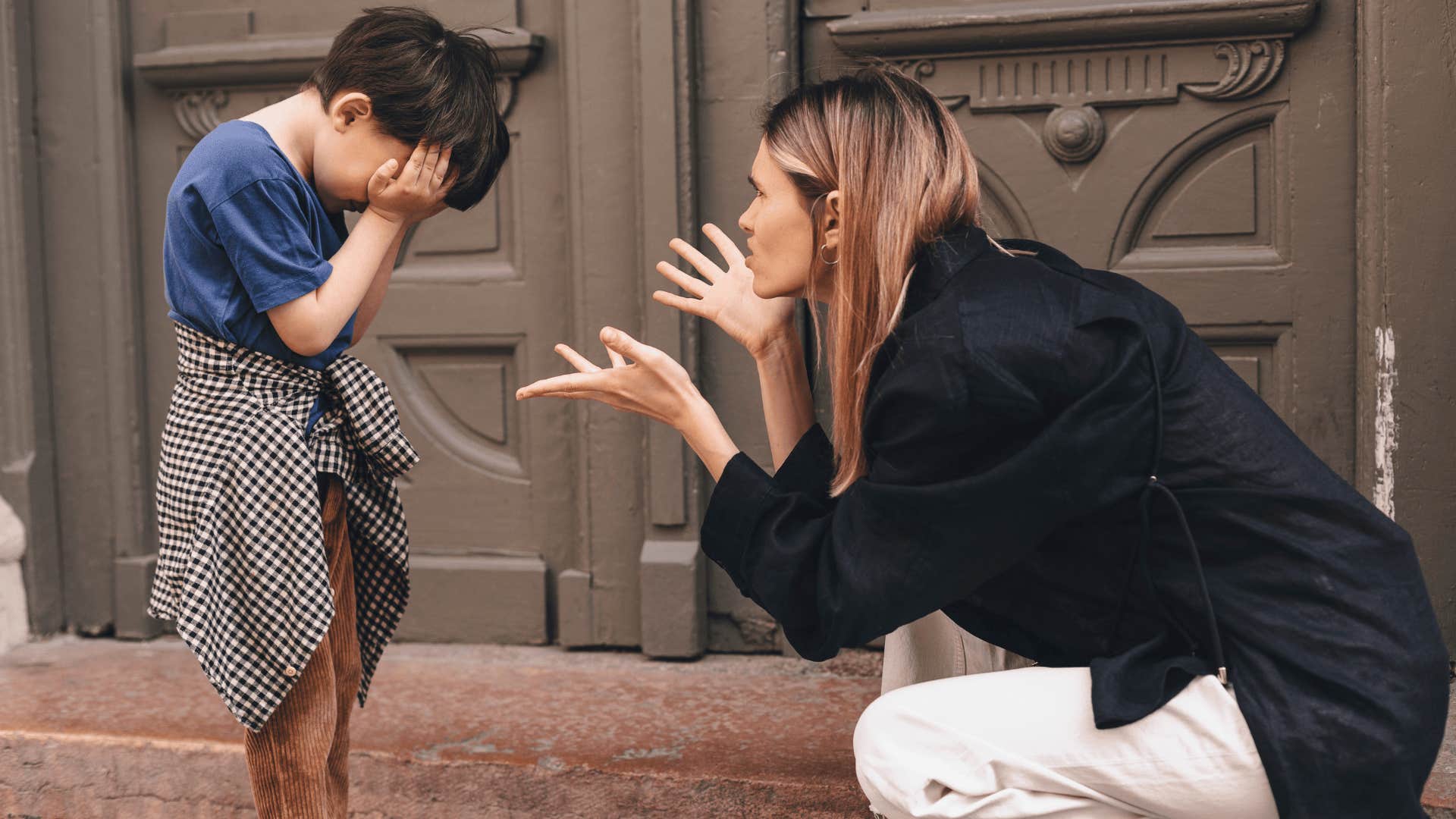
As parents, we harbor dreams for our children. They start when we get pregnant, before the gender's even known. Secretly we hope they'll be like us, only smarter and more talented. We want to be their mentors, putting our life experiences to good use.
But the irony of parenting is that children turn our molds upside down. They come out wired in ways we never anticipated. Our job is to figure out their inherent, God-ordained bent and train them in that direction. Forcing our dreams on them won't work. Only when we see them for who they are can we impact their life powerfully.
8. Forgetting their actions speak louder than words
 Pixel-Shot / Shutterstock
Sometimes when my kids ask a question, they'll say, "Please answer in one sentence." They know me well, for I'm always trying to squeeze life lessons into teachable moments. I want to fill them with wisdom, but what I forget is how my example overshadows my words.
9. Judging other parents for choices they wouldn't make
 Nicoleta Ionescu / Shutterstock
No matter how much we disagree with someone's parenting style, it's not our place to judge. Nobody in this world is "all good" or "all bad"; we're all a mix of both, a community of sinners struggling with different demons.
I tend to cut other parents more slack when I'm going through hard spells. When my child is testing me, I'm compassionate to parents in the same boat. When my life is overwhelming, I'm forgiving of others who slip up and let things fall through the cracks. We never know what someone's going through or when we'll need mercy ourselves.
10. Underestimating character and moral fiber as traits to teach
 pikselstock / shutterstock
If there's one thing I hope to get right in my children, it's their core. Character, moral fiber, an inner compass: these things lay the foundation for a happy, healthy future. They matter more than any report card or trophy ever will. None of us can force character on our kids, and at age 10 or 15, character won't mean much. Children care about short-term gratification, but we, as parents, know better.
If we want them to build character, confidence, strength, and resilience, we need to let them face adversity and experience the pride that follows when they come out stronger on the other side. It's hard to see our children fall, but sometimes we have to. There are a million ways to love a child, but in our quest to make them happy, let us stay mindful that sometimes it takes short-term pain to earn a long-term gain.
Kari Kubiszyn Kampakis is a blogger and newspaper columnist. She has been featured on HuffPost Parents, The Good Men Project, and more.