
Growing Up In A Good Family Teaches Kids 9 Values That Are Highly Underrated These Days
 PeopleImages | Shutterstock
 Looking around at the world today, it can be easy to believe that we live in a society with zero values. The good news is that there are still good people in the world. Often, they grew up in a good family, where they learned values that are often highly underrated.
Every family functions differently, yet the bonds we have with our parents, siblings, and other relatives impact our personalities and the relationships we choose for ourselves. As it turns out, growing up in a good family makes it significantly easier for people to have strong morals.
1. Accountability
 Antonio Diaz | Shutterstock
Growing up in a good family means kids learn accountability by watching how their parents handle apologies. An environment based on mutual respect is a stable place for kids to develop, allowing them to take appropriate risks and develop a strong sense of self.
A study published in BMC Public Health notes that positive childhood experiences provide a foundation for someone's well-being as an adult, even when there's adversity in their lives early on. Having a foundation of emotional safety and feeling like they belong leads kids to cultivate a strong sense of routine and responsibility as they grow.
When parents model behaviors like apologizing, owning their mistakes, and centering repair after conflicts, kids learn how to do so, as well. They're able to enter adulthood knowing how to say they're sorry when they've done something wrong, instead of growing defensive and deflecting their behavior outward.
Coming back from conflict can be uncomfortable, especially if you don't have practice in it, but kids raised in good families develop a solid sense of their own accountability.
2. A calm nature
 PeopleImages | Shutterstock
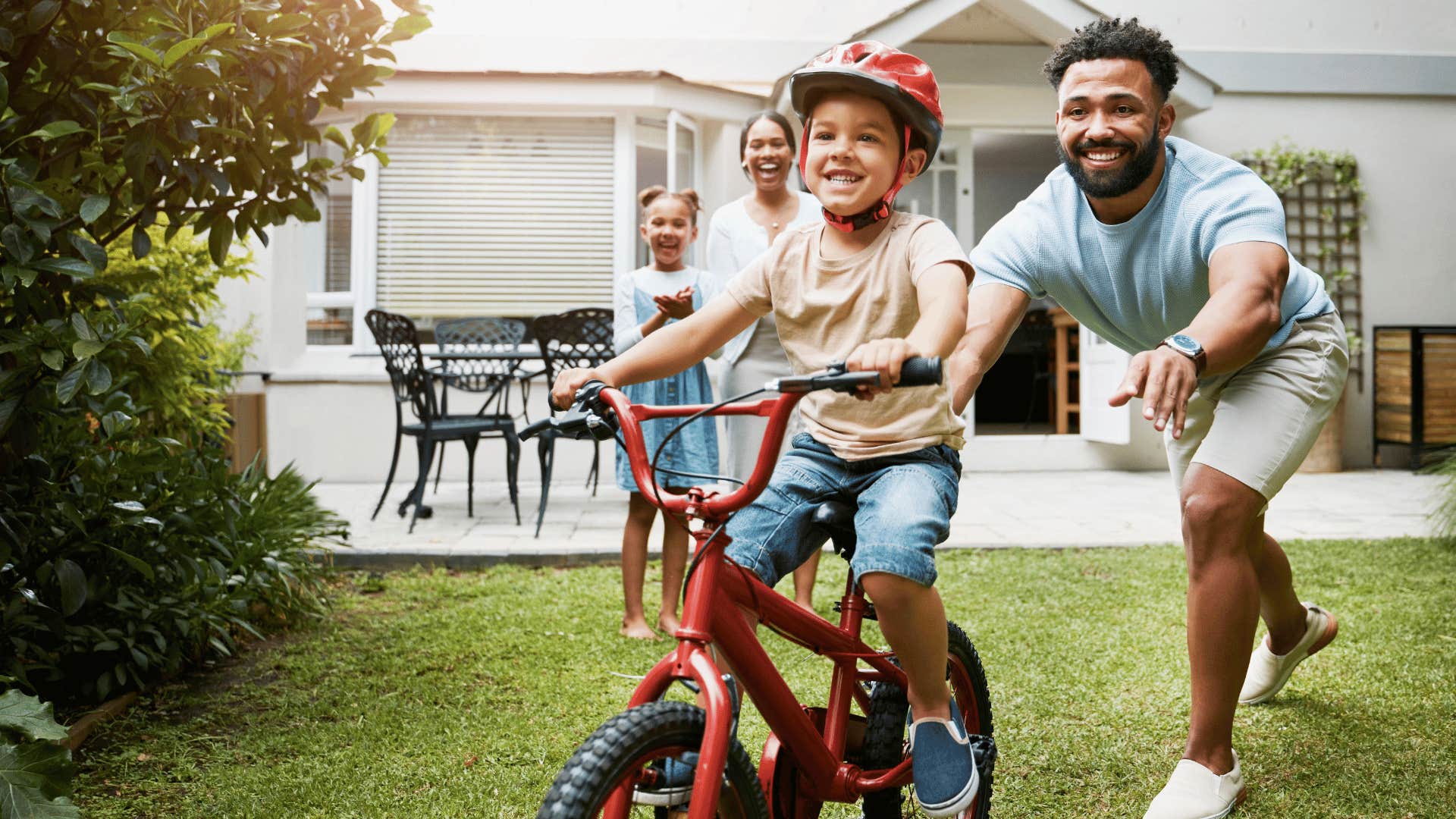
A good family is often defined by the parenting style the kids were raised with. An authoritative style, which means a parent who is in a position of authority that is earned, rather than forced. This establishes clear boundaries that kids are expected to meet.
Kids need boundaries to feel safe. They have to know that if they're loved, certainly. But boundaries and clear consequences for pushing against a boundary that's been set for them helps them feel secure.
Boundaries can help mitigate against a sense of impending chaos from the outside world. In other words, when a family system has solid outlines, it creates calmness, which leads to being a calm adult.
3. Strong coping skills
 fizkes | Shutterstock
Kids who are taught how to be emotionally intelligent become adults who understand their inner landscape and know how to express their feelings. They also learn how to handle emotionally fraught situations without falling apart.
According to clinical psychologist Lisa Firestone Ph.D., "Research has shown that emotional intelligence or EQ 'predicts over 54% of the variation in success (relationships, effectiveness, health, quality of life).' Additional data concludes that 'young people with high EQ earn higher grades, stay in school, and make healthier choices.'"
Emotional stability is a prerequisite for having strong coping skills. Growing up in a good family prepares kids to deal with the harder parts of life, because it gives them a basis of self-awareness and confidence that they need to face their struggles head on.
4. A positive outlook
 mavo | Shutterstock
When parents teach their children that they're appreciated, they grow up to believe in their own self-worth. Expressing affection shows kids how to love themselves, which is the first step to loving others and seeing the world as a promising place.
Their inner optimism will shine through, because they were raised to believe in themselves and believe that the good in the world outweighs the bad. This happens best in good families, where this behavior is modeled daily.
Of course, a positive outlook doesn't mean false positivity, as that may be disorienting. Kids know when something is wrong, and pretending to be positive can cause kids not to trust their own emotional barometer. Instead, help kids find ways to solve problems so they can find their way through the problem.
5. An open mind
 NDAB Creativity | Shutterstock
Good families give kids access to education and emphasize the need to respect other people, even when those people's opinions or values don't align with their own. When kids learn that there's more than one way of looking at the world, they understand that everyone's life experience is different yet no less valid than theirs.
This starts with teaching kids empathy, which is the ability to imagine someone else's feelings, even when they're different from us. Accepting others without judgment is a rare trait, but kids who have been taught to keep an open mind can easily see other people's perspectives.
6. Commitment to others
 Ground Picture | Shutterstock
A study from the University of Cambridge found that when parents and children develop a loving bond early in the child's life, it significantly increases the likelihood that they will grow up to be "prosocial." They'll help people in their community, and act with empathy and kindness, because they know the value of being generous.
Ioannis Katsantonis, a lead researcher in the study, explained why having a strong parent-child relationship leads to being a helpful person later in life. "As children, we internalize those aspects of our relationships with our parents that are characterized by emotion, care and warmth," he said. "This affects our future disposition to be kind and helpful towards others."
Seeing our parents help us means that we learn how to help others, in turn.
7. A strong moral compass
 Ground Picture | Shutterstock
According to a poll from Pew Research Center, 66% of parents said it's "extremely important" that their kids grow up to be ethical, honest adults.
Good families instill a strong moral code in their kids. They teach them how to choose between right from wrong. They show them how to be accepting of people's differences. They lead based on love, which fosters children's compassion and allows them to develop the kind of moral compass that will guide them from a place of understanding and humanity.
Most importantly, they model making choices based on their own moral compass. This helps parents build a good, solid family for their children to grow up in.
8. Honesty
 PeopleImages | Shutterstock
Growing up in a good family means teaching the value of honesty. This happens best when parents model honesty whenever possible, as well as making clear that they expect honesty from their children.
All little kids tell lies, it's developmentally normal for them to start telling lies around age 4. Experts even say this process can be a sign that your child is on track to developing empathy. Parents who value honesty teach their kids how to separate the truth from male-believe and the value of telling the difference. They do this without shaming their child or calling them a liar.
9. Cooperation
 PeopleImages | Shutterstock
Cooperation might be one of the most highly underrated values today. Whether it's due to the division represented on social media and cable news or a struggling economy that seems to make an even more dog-eat-dog world, it often feels like everyone is out only for themselves.
According to Nichola Raihani, author of The Social Instinct: How Cooperation Shaped the World, "I think there is a pervasive form of zero-sum thinking that holds that we should look out for number one, and that helping others or being kind is a mug’s game where you somehow lose out by doing so. But this is completely untrue."
Growing up in a good family helps kids learn the value of cooperation. This is because kids feel secure in a happy household, as they don't feel a need to compete for every resource, giving them the opportunity to learn the value of cooperation. They quickly learn that the best solutions happen when people collaborate, sharing insights and experience.
Alexandra Blogier is a writer on YourTango's news and entertainment team. She covers social issues, pop culture analysis and all things to do with the entertainment industry.
