
7 Things That Have Made Life Better Since The 1990s Despite A Lot Of Things Getting Worse
 insta_photos | Shutterstock
 There are a lot of things to love about the '90s, whether you were a kid growing up in the decade, an adult, or somewhere in between. Despite much to love about the decade that brought us grunge, there is no denying that some things have improved since then.
Looking back, it is hard to imagine how we managed when, in this current world, we demand constant connectivity and convenience. As technology becomes increasingly sophisticated, people must keep pace. On the other hand, some may argue that we have become too dependent on our devices, but the truth lies somewhere in between. The '90s were undoubtedly epic, but the fact remains that if we were suddenly plunked right back in time, there would be some things that it would be hard to deny haven't made life better since then, despite a lot of stuff being, well... worse.
7 things that have made life better since the 1990s, despite a lot of things getting worse:
1. GPS
There was no plugging any address in the world into your phone in the '90s, and having directions at your fingertips like we have today. GPS is a hugely convenient technological advantage that has made life so much better since the 1990s; there's no denying it.
In the late part of the decade, we could print directions from Google Maps, but many people still used road maps purchased at gas stations. Now, we do not need to multitask by holding a map and reading the directions. Maps are built into apps on our phones and are often available through the computers in our cars.
Drivers can navigate in real time with traffic and weather alerts, and construction zones, making detours or missed turns and exits a breeze to handle. That's not to say there isn't a benefit in learning to read maps. In fact, it's a skill everyone should probably have, just in case, but thank goodness we don't have to worry about how to get where we're going like we used to.
2. Cars
There's no denying that cars have become much more comfortable since the 1990s. Can you even imagine not having a seat heater nowadays?
Car manufacturers have added more usability and comfort to our rides. One major change is how cars' computers make them safer and expand connectivity on the built-in navigation screens. In addition to safety, there is automation. Automatic windows, trunks, locks, and ignitions. Instead of starting a car with a key, many cars start with the press of a button.
There are electric cars that save on gas and support the environment, thereby decreasing pollution. Even buying a car has improved with apps like Carvana and Carfax offering new-to-you cars that are delivered to your front door.
3. Delivery services
 antoniodiaz | Shutterstock
There's no denying that delivery services have made life better since the 1990s, when, really, all you could get delivered to your house was a pizza if you lived close enough to the restaurant.
Now, there are so many convenient services. No longer do you have to drive to the grocery store, pay, and lug the groceries to and from your car. You can order groceries online from food apps like Uber, DoorDash, and Instacart for a fee.
There is also food delivery from popular places like Taco Bell and McDonald's. You can get pretty much anything you want on the internet delivered to your home.
4. Shipping
Back in the '90s, if you wanted to buy anything without going to the store, you not only had to order by phone from a catalog, but you also had to wait weeks for it to arrive. There was no such thing as 2-day shipping for anything, really.
With the rise in E-commerce, shipping has become more commonplace. There has been a boost in package deliveries to households. The negative impact of this is that smaller stores and larger department store chains are closing. But innovative online stores are thriving. In addition to ordering online, parcel services like UPS, FedEx, and Amazon are on the road delivering packages in shorter delivery times and with more efficient vehicles.
5. Banking
In the past, banking was a tedious process. You actually had to do your banking in person, and bank hours are notoriously difficult to navigate.
Now there is direct deposit, and virtually all banking can be done from an app. You never have to set foot in a bank if you don't want to. What’s more, you don’t have to wait for the bank to open to check your account and make transactions. All the information is available through an app.
6. Phones
 pics five | Shutterstock
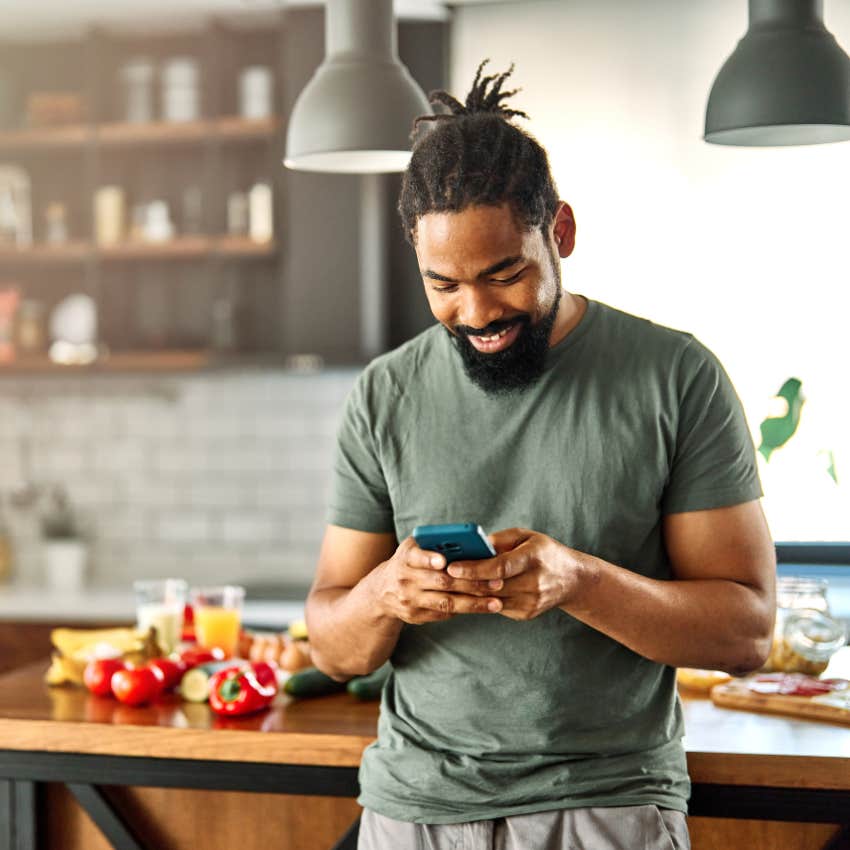
The one you’ve been waiting for. In the '90s, we thought we couldn't get much better than the ease of the cordless phone. There were still phone booths at that time when you needed to make a call on the go. And there were actually early models of cellular phones, though beepers were more common.
Today, everyone has a phone, but they aren't really phones. We're carrying around supercomputers in our purses and pockets.
Landlines are a rarity, mostly used in office settings. Cell phones are a commodity and have transformed into an all-in-one necessity. You have a handheld computer at your fingertips with capabilities to call, in addition to other tasks that one would normally do on a computer. Not only do we use our phones to text and talk, but we also have smart watches and tablets. We are constantly connected.
7. Streaming
In the '90s, the options for entertainment were cable at home, if you were lucky, or actually going to the movies. When it came to music, you actually had to go to the record store and buy a CD, or you could wait and record the song you wanted to hear off the radio.
Nowadays, entertainment is so accessible that it’s hard to choose which outlet to watch or listen to. The fanfare of buying a new single or album may have been boiled down to a download, but you can easily find songs and create playlists to stream at your leisure. The 1990s method was to listen to the radio and be ready. Hit record, then stop at the right moments to capture the song on your cassette tapes. Then you would have a mix-tape that you could decorate and pass out to friends. Then CDs replaced cassette tapes, but they often scratched, causing songs to skip right at the best moment. Cassette tapes had similar issues of getting ruined in the boom box. Now we can download albums and songs, and if we miss the nostalgia of having a physical album including artwork, many are turning to vinyl records.
On top of music, there are countless platforms for TV and movies. Netflix beat out Blockbuster Video in a TKO during the early 2000’s; subsequently, the Friday night ritual of going to the video store to rent movies for the weekend died off. Netflix and other streaming platforms offer an exclusive, broad array of entertainment.
And finally, books have become more technologically oriented. The unfortunate consequence is the fading away of book sellers, and even the closing of big chains like Borders and Walden Books. People are listening to their books more often than not, as well as downloading ebooks to read on readers like the Kindle, Apple Books, Google Books, or the Nook.
Laura Lomas is a writer with a Master’s degree in English and Creative Writing who focuses on news, psychology, lifestyle, and human interest topics.
