
Scientists Say This Highly Praised Habit Almost Everyone Does At Work Everyday Is Low-Key Ruining Your Life
 GaudiLab | Shutterstock
 Maybe you smile through meetings you'd do anything to skip, or throw in extra exclamation marks in emails. You tell everyone you're "Happy to help!" but in reality, you're exhausted. This daily performance isn't normal, and it's known as "surface acting."
Often attributed to sociologist Arlie Hochschild, "surface acting" is a real struggle that workers face when trying to navigate the social and emotional expectations of the workplace. It can often be seen as a strength by those who can't see what's truly happening under the surface.
A new study revealed that engaging in 'surface acting' at work is extremely detrimental.
EM Lyon Business School in France conducted two clinical trials to measure the energy levels and outlooks of various managers and employees throughout a typical workday. This data was then compared to their self-reported levels of emotional regulation.
 Prathankarnpap | Shutterstock
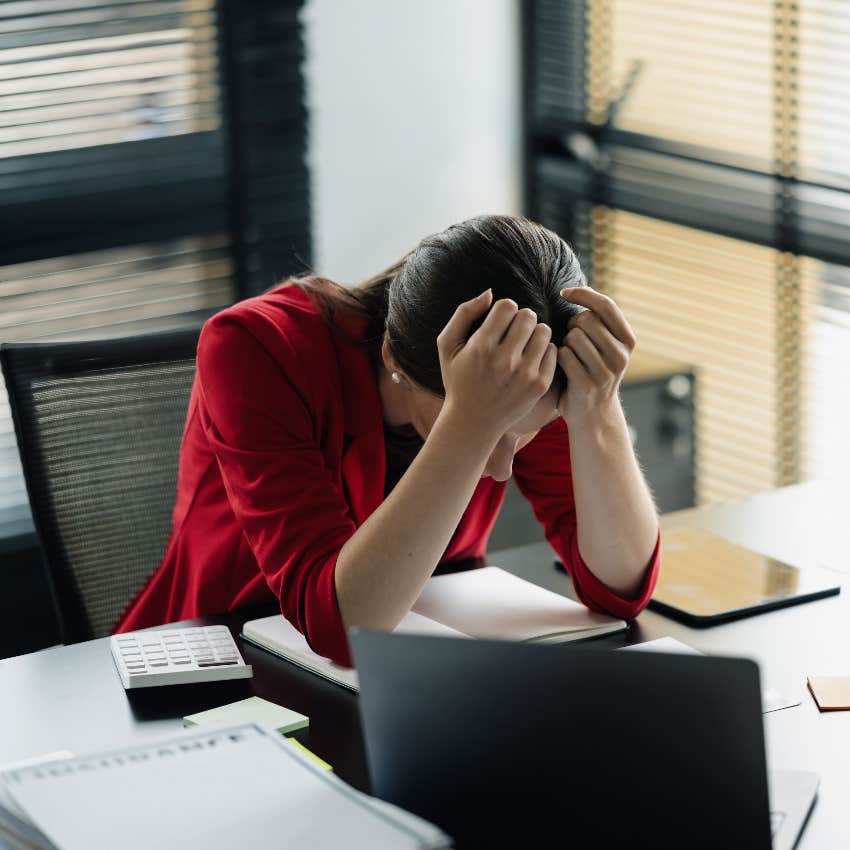
Researchers noticed one specific habit among workers that tended to be more disconnected and dissatisfied: "surface acting." What they're referring to is the tendency of professionals to force emotional reactions that they think are expected in the workplace. For example, this could mean feigning perkiness when they're actually feeling drained and overworked.
The study summary read, "The researchers say that this ‘surface acting’ creates a scientifically proven exhaustion loop that drains the very resources necessary to function well in interpersonal environments. As a result, cognitive capacity declines, authenticity erodes, and team trust suffers in ways that make engaging in leadership more difficult in the future."
This 'surface acting' had two distinct consequences for workers.
First, they were more likely to feel weary at the start of the day. These workers also experienced burnout much faster during the workweek, unlike those who openly shared their true emotions.
Second, this exact fatigue decreased the workers' ability to summon the energy to stop faking their emotions. This only contributed to a continuous downward spiral.
"Our findings suggest that the poor get poorer over the week, as we observe a resource loss spiral through surface acting," the authors explained. "Specifically, service employees who face emotional energy losses in the morning will likely enact more detrimental surface acting strategies. As a result, they lose resources and start the next day with fewer resources, further increasing surface acting and perpetuating resource loss over time."
If this sounds familiar, try taking intentional breaks to catch your breath.
It's crucial to monitor yourself and notice the signs of "surface acting" burnout when they happen. Symptoms could include feeling distant and disengaged from colleagues, sudden loss of temper, and decreased sleep quality. Outbursts may occur as workers lack the energy needed to control their emotional responses.
 DimaBerlin | Shutterstock
Fortunately, there are methods to help you fix this. The study results showed that "taking full, complete breaks from work and its emotional demands" is the most effective way to disrupt this cycle of fatigue. Take advantage of weekend breaks, so you can return to work on Monday feeling renewed and refreshed.
"We found that low-effort relaxation activities uniquely protected individuals from the downsides of surface acting in both our studies," the researchers claim. "Reading on the couch, sitting outside to watch the sunset, or listening to music can replenish energy even when you’re feeling exhausted. Unlike coordinating time to see friends or working up the motivation to hit the gym, these low-effort activities helped people escape the surface-acting loop that so easily drains leaders."
Kayla Asbach is a writer currently working on her bachelor's degree at the University of Central Florida. She covers relationships, psychology, self-help, pop culture, and human interest topics.
