
People With Shifty Vibes & Lying Eyes Often Have 8 Odd Traits Abut Them
 CarlosBarquero | Shutterstock
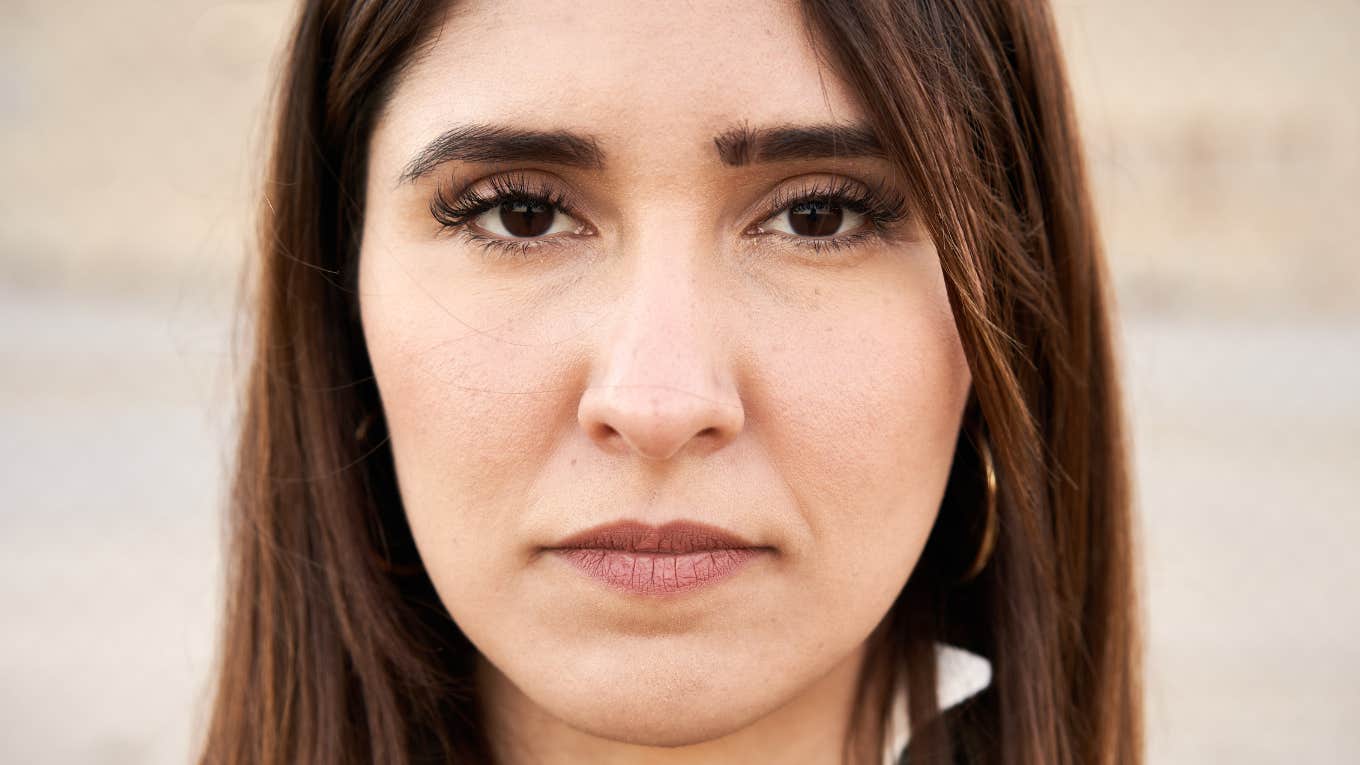
The traits of an untrustworthy person aren't always obvious at first because these shifty types tend to ooze charisma, but the closer you look at their eyes and, most definitely, their off-putting vibes, the clearer a person's shadiness becomes.
People with shifty vibes and lying eyes often have a few odd traits:
1. They mask the truth
 Aloha Hawaii | Shutterstock
One subtle trait of an untrustworthy person is secretiveness. It's highly likely that someone who keeps important information to themselves or hides how they feel isn't a trustworthy person.
A study in the Journal of Research in Personality noted that being vulnerable is a key element of trustworthiness. The study found that there are three parts to trusting people: trusting actions, which researchers defined as "behaviors that demonstrate a reliance on others"; trusting beliefs, which is the perception of trustworthiness; and trusting intentions, which is the willingness to show vulnerability.
When a person isn't open or honest, it's almost impossible to trust them. Someone who keeps secrets usually doesn't trust other people, and their inability to be vulnerable shows that they can't be fully trusted, either.
2. People like this are emotionally manipulative
 Inside Creative House | Shutterstock
Being emotionally manipulative is another subtle trait of a shady person. Usually, having high emotional intelligence is a positive part of someone's personality, as it allows them to understand how other people feel. Yet sometimes, emotional intelligence can be used to manipulate people and cause them psychological harm.
Dr. Marni Feuerman, a licensed psychotherapist, revealed how untrustworthy people weaponize their emotional intelligence as a method of control. She noted the connection between narcissism, sociopathy, and emotional intelligence. People with those traits are skilled at "reading emotional cues from others and understanding others intuitively. Unfortunately, they are also good at manipulating and using others."
3. They exaggerate
 Prostock-studio | Shutterstock
An inherent part of trusting someone is believing that what they say is true. People who exaggerate tend to change details or invent wild stories to make themselves more attractive or appealing to people they want to impress.
According to a study from the Personality and Social Psychology Bulletin, generalized trust can be defined as holding the expectation that other people's promises or statements can be relied upon. The study noted that trustworthy people are seen as having high moral standards, which means they're honest and have positive intentions toward other people.
The study also reported that generalized trust has a major impact on healthy relationships. Trustworthy people have more social success than untrustworthy people, which shows that making up fake scenarios or accomplishments to win people over actually has the opposite effect. It's hard to trust someone if you don't know whether or not they're embellishing the truth.
4. They contradict themselves
 Krakenimages.com | Shutterstock
Someone who constantly contradicts themselves is usually an untrustworthy person. Saying one thing but doing another is an indication of shiftiness and a lack of follow-through. A person who breaks promises shows that they're untrustworthy because their words and actions rarely match.
As cognitive psychologist Anne Böckler-Raettig explained in a TEDxTalk, "Trust isn't something we can just switch on. It is an inherently ongoing process." She explained that trust is indispensable on an individual and societal level, noting that without trust, relationships could never happen.
Dr. Böckler-Raettig also explained that a major part of trusting people is being able to see their perspective and being able to forgive them when they've done something wrong. It's easier to trust someone if they rarely contradict themselves, but if they have an ongoing pattern of saying one thing and doing another, it's harder to offer them forgiveness and to continue to believe what they say.
5. People with weird vibes rarely show remorse
 MAYA LAB | Shutterstock
Making mistakes is an unavoidable part of having relationships, yet choosing to apologize is crucial to keeping those relationships strong and healthy. Someone who doesn't feel guilty after they've caused harm is generally a shady type.
According to psychological research from the Journal of Personality and Social Psychology, a person's tendency to experience guilt is a strong indicator of how trustworthy they are. People who feel guilty when they've done something wrong are more likely to avoid engaging in harmful behavior, since guilt is an uncomfortable emotion to have.
Guilt is also a motivating factor for making amends and apologizing. In contrast, an untrustworthy person feels little or no guilt for any wrongdoing they've committed, which makes it unlikely that they'll try to correct their behavior in the future.
6. They're focused solely on themselves
 CarlosBarquero | Shutterstock
Someone who is shady as all get-out is often completely unwilling or unable to consider how their behavior impacts other people because they cannot see past their own selfish desires.
A 2022 study from Personality and Individual Differences has shown that trustworthy people put the interests of other people behind their own self-interest. This trait is critical for any human walking the face of this Earth, but it's especially important for people in leadership roles, as it shows that they care about what their employees need.
A trustworthy leader focuses on what they can do to improve their workers' sense of job satisfaction. They listen to feedback and incorporate it into the work environment. They're transparent about their decisions because they actually care about other people. Shifty-eyed folks can't see past their own perspective, which means they prioritize themselves 24/7.
7. Deceptive people have zero empathy
 fizkes | Shutterstock
A shady person's overarching sense of indifference toward how people feel makes it hard for them to hold onto connections, so they usually end up socially isolated or having very few friends. Life and relationship coach Mitzi Bockmann shared that people who lack empathy can't be trusted to care about someone else's emotions because they're incapable of processing their own emotions. She noted that unemotional people "are fundamentally not equipped to understand what empathy means. If people can't understand their own feelings, it is impossible for them to understand the feelings of others. They expect others to also ignore their feelings, pack them away, unexamined, and go on with their lives."
8. They're selectively generous
 Kmpzzz | Shutterstock
An untrustworthy person is only considerate or kind when it serves them. They show care and affection when it meets their needs, but they're quick to neglect people if they don't gain anything from it. As the Personality and Social Psychology Bulletin reported, "High-trust individuals were seen as having better social skills and those skills can be used to pursue either selfish or selfless goals."
The study also noted that being trustworthy is "positively correlated with social success and the willingness to help others," meaning that a trustworthy person will go out of their way to offer people support, even when they have nothing to gain from doing so. Yet a shady human only extends themselves when it benefits them; otherwise, they're totally MIA. We all know the type.
Alexandra Blogier, MFA, is a staff writer who covers psychology, social issues, relationships, self-help topics, and human interest stories.
