
Most Millennials Aren’t Fooled By AI Or Fake News Because They Grew Up Watching These 90s TV Shows
 melissamn | Shutterstock
 We tend to think of older folks as being the most likely to be deceived by misinformation online, but that isn’t necessarily true. More than a third of teens said they had been fooled by AI or fake news at some point.
One generation may be more immune to falling for false information than others, though. Voice actor Tawny Platis argued in a TikTok video that millennials are the best at spotting fake news for what it really is because they watched some specific TV shows in the '90s that taught them how to use their critical thinking skills to take a closer look at everything.
Most millennials aren’t fooled by AI or fake news because they grew up watching these '90s TV shows:
1. ‘Wishbone’
 Edyttka Stawiarska | Pexels
Have you ever heard someone say that “history always repeats itself?” It sounds like a cliché, but it’s usually true, which is why people turn to old texts to learn from the mistakes others already made. Luckily, there was a cute dog to teach millennials all about that when they were growing up.
Platis described the classic “Wishbone” by saying, “A Jack Russell Terrier taught you about Faust, ‘The Odyssey,’ and ‘Frankenstein’ before you were 10, which is why you recognize when someone’s recycling the same manipulation tactics stories have been warning us about for centuries.”
In a world increasingly dominated by the STEM fields, studying literature isn’t treated with nearly as much importance as it once was. That doesn’t change the fact that studying stories from the past can help us develop stronger cognitive skills and see the world around us in a different way. Wishbone the dog showed millennial kids that repeating patterns mean you shouldn’t take anything at face value.
2. ‘Reading Rainbow’
Beloved host LeVar Burton’s catchphrase was “don’t take my word for it,” and millennials believed him. Platis said, “Now you actually check sources, read past the headline, and ask who’s funding the study. And you know that screenshots of comment sections and anonymous blogs are not actually evidence.”
Taking sources that aren’t credible as factual without really thinking it through is dangerous because not only could you end up misinformed, but you could also spread that inaccurate information to others, damaging your reputation in the process. As we’re bombarded by more and more fake news, it’s crucial to be able to determine if a source is trustworthy, which is a lesson Burton taught millennials.
3. ‘Mister Rogers’ Neighborhood’
 Olga Popova | Shutterstock
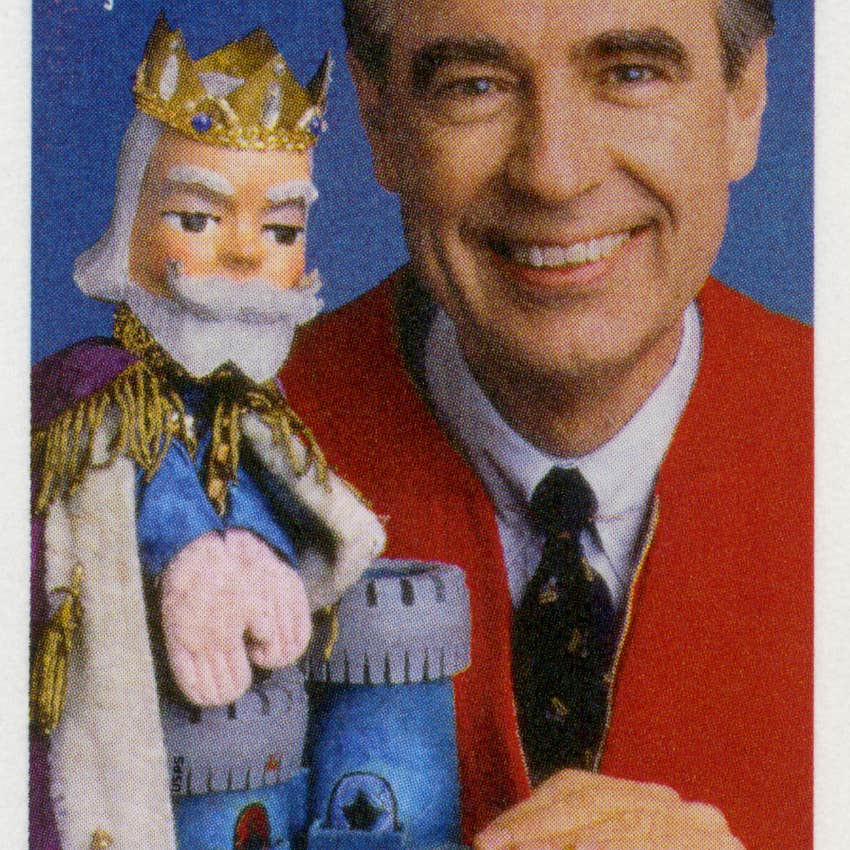
Mister Rogers was undoubtedly one of the most influential icons for millennial kids, and one reason why came from the way he didn’t really treat them like kids at all. Platis said Rogers’ approach was to expound on “social issues like you could, in fact, handle the truth.” This led an entire generation to believe they didn't “need information wrapped in bubble wrap in order to process it.”
Obviously, an adult shouldn’t tell a child everything as bluntly as possible, but it does a disservice to kids to act like they can’t deal with complex issues because of their age. They see those things happening every day, so they have every right to understand them a little better.
Author Karen Russell explained that as a mother herself, she “[understands] the impulse to reassure our kids that nothing is wrong” all too well. But that can also hold kids back from knowing they “can be agents for change, or even that change is possible.”
Mister Rogers didn’t see a reason to hide the messier parts of the world from children, and now millennials are ready to hear the truth in a way few others are because of it.
4. ‘Where on Earth is Carmen Sandiego?’
“You spent your childhood chasing a woman in a red trench coat across the globe using nothing but context clues and deductive reasoning,” Platis said of this '90s hit. “This is why you can’t consume any media without asking, ‘What are they not showing me?’ and ‘Who benefits from this framing?’”
As nice as it would be to turn on the news or read an article online and trust that it was accurate, even the best outlets can tinge their reporting with bias. When you add in the fact that more billionaires are involved in media ownership than ever before, it becomes clear that you might not be getting the full story.
Everyone has their own values and agendas, and it’s very hard for even those with the highest level of integrity to completely remove that from headlines or posts. Anyone who grew up on Carmen Sandiego knows how to ask some deeper questions that will help them see what’s real and what’s fake.
5. ‘Bill Nye the Science Guy’
 CarlaVanWagoner | Shutterstock
Science is being attacked in an unprecedented way, but millennials are impervious to the chaos. As Platis pointed out, Bill Nye made sure they “learned the scientific method before long division,” which has given them unique insight into what actually constitutes evidence and what can be considered a reliable source.
Chances are even the kids who enjoyed Nye’s show the most don’t perform experiments in a lab on a regular basis, unless they pursued a scientific career. That doesn’t stop them from knowing that evidence is required for something to be factual and that all theories must be put to the test instead of just assuming they’re accurate.
These millennials can easily spot the difference between data and statistics and anecdotal evidence that seems to support a hypothesis but has no real scientific basis, which has prepared them for a world that is probably more deceptive than they ever expected it to be.
Mary-Faith Martinez is a writer with a bachelor’s degree in English and Journalism who covers news, psychology, lifestyle, and human interest topics.
