
Experts Say Low-Quality People Often Share These 5 Conversational Habits & Many Mistake Them For Confidence
 Shalom De Leon | Unsplash
 Research has linked self-critical and self-focused thinking patterns to social anxiety, relationship difficulties, and diminished connection with others, and the same dynamic plays out in how people actually show up in conversation. The way someone communicates is one of the clearest windows into how they think about the people around them.
Studies show that a lack of communication is the number one reason couples break up or get divorced. Nagging is a major culprit — relentless reminders, suggestions, and advice on how, when, and why we should do things. But there are other conversational habits that low-quality people share, too, that are often mistaken for confidence off the bat.
Experts say low-quality people often share these 5 conversational habits — and many mistake them for confidence:
1. Low-quality people often nod along even when they don't agree
How many times do you catch yourself saying yes when you mean no? Do you say, "I don't know" for fear of being judged, dismissed, or rejected?
When we systematically accept things against our will, shut down to keep the peace, and rationalize why that’s okay, we set ourselves up for resentment and anger down the line. Covering up our feelings and not trusting our partner to be mature enough to manage their response to "no" just won't work.
It's better to say, "No, I'm not available to discuss this right now. I need to unwind and think about it. I'll be ready to talk about it in an hour." Then keep your promise.
Research has identified emotional suppression as a critical factor in determining psychological well-being within marriage, finding that hiding feelings from a partner consistently undermines relationship satisfaction and personal mental health.
2. They often send mixed messages
 Daiga Ellaby / Unsplash+
Most of our communication is non-verbal, according to research from the University of Texas, and when it's out of sync with our words, we are sending mixed messages. No wonder couples argue, get frustrated, and eventually tune each other out!
When we say one thing while rolling our eyes, tightening our lips, and/or shrugging our shoulders, we send another message, usually one of being dismissive, defensive, and/or judgmental.
One way to avoid this is to maintain eye contact. This ensures active listening and allows you to focus on what the other person is saying instead of considering what you are planning on saying next.
3. Low-quality people always seem to try and have the last word
In the world of neuro-linguistic programming, we say that effective communication is when your message is not simply sent but transmitted and received by the listener. As relationship expert Dave Elliott explains, someone who habitually deflects and defends creates a pattern of "dueling defensiveness" that is wholly unproductive and absolutely destructive.
When talking about uncomfortable subjects, it's too easy to become judgmental, blaming, and defensive — tactics that all lead to communication breaking down. Priding yourself on being a pit bull, taking things personally, finger-pointing, finding fault, and needing to have the last word, well, it just doesn't work.
Instead, set your intention for how you want the conversation to go so both of you win, and take some time to think about all the different possibilities and outcomes. Creating a peace treaty together that sets up the guidelines for communication to ensure smooth, respectful, and authentic communication is a great tool.
4. They often finish other people's sentences
 Kübra Arslaner / Unsplash+
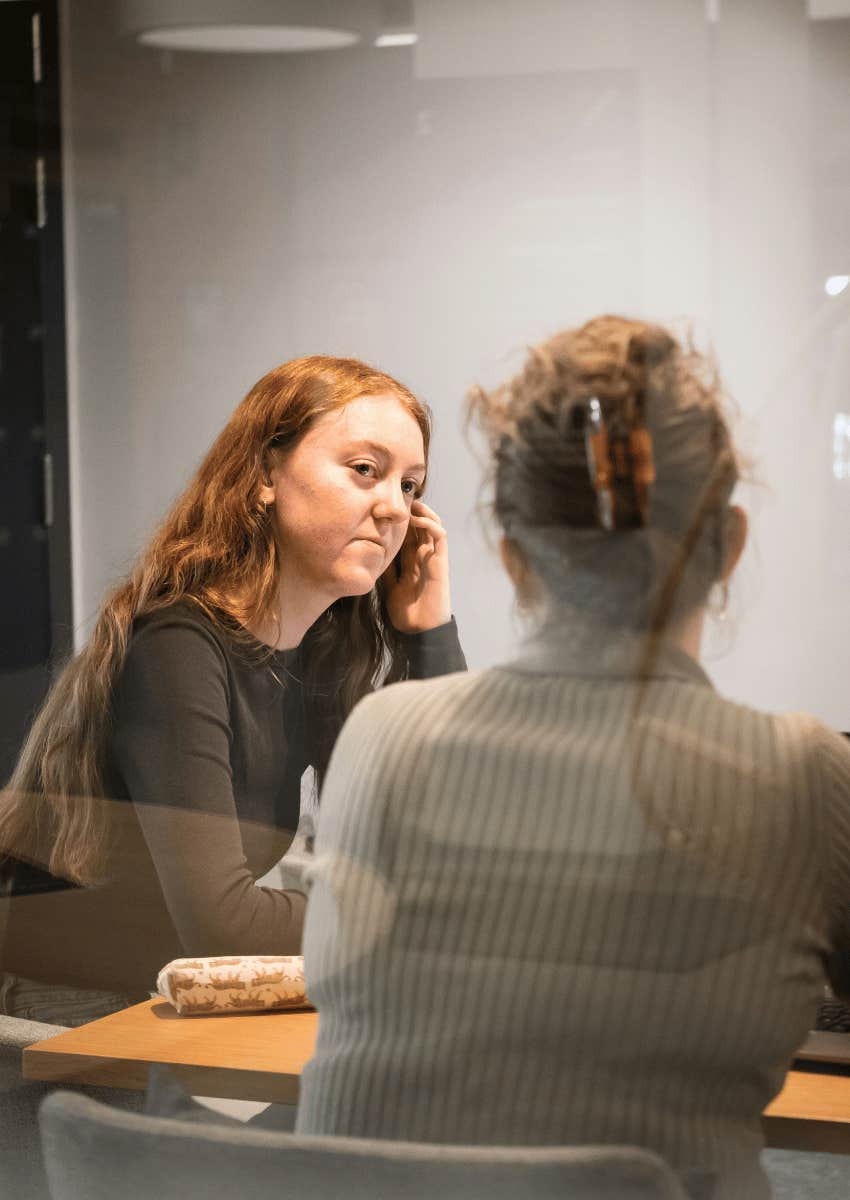
This is a bundle because when you have one, you almost always have the other two as well. How many of us have forgotten what we learned in grammar school? Don't interrupt and let the other person take time to formulate an answer. On this level, men and women communicate so differently.
Men often complain that they are still thinking about an answer when their partner starts badgering them for a quicker response or asks another question while they are still thinking about the last one.
Take time to pause by counting to 30 before saying anything at all, and don't ask several questions at once. And while you're at it, do as we do in France: Roll your tongue around your mouth seven times before you speak.
You might look like a cow chewing its cud, but it forces you to slow down and think about what you're going to say. It might even get a smile in an otherwise tense situation, but at least your partner will feel respected and know that you're patiently giving him the time to respond.
Cutting people off mid-thought sends a clear message: what you have to say matters more than what they do. Marriage therapist Lianne Avila explains that defensiveness and the need to counter-respond before someone finishes speaking is a negative coping mechanism that prevents partners from feeling heard
5. Low-quality people tend to give commands
Somewhere along the way, the idea of polite requests, please, thank you, and other words of appreciation in everyday conversations has gone the way of the Smith-Corona typewriter.
From the classic, "Don't leave the toilet seat up!" to "How long does it take to empty the trash?" — these commands are the quickest way to send a man to his man cave. Instead, adopt this simple one-liner that will train any man to jump up and help.
"Honey, I feel like a queen when you see the trash can is full and take it out for me! Thank you so much for doing that!" There's nothing wrong with a little over-the-top appreciation, which always works and is the best way to foster open, loving, authentic communication.
Deb Dutilh is a Relationship and Compatibility Coach and has over 25 years of international experience in teaching and personal development. She helps women stop people-pleasing and learn how to communicate their needs.
