
My Sister Is Dead — And I'm Guilty As Charged
 Daria Trofimova | Unsplash
 I didn’t kill my sister. She drank herself to death. But I had my part in it. I didn’t stop her. It feels like murder. During grief counseling, I learned the difference between “moving on” and “moving forward.”
Moving on is going through the motions day by day as if on autopilot. Never really accepting or getting past the grief of loss.
Moving forward is understanding what’s happened, continuing to go through a healthy grieving process, and coming to a place of acceptance.
I’m moving forward, but I still have a sense of guilt that will never, ever leave me. Post-chemo, my sister Robin had a lot of long-term side effects, predominantly lymphedema in her legs.
Her doctors didn’t catch her ovarian cancer; she did. They refused to send her for a CA125 marker test. Had she not cheated the system, she’d likely have died years before her self-inflicted alcohol-related death.
As I type, I’m introduced to the irony of this tragedy. I’d never thought of this before now. She did all she could to save herself in 2005, yet she drank herself to death in 2022. This confirms what I’ve said all along: She didn't want to die. Something new for my already scarred brain to process, ugh.
My sister is dead, and I'm guilty as charged.
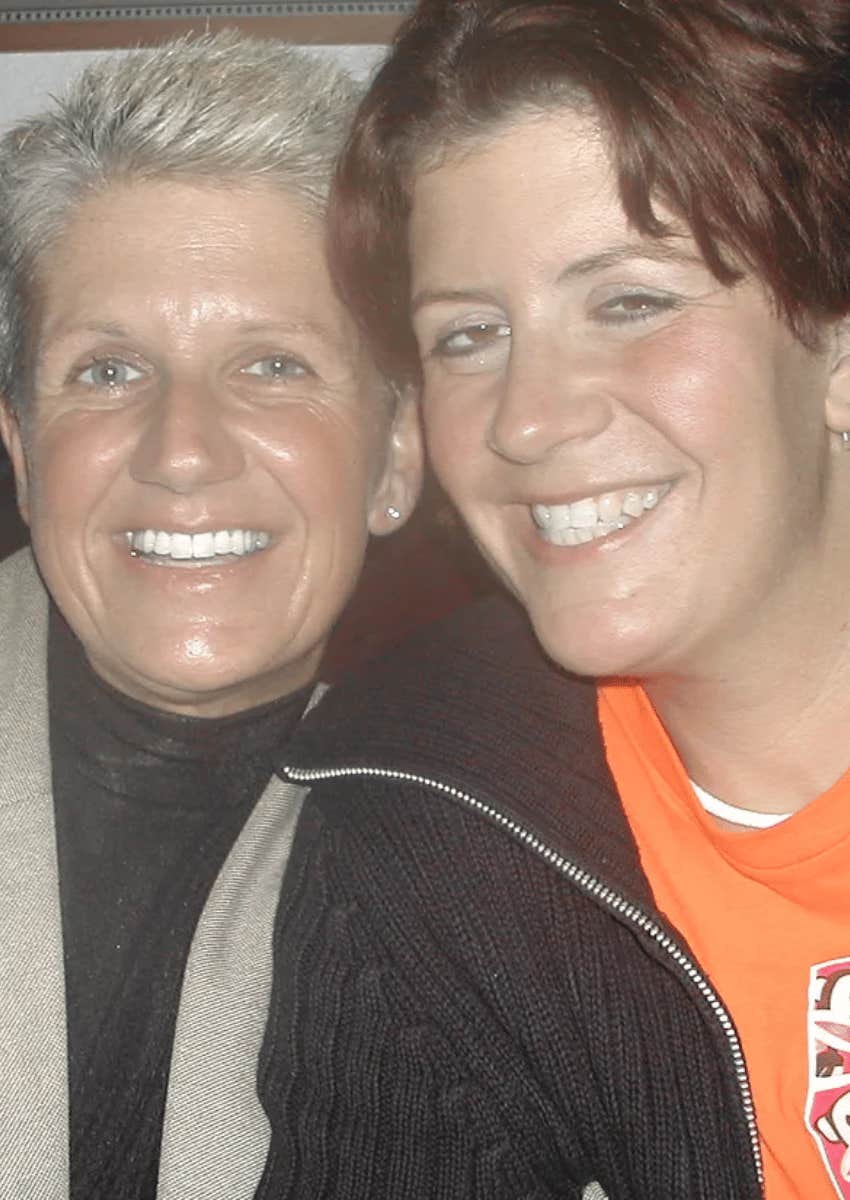 Photo from Author
I loved my sister unconditionally, from birth. Being eight years older than me, she was always there. Like a third, cool parent. Always present, always protecting, and always loving me like her own child. I reciprocated until things got harsh, and now I look back with regret.
In 2007, she lost her job due to financial cuts (that’s her version), and that’s when her life changed. Her job was her identity.
She also moved in with her partner and her two children, which was a huge change that consumed her more than I think she realized it would. I am a stepmother, and can attest, it’s not for the faint of heart. I think it was much harder on my sister than she ever realized or could handle. That was just one of the issues that injected craziness into her life.
She eventually held one more job in her field, mental health, for a few years, but it was never at the executive level she was used to. I think in hindsight, she felt it was beneath her as she struggled to humble herself. She had a pretty big ego, which was well deserved in some respects, but occasionally it was a little too big for her britches.
I always gave her the benefit of the doubt. Always. She had been my trusted big sister and confidant my entire life. Even after being burned by a few bad “loans” and “fake news” stories, I initially believed everything she told me. And I would defend her to the hilt with anyone who challenged her truths. Until I started to see the light.
What I didn’t do for my sister
As her life got harder and more downtrodden, I helped her as much as I could. I “loaned” her money until I finally had to stop. I listened to her stories and complaints, many being someone else's fault but never her own, and I tried to encourage her and offer sound advice until the bitter end.
But my patience wore thin. The last decade of her life was a constant ball of swirling chaos. Her relationship ended badly, she had an addiction to Adderall, which caused a gambling addiction, she ended up in a halfway house, had sketchy roommates, struggled to make ends meet, and was working in what she referred to as “low-rent” jobs until she could get her mental health license renewed.
According to her, she renewed it in the early 2020s but was struggling to find a job. I learned posthumously that it lapsed in 2010 and was never renewed.
At the time, I was newly married with two stepchildren, and we had a crazy ex-wife in the mix. It wasn’t the time for me to offer up a sofa to my unstable sister, for I can guarantee it would’ve caused an issue with our child custody plan, and I wasn’t going to do that to two 7 and 9-year-old children.
As her life and her phone calls got weirder, my mom was deep in the throes of Alzheimer’s, my dad was struggling as her sole caregiver, and we were heading into the mission field in Guatemala. Chaos was ensuing all around us.
Robin would call babbling on about someone at work, a neighbor, or a landlord, and all of the problems they were causing. I’d listen, but my patience was at its wits' end. I’d get short-tempered sometimes and yell, “Oh my God, why do you know so much about these random people, and why do you care? I don’t care about any of this! Tell me what’s going on with you.”
It was her way of deflecting how bad things were in her life. Talking about others took the attention off her.
On occasion, she’d call with cryptic messages like, “I need to talk to you, but I can’t until Susie (not her real name) is gone. I’ll call you later.” I’d wait, but the call would never come. I would call her at a later time, but she wouldn’t answer. Sometimes for days.
I’d also get a lot of “I have something I need to tell you, but I can’t talk right now,” calls. Those calls never manifested into anything concrete, either, although I wish they had.
It’s important to note that, prior to things going south, Robin and I talked all the time. Sometimes daily, sometimes 5–6 times a week, sometimes multiple times a day. We were close, we were sisters, and we were best friends.
But after her job loss, eventual relationship loss, and life shift, I think she lost hope but kept going through the motions. And I didn’t jump in with a life preserver. And then my mother died from Alzheimer's.
The bond that broke my sister
 RDNE Stock project / Pexels
Robin was in denial about our mother’s diagnosis for a long, long time. Probably the entire time. They had a different bond than my mom and me because Robin was from my mother’s first marriage, which ended in divorce. They moved in with my grandparents in 1963 and were thick as thieves even though Robin was only 3-years-old.
My father married my mother in 1965, and I was born in 1968, giving Robin several more years alone with my parents. The bond they had was strong, loving, and always much tighter than I realized until my mother’s health declined.
The last two years of my mother's life, Robin would call me and say things like, “I talked to mom today, she sounded great! I think she’s getting better,” to which I, the realist, would chime in with things like, “Robin, wake up, she has Alzheimer’s. This will not get better, and it will eventually take her life.”
“I know, she just sounded good today,” she’d reply sheepishly.
Then I’d feel like a piece of crap.
“I know, we have to embrace the good moments,” I’d say, trying to repair the emotional damage I’d done.
When my mom died on March 23rd, 2021, it was hard on all of us. We knew it was coming, but it didn’t matter. My parents were married 56 years, she and I were close, but the bond between Robin and my mom was impenetrable. It hurt us all. But it broke Robin.
Drinking ran my sister's life
Our family drank our entire lives. Not like raging, abusive alcoholics, but working, professional, “functioning” alcoholics.
Robin’s drinking took a turn when life went downhill. My husband saw it when he randomly showed up at her home in 2019 on a surprise “welfare check” he did while working at a nearby trade show.
She was drinking vodka and soda out of a giant plastic tumbler, and he thinks she was taking it with her wherever she went. When he returned, I confronted her about it and told her we would help, but she had to stop drinking like that. She said she knew she was drinking too much, confessed it all to me, and promised she would seek some help.
When we spoke over the next couple of years, she seemed coherent, capable, and a bit like her normal self. I always wanted to visit her, but life would get in the way. Trade show here, family event there, then that pesky pandemic. In the past, I’d see her at least once a year, sometimes more, but towards the end, that gap widened significantly.
She never embraced video technology, so I didn’t physically “see” her and the changes that had happened to her until it was too late.
The call that my sister was dead
 cottonbro studio / Pexels
My father called me on a random day in February 2022. “Your sister's roommate called and said she’s drinking a lot. She couldn’t get my number because Robin always has her phone stuck to her, but she got it and thought we should know. She’s yellow, her stomach is distended, and she can barely walk.
Jesus Christ. I said, “Um dad, you realize what that means? She has liver damage if she’s yellow. This has to be from drinking. She has cirrhosis.”
Rewinding to her post-chemo issues, she had been in and out of doctors' offices and hospitals for years following her cancer. She was in remission, but her side effects remained long-term. It was in those that she was able to hide her drinking from us. By using past medical problems to mask her current issues, we were oblivious to how bad things had become. She was always talking about getting PET scans, visiting cancer centers, and having multiple stomach ulcers as a result of her long-term chemo effects.
We were oblivious. But had I gotten myself on an airplane and gone to see her face-to-face, her face would’ve told the whole story, and I feel I could’ve intervened.
When I tried to call her that day, she answered the phone, said nothing, and hung up on me. Odd. After that, all my calls went to voicemail. I left her multiple messages, telling her I knew she was having some issues and we wanted to help.
But it was too late. Three days later, my dad got another call. She’d collapsed and was taken to the hospital by ambulance. The next call came from a hospice nurse.
What the actual heck? She was in stage four liver disease.
What happened over the next week I can only describe as pandemonium. As she had no plans for later life, they were seeking someone to make decisions on her behalf. I was able to talk to her, but because the call was more than our normal five-minute call of late, it was clear to me that something was wrong. She insisted she was in the hospital for her legs and that she’d be going home soon. She had hepatic encephalopathy, liver disease-related dementia.
This now made sense as to why her calls were getting less frequent, shorter, and weirder. She never went home.
Hospice visited her to see if she was capable of setting up a power of attorney and deemed she wasn’t. Therefore, from Guatemala, I had to get guardianship over her through the state of Michigan via multiple Zoom court meetings.
A red-tape-filled nightmare. I obtained temporary guardianship, had to choose an assisted living facility, and hopped on a plane to see my sister for the last time. Without warning, my sister was dying.
When I walked into the room, she beamed, and my heart sank. In the span of the few years I hadn’t seen her; she’d aged about 20 years. My bird, her nickname, would be flying away soon.
The aftermath and guilt of my sister's death
When the call came on May 22, 2022, shortly past one year after my mother's death, I collapsed in a heap on the floor. How did this happen? How did I let this happen? How did I fail my sister, whom I loved so much, so badly?
I’m a horrible person. God has to be really upset with me.
Trying to process her death took me a long, long time. I’d never considered grief counseling before, but when suggested by my husband, I caved.
I can’t change what happened. While I felt like I didn’t do as much as I could’ve, she also held on to this secret because, I know, she didn’t want to burden us with any more trouble than we’d all already had in the family. She thought she was protecting us, but her ego and her pride took her life.
Even today, as I write this, I know I am not fully responsible for what happened, but the tears well up in my eyes as I remind myself that I could’ve done more.
What this has sparked in me is a strong shift in how I handle my interpersonal relationships from here on out. I no longer wish to hold on to drama or grudges. I no longer wish to stand back while I see someone struggling. I will no longer keep my big mouth shut when I know that someone I love is doing damage to themselves, whether physically, emotionally, or mentally.
But no matter how much I’m taught, told, or reassured that it wasn’t my fault, the grief and the guilt will remain a part of me for my lifetime.
Don’t let this happen to you. Speak up. Stand up. Step forward. Life is too short to lose the ones you love.
Kristen Crisp is the founder of Not Even Wine With Dinner. A community/mission for those looking for peer support with sobriety, self-esteem, mental health, aging, and all the things that come with being human. She is also a frequent writer on Medium.
