
Americans Get Sad Faster Than Everyone Else For A Reason One Happiness Expert Says Is Easily Fixable
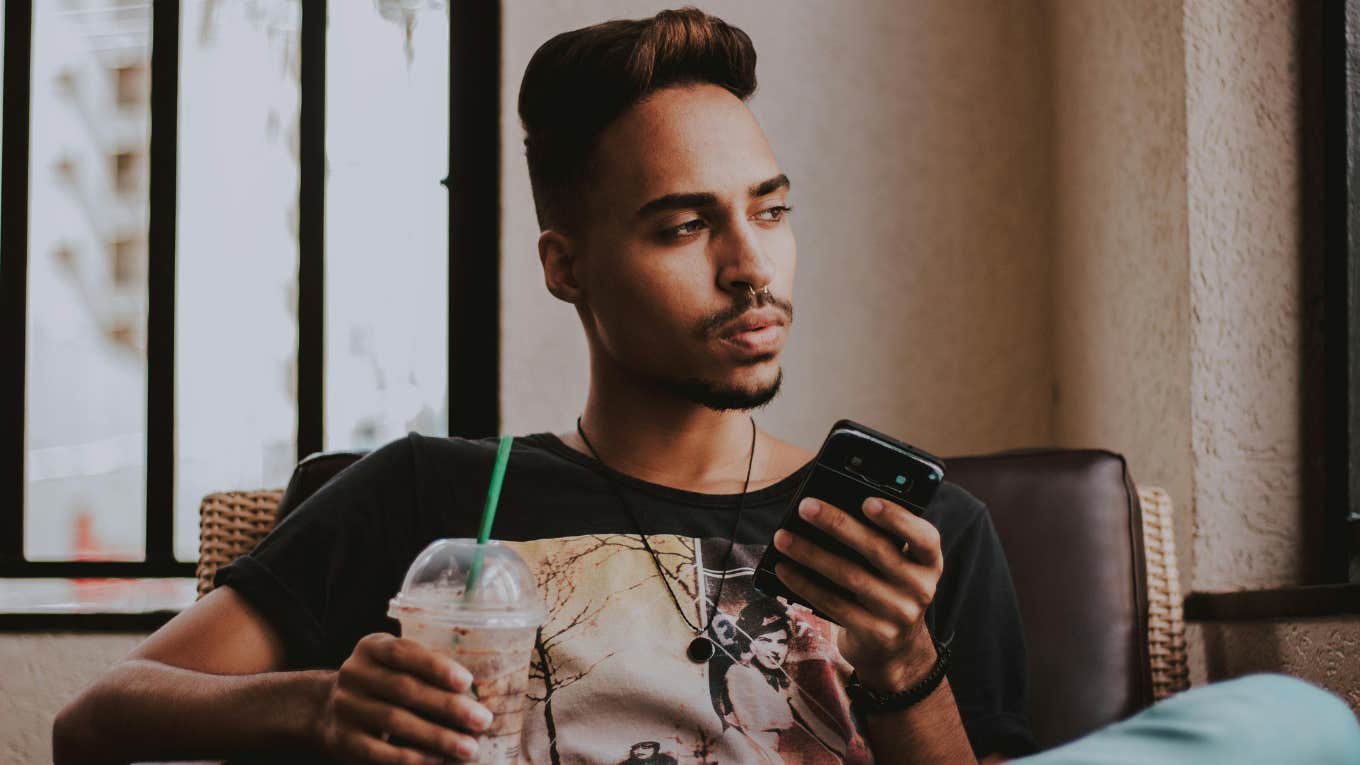 Gabriela Pereira | Pexels
 Social scientist and Harvard professor Arthur Brooks analyzed findings from the World Happiness Report and theorized that Americans, in particular, become sadder faster than people in other countries, and social media is likely to blame.
These days, everything seems to hinder moments of real happiness. Even with highly advanced technology, access to numerous resources, and the security that comes with being a powerful nation, Americans are not happy. Why?
The rise of social media was supposed to be a way for us all to connect at breakneck speed. However, as Brooks noted, English-speaking countries use social media in a grim way, and social media itself is programmed to keep us apart rather than bring us together. In other words, we're not using social media the way we should.
Americans get sad faster because they use social media differently from other countries.
According to Brooks, other countries are keen on using social media apps like WhatsApp as a means to an end; to plan hangouts and actually meet with their friends in real life. Americans, not so much.
This is because the ways social media is programmed in English-speaking countries differ greatly from those in other countries. Much of the time, these apps act as echo chambers for whoever we want to see and interact with, not just who we follow personally. Coupled with how we use these apps makes it extremely easy to form what psychologists call parasocial relationships.
According to Howard University Doctoral Students, "Parasocial relationships are one-sided relationships, where one person extends emotional energy, interest, and time, and the other party, the persona, is completely unaware of the other’s existence."
Brooks warned that using social media in this way hinders relationships, stating, "any technology that substitutes for your relationships is going to make you unhappier."
The solution could be as simple as not following anyone you don't know personally.
It's important not to allow social media to become a replacement for real-life relationships. Brooks offered the tip: "Don't follow people you don't know, but stay in contact with people you do know." Happiness will only continue to decline if we're not careful about whom we give our attention to.
 Dean Drobot | Shutterstock
There are plenty of benefits to social media if we use it to nurture the relationships that we already have. According to Professor Linda C. Ashar, JD, "Whether through online forums, sharing documents, group chats, or how-to videos, individuals can work together with others to achieve common goals, create meaningful content, and solve problems collectively."
Therefore, it's really not even about using social media less. What it's really about is using it to connect with those we already know or can realistically connect with through social media.
If we're always reaching out to people we know will never really reach back to us (like influencers, celebrities, the rich, etc.), we'll never be happy.
So don't be ashamed about using social media. Instead, try to be aware of when algorithms make it easier to connect with people you don't actually know.
If you find yourself spending too much time with an online caricature, shift your attention to a friend in real life. You'll have a happier heart as a result.
Luke Aliga is a writer with a degree in Technical Writing and Communication who covers relationships, culture, and human interest topics.
