
I'm The Parent Of A Transgender Kid. The State Of Texas Says I'm A Child Abuser.
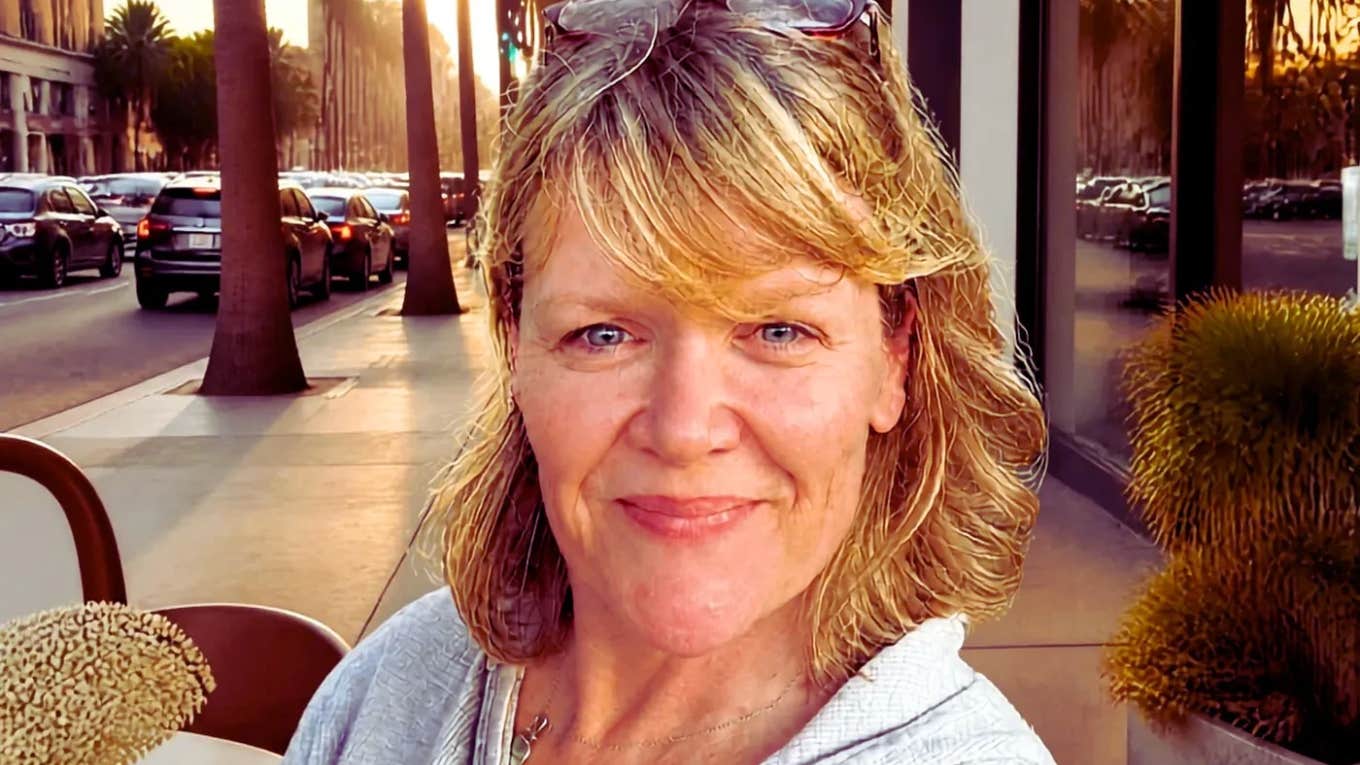 Courtesy Of Author
In the fall of 2018, my twelve-year-old daughter was seated at the peninsula in our kitchen while I was having coffee and getting ready for work. We had a rough entry into middle school. She had called me multiple times to be picked up — sometimes from the nurse’s office, sometimes from the restrooms.
She was sick, or her stomach hurt, or her head hurt; pick anything from the seemingly endless list of options that all arrived at the same place: I cannot be here; please come get me.
I was pouring coffee into a thermos, checking the clock on the microwave periodically and trying to figure out how many minutes were left and how many things I needed to accomplish before walking out the door.
She looked at me and said, “Mom, I need to tell you something.” There was a flat seriousness in it. I looked up. “I’m being bullied at school.”
I stopped, took a breath in, and went and sat down next to her on a stool. She didn’t want to get into the details. She didn’t want to name names. But I asked what I thought was the all-important question: Do you feel physically safe there?
“No,” she said.
Another breath as I processed all of that. The wheels in my head were spinning loudly. The bullying connected a few dots for me. Well, then you can’t go back.”
Her relief was palpable. I saw her narrow body exhale the stress, the same stress that I then inhaled, passed off to me like a baton in a relay race. Everything I had planned for the day fell apart. Most of what I had imagined about parenting had already done so.
The truth is that I knew why my child was being bullied; it wasn’t a mystery
 DimaBerlin | Shutterstock
The guidance counselor advised me that she had told some of her friends at school she wanted to be addressed as a “he” but hadn’t told us that directly yet.
We had had a rough time with it starting around third grade. There was a long period of search and self-diagnosis. It ranged from the sweetly comical “I think I’m Jewish” to possibly being queer, bipolar, or having a dissociative identity disorder. She was searching and asking questions, questions that confused and bewildered me and my husband. By the time one of those theories emerged as gender dysphoria, the truth is that it was hard to know what to take seriously.
But the gender dysphoria diagnosis was at least a conclusion that lined up in front of me. I could see it in the subtle shifts toward more masculine clothing, the request for a chest binder (which I had originally chalked up to discomfort with puberty), and the haircut. All the fashion choices leaned suspiciously away from stylish tomboy and more toward actual boy. I had guessed it was the style at school; I was wrong.
I understood that this was a moment of no return, a moment to acknowledge what I didn’t want to see or say out loud. It was hard to imagine what life looked like this way — and more than a little scary. But here we sat. In some ways, it was less about the bullying and more about me choosing to see.
I had to find a new school. We had visited a private school that my husband really liked prior to sixth grade. It was a lovely place but seriously inconvenient. Weighing safety against convenience, though, there really was nothing to deliberate.
I called the school and asked if there was still an opening in their middle school. Thankfully, the answer was yes. I explained that E was transgender and that he wanted to be at a school as “himself.” It was the first time that I said it out loud and used the pronouns that he had requested at the public school.
If all of it had ended there, it might have been a chapter in my life instead of a book. It did not end there.
When your child comes out as transgender, what they are effectively saying is that part of them is very different than what you thought you knew. What you could see, feel, and embrace with a hug — this person you thought you knew intimately and understood — sees themselves differently. It’s a powerful curveball.
Like most people, I had no understanding of transgenderism and was poorly equipped
I had a lot of catching up to do. Enrollment in the new school was a single step onto a path that didn’t wrap up neatly that day. We started the slow, painful process of adopting a new name, “E,” and practicing new pronouns in our house. We told family. We attended a support group.
Periodically, I marveled at the perceived normalcy of other families, feeling mostly alone. For reasons that felt completely about protecting my child and my sanity, I withdrew from social media. There was still so much work to do, so much change to make. Simple things like doctor's appointments became stressful and complicated. We did a lot of emotional work.
Nagging underneath this to-do list were bigger questions about gender-affirming care. It was daunting, and I was terrified of making a mistake. I had hoped that by switching schools and names and pronouns and surrounding our kid with love and support we could postpone larger decisions until he was older, but the dysphoria persisted and flared up with bouts of depression and anxiety that would not be ignored.
Still, I hesitated. I read somewhere that a typical waiting period is a year. Somehow we held out for over two. It was a wise and helpful therapist who broke the dam. He pulled me aside and suggested that we let E try hormone therapy. He assured us that changes were slow and that we could consider it a trial. He said that if E didn’t feel better within a week, we could stop.
In our exhaustion, having turned over every other stone, we accepted it as something worth trying, now that everything else had been tried. The therapist was right: The hormones were a life raft. E was more present, more engaged with us and with friends. Life resumed in a way that felt authentically normal and true.
Then the governor of Texas issued an order saying gender-affirming care was child abuse
 Lopolo | Shutterstock
Then, on February 22, 2022, Greg Abbott, the governor of the state of Texas, where we resided as a family, issued an Executive Order naming gender-affirming care as child abuse and directing state resources to investigate parents like me as child abusers.
On June 2, 2023, legislation was enacted to prohibit it entirely and penalize physicians for prescribing it. The smart and compassionate physician who treated E warned me to be careful who I spoke to and what I said.
The exact words she used were “your friends might not be your friends.” It was ominous and more than a little scary, but mostly my fear was about facing down life without the health care my child needed. We couldn’t go back.
We traveled out of state to get care, because once you figure out what is right for your child’s health and safety, it doesn’t really matter what the governor says. Or even what your neighbors might do.
I felt defiant. I felt angry. And I was mostly baffled by a system that viewed me as a child abuser and felon. I had awoken on the wrong side of society’s bed. And what I had missed from my previous vantage point came into very clear focus. Once you see something clearly, you cannot unsee it.
Our son is an adult now, and the struggle of gender transition is behind him
He is a college student getting good grades in his classes. He studies, reads novels, plays video games, travels, and hangs out with friends. He is kind, thoughtful, and compassionate. I am proud of him.
We are still bombarded by the rhetoric of transgender everything: restrooms, identity documents and sports teams. I worry about how this impacts him. We’re the evil “other” that I hear about on certain news outlets — a family to be wary of, perhaps to disregard and avoid. The messaging is very clear: there is something wrong with us.
That is why I write. I write to connect that hostile rhetoric to a real family of real people doing regular things. I write to explain what is counterintuitive to many people about gender affirming care for minors. I write because all of this could have been a little easier with just a little more education and understanding. I’m hoping it will be easier for the next family going through it.
Lisa Gibson is a marketing executive, mother, daughter, wife, friend, yogi, artist, and adopter of pups based in Denver, Colorado. She believes that the world could be a better place for everyone if we work a little harder to make that happen.
