
If Your Cat Constantly Bites Your Arm, It's Usually Trying To Tell You 6 Things
 Daria Bondina | Shutterstock
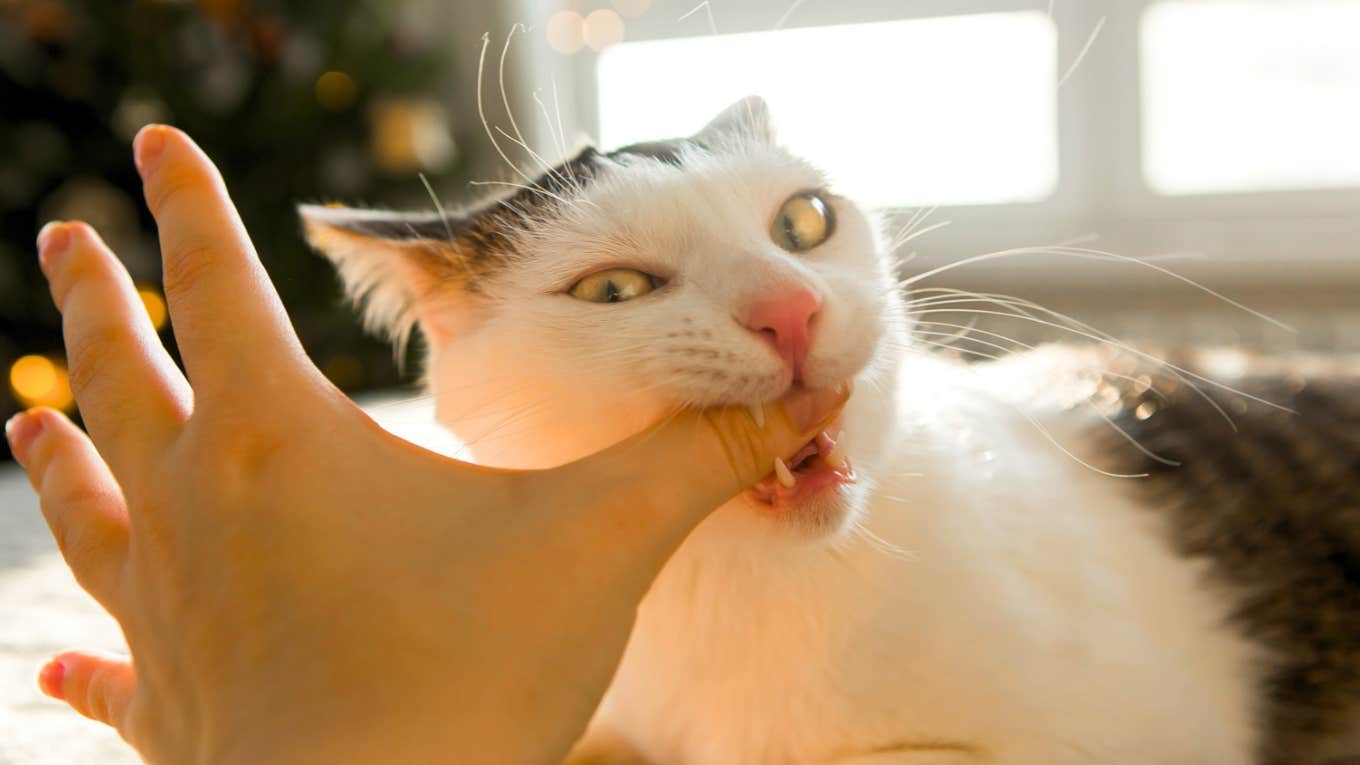
Cats can be complicated at times, and we don't always understand their actions or behaviors. One behavior that's hard to understand is biting, especially when you're just relaxing and petting your cat. Cats may bite their owners for all sorts of reasons. Some are seemingly innocent, and some not so much, so paying attention to their body language and what happens right before the bite can help you figure out why.
Whatever the reason behind the bite, take it seriously if your cat breaks the skin. Even a small puncture can lead to an infection. In rare cases, infections from cat bites can even progress to sepsis. Wash the wound right away with soap and water, watch how it heals over the next few days, and don't wait for redness, swelling, worsening pain, or fever before seeking medical advice.
If your cat keeps biting your arm, they're probably trying to tell you one of these 6 things:
1. They're scared and need some space
 plsdk | Shutterstock
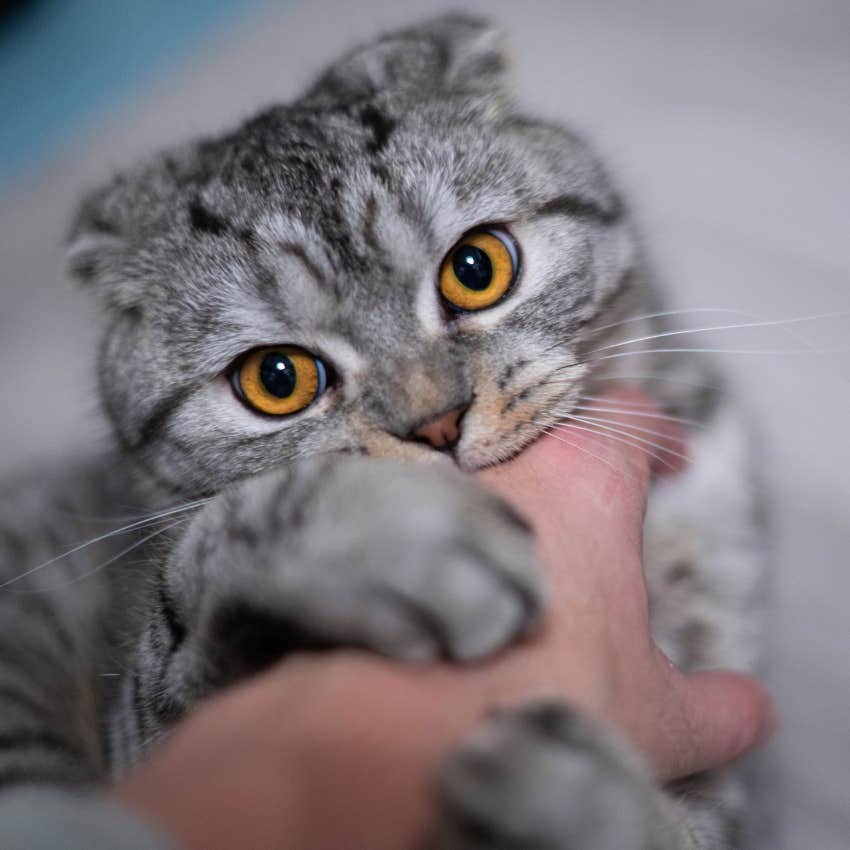
When a cat is scared, you will see it in their body language. They may hiss or try to swat at whatever or whoever is scaring them. You might also expect them to run away and hide.
However, if they can't retreat, they may become aggressive and fight back. If you try to comfort your cat when they're scared, they might bite you. They aren't doing it to be mean, but because they're trying to protect themselves.
2. They're overstimulated and want you to stop petting them
Many cat parents have been bitten by their cat while simply petting them. You could've been stroking their head, thinking the cat is enjoying it, until they turn around and bite you.
Some cats enjoy being petted at first but become uncomfortable if it goes on too long. If they become tired of being touched in a specific location or for too long, they may show signs like a twitching or lashing tail, ears turning backward, or a tense body. Stop petting and give them space when you notice these changes. Some cats give very subtle warnings before biting, so they're easy to miss; once they run out of them, the easiest option is often to bite you, since it seems like the most effective way to make you stop.
3. They're grooming or cleaning you
 Diana Taliun | Shutterstock
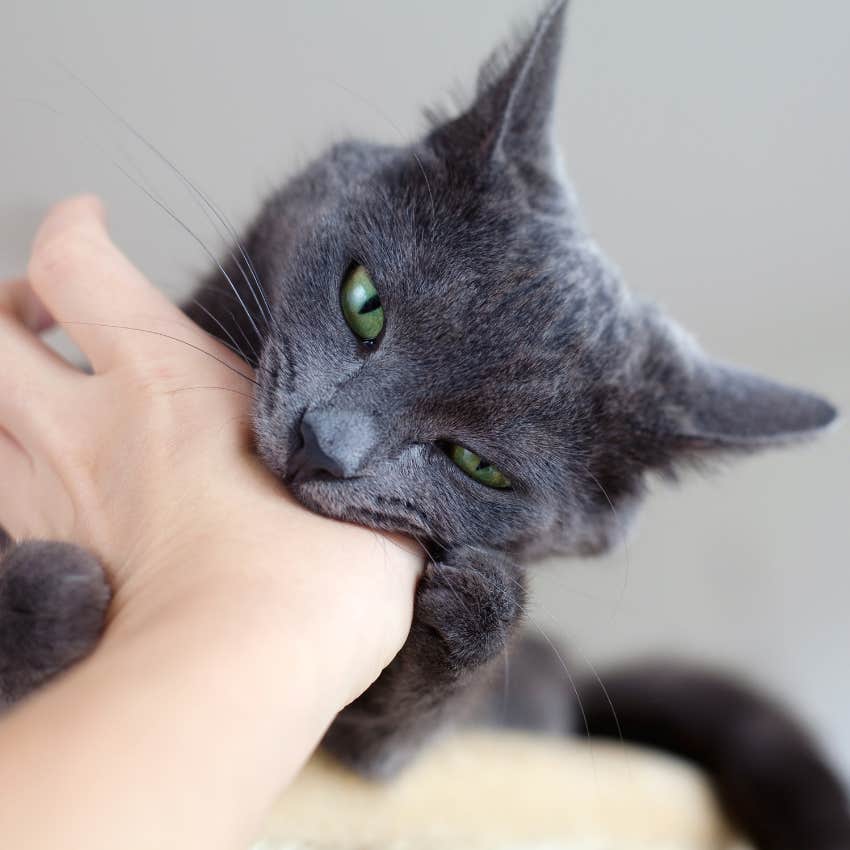
You may have noticed your cat grooming themselves often. They tend to lick their fur and maybe nibble as well.
Cats may also groom other cats and their owner as a way to be affectionate. While grooming you, they may gently nibble, then go back to licking. This can be part of grooming, but pay attention to their body language instead of assuming every bite is affectionate.
4. They're getting carried away during playtime
Playing with your cat can be fun and all until they bite you out of nowhere. This is usually a form of play aggression. This can show up as them biting, scratching, hitting, or chasing you during playtime. It's because they're directing their hunting behavior into play. Roughhousing with your hands and feet might teach them that you are another toy for them to play with.
Use a wand toy instead of your hands or feet so your cat has something that's not your hands or arms to chase and grab. If they start biting you, pause the game and avoid sudden movements that could encourage more chasing. Don't yell at or punish them, since that can make them scared and make biting worse.
5. They're trying to get your attention
 Inna_Kandybka | Shutterstock
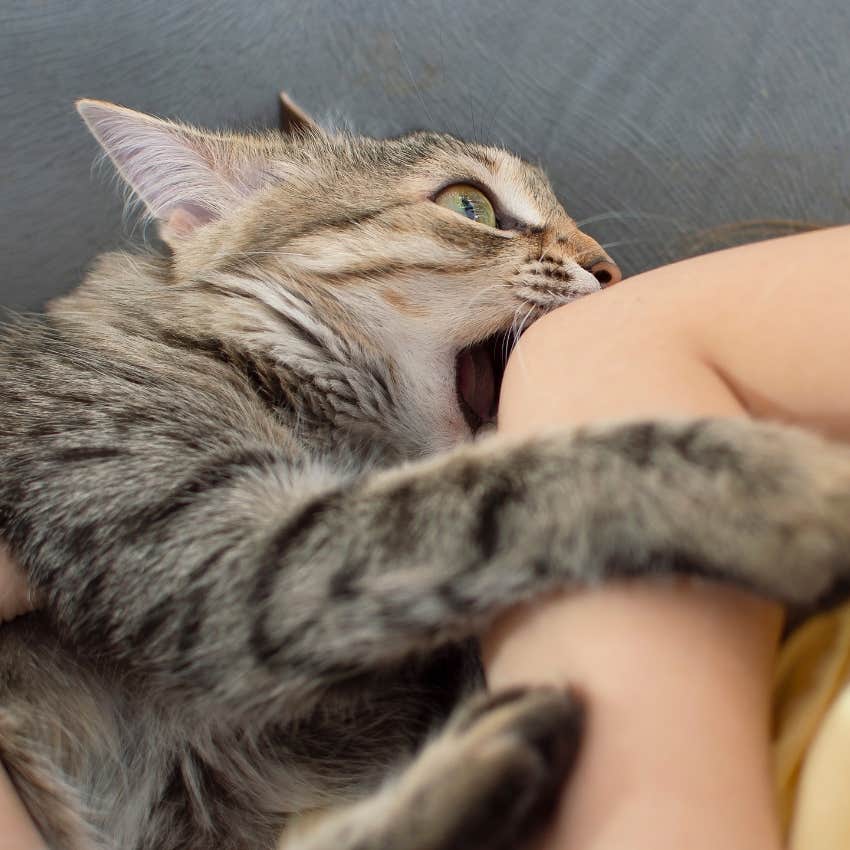
Have you ever been relaxing with your cat and they just nibble on you? They might be trying to get your attention or invite you to play. These gentle nibbles are often called love bites, but the name doesn't tell you exactly how your cat feels.
Even a soft bite can hurt because of a cat's sharp teeth. It can also mean they've had enough petting, so look at their body language and what was happening before the bite.
6. They're in pain or not feeling well
Sometimes, your cat may bite because they're sick or hurt. Cats may become aggressive toward their owners because of their pain and a need to protect themselves.
A cat's natural instinct is to hide signs of pain and sickness from others. In the wild, if another animal notices a cat is weak and vulnerable, it is more likely to attack it. Cats may still hide signs of pain or sickness, even in a loving home. If your cat starts biting unexpectedly, bites more often, or seems uncomfortable when you handle them, schedule a vet visit to check for pain or illness.
Aricka Croxton is a writer with a Bachelor’s Degree in Creative Writing from the University of Michigan who covers relationships, self-help, and wellness.
