
People Who Say They Love Being Alone But Actually Really Deserve Attention Tend To Have 5 Lonely Habits
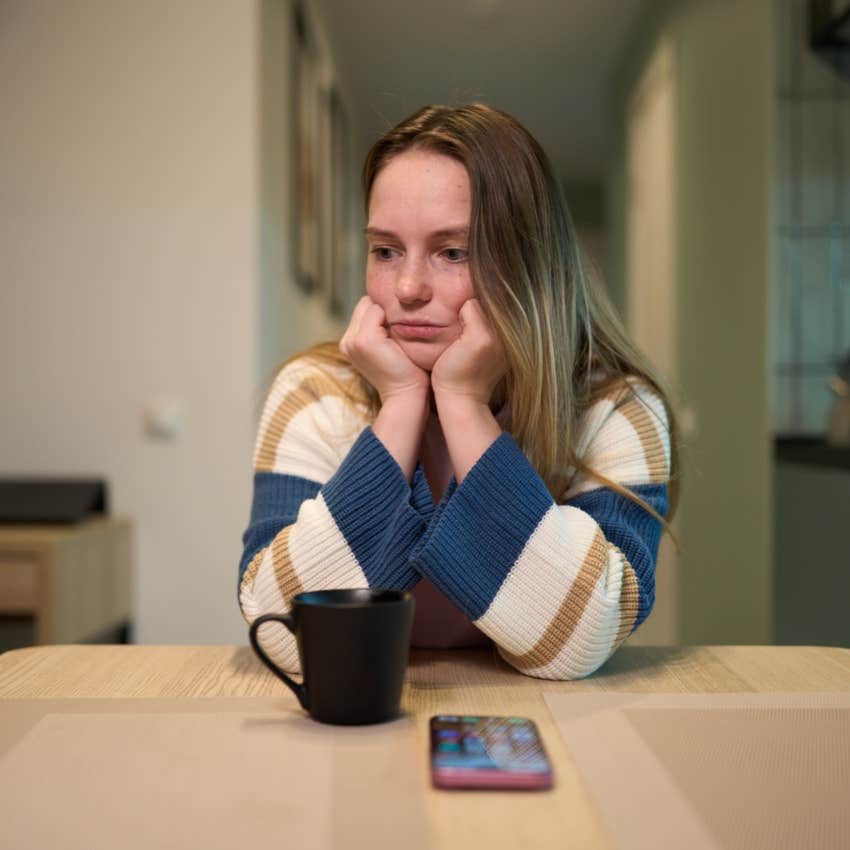
 Photo Editor: Nicole Width | Photo: Krakenimages, Shutterstock
It's absolutely possible to love being alone and still want some attention from others. The problem is that lonely people don't always ask for what they need. Instead of making friends or putting themselves out there, they often revert to sad habits that keep them isolated when they deserve more attention.
Lonely habits of people who say they love being alone but actually really want a little company:
1. They wait for others to reach out first
 Sergey Mironov | Shutterstock
When a person gets used to being stood up for things, or worse, not being asked to go at all, they stop being the person to reach out first. They want to be included, but they don't want to put themselves out there.
Introverts, especially, really value friends that reach out first. Because their default is not to reach for the phone first or to stay home anyway, they often get overlooked when people are thinking of others to invite to outings.
People who are lonely and looking for attention function the same way; they want the people in their lives to reach out first because they have been the ones reaching out first, and they want to feel seen and appreciated.
2. They take up unhealthy habits
Loneliness and social isolation take their toll on people. In order to cope, many people take up extremely unhealthy habits that will further their loneliness and social isolation. Someone who struggles to make friends, for example, might overeat for a sense of comfort or spend hours doomscrolling just for the facade of connection.
A 2016 study led by Newcastle University epidemiologist Nicole Valtorta, PhD, found that lonely individuals have a higher risk of poor health because of a combination of behavioral, biological, and psychological factors. Valtorta explained, "Lacking encouragement from family or friends, those who are lonely may slide into unhealthy habits."
3. They talk negatively about themselves
 Prostock-studio | Shutterstock
Without a close-knit group of family or friends around for support, it's easy to start feeling self-contempt. They might start beating up on themselves, and their self-worth will take a nosedive because of the lack of social interaction and attention. It becomes a vicious cycle.
Chronic loneliness has the same symptoms of negative feelings of self-doubt and low self-worth. When you keep telling yourself you aren't worthy of good friends and fun, you start to believe it and stop trying.
4. They rely on connecting with people through screens
For someone who is chronically lonely, any connection at all can seem like a net positive. However, only connecting with people through screens can still have a detrimental effect on a lonely person's mental health.
A 2015 study found that the rate of loneliness in the United States was steadily declining among teenagers until 2007. The researchers note that 2007 is the same year that the iPhone debuted and insist that that is not a coincidence. In fact, loneliness didn't stagnate in 2007; there was a dramatic uptick.
5. They don't trust others, which keeps them from making friends
 Srdjan Randjelovic | Shutterstock
People who crave attention and are lonely may want to be around others, but have trouble trusting them. This is because they may have been hurt in the past by not being invited, or perhaps they canceled so many times that their friends stopped asking. Whatever the reason, they don't feel like they can rely on others.
Psychosocial rehabilitation specialist Kendra Cherry, MSEd, explained, "If you’ve been deeply hurt by a friend in the past, you might have trust issues. As a result, you might be hesitant to begin new friendships with others." These trust issues hold people back not only from making new friends, but from deepening friendships they already have, because those friends broke their trust once, so they might do it again.
Lyss Micalizzi is a writer covering human interest and pop culture, with a master’s in Literature and Culture, a bachelor’s in English Literary and Textual Studies, and over six years of writing and social media experience.
