
Highly Suspicious People Who Don't Trust Anyone Often Complain About 8 Things On A Regular Basis
 michaelheim | Shutterstock
After being dragged through the mud, some people develop serious trust issues. Even the smallest things can make them question whether someone is genuine or has hidden motives. Over time, this line of thinking leads them to complain quite a bit, with these friendship and relationship behaviors being the most upsetting for them.
8 things highly suspicious people with trust issues complain about on a regular basis:
1. People who are constantly letting them down
 DexonDee | Shutterstock
People with trust issues struggle to see the best in others. In fact, they often just see the worst and completely ignore the good things people do for them. That's probably why they complain so much. It doesn't matter how minuscule the problem is, they're going to let it rip.
Because they've experienced so many letdowns, the smallest issues send them into a frenzy. Often they know it isn't healthy, but they don't know how to stop the pattern.
That's just another reason why they're so easily triggered. As counselor Andrea Mathews, LPC, NCC, writes, "This does not mean that you have failed in your work or that you should be doing better at this time. It simply means there is more work to be done."
But, until the moment the realize they still have work to do to stop seeing the worst in other people, they will probably stay stuck in that cycle of complaints.
2. People who make promises they never keep
 Antonio Guillem | Shutterstock
There's nothing worse than feeling betrayed by someone you trusted, which is why so many highly suspicious people develop an obsessive concern over people breaking promises. They're sick and tired of putting their faith in the wrong people.
It isn't too much to ask for people to show up on time. It doesn't take much for people to honor their commitments. Yet, without fail, the people they choose to trust turn around and betray them. Time again, they prove that people aren't that reliable. That's why highly suspicious people are so guarded. Why open up if they're going to be hurt again?
3. People who ask too many personal questions
 we.bond.creations | Shutterstock
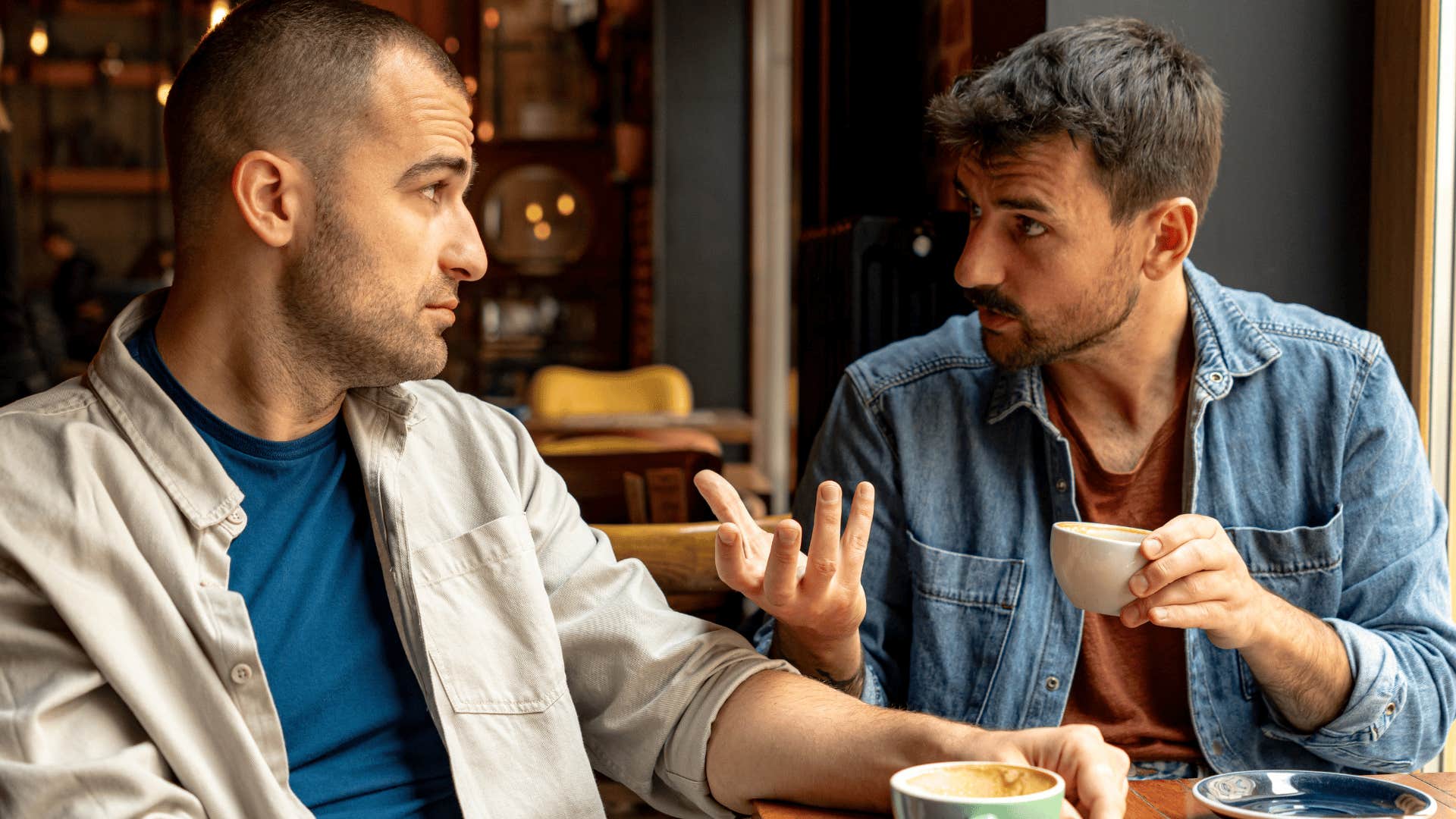
People with trust issues don't mind personal questions, but they very rarely want to have that sort of conversation soon after you meet. Once you get closer, they'll slowly let their guard down.
But until you get there, you might want to keep it surface-level. People with trust issues almost immediately think those who ask a lot of questions are sus. Yes, oversharing is awkward in general, but these people are extra guarded. So, the next time you talk to them, don't ask about their childhood trauma. They might not respond well.
4. People who act differently depending on who's watching
 Nicoleta lonescu | Shutterstock
If you think they're highly suspicious now, wait until they meet someone who's low-key two-faced. They might tolerate some code-switching, but people who act differently depending on who's watching grind their gears in general.
I mean, they already have trust issues, of course it's going to push their trust issues buttons being fake, even if that person doesn't intend to be deceptive.
That's why, if you wanna win their trust, keep it real. If you feel a need to code-switch, explain it to them so they understand the context, because sometimes a little social adaptation is important.
Yes, the truth may sting, but they'll respect you more for it than if you were to play it safe and pretend you're not doing it.
5. People who gossip regularly
 KaterynaUKR | Shutterstock
Sorry, but if you're hoping to gossip, you won't get very far with someone who's been burned and lost trust in people. This is especially true if someone does it regularly. While they know it's normal and, in some ways, part of how humans bond, gossips just won't get far with people who trust nobody.
Call them a buzzkill, but being around negativity is pretty draining. A study in 2025 found that negative comments increased anxiety and decreased mood. That's why you gotta be careful around mistrustful people. They don't have a high tolerance for negativity.
6. People who refuse to take accountability for their actions
 simona pilolla 2 | Shutterstock
Highly suspicious people might be many things that seem bad on the surface, but they do tend to strive for accountability, which is a good thing.
Usually, people who've been burned in the past know they have a lot of work to do. Especially in how they approach others, the last thing they want is to lose someone they adore. That's why they are never scared to take accountability.
Is it easy? No, but they don't want to be a hypocrite. They can't stand fake people who play the victim. So, even if it stings, they toughen up and stand on business. And if the people around them don't? You'd better believe they'll complain.
7. People who try to rush relationships
 Hananeko_Studio | Shutterstock
People who don't trust anyone are probably the most suspicious of people who try to rush into a relationship or close friendship. They likely don't want to be that person who pushes people away, but they seriously need people to slow down.
Sorry, but they aren't down to talk about relationship trauma on a first date. While some enjoy it, highly suspicious people view it as a red flag. They know manipulative people typically do this, like love-bombing.
Even if it's the most healthy, well-intentioned person trying to start a romantic or friendship relationship, the fast pace will probably scare them away.
8. People who change their story when they're confronted
 MAYA LAB | Shutterstock
If someone is going to talk their smack, they better get ready to back it up. Suspicious people may seem intense, but nothing sets them off more than someone who changes their story.
It won't just cause them to complain regularly, it is one of the few triggers that make them lose their mind. Once someone does this, the suspicious person is likely to cut them out of their live entirely.
Even if it's normal in the workforce or in friendships to have a little veneer of protection up, highly suspicious people can't stand it. It isn't just fake. It's straight-up lying and gaslighting someone to their face. And as a 2024 study cited, that's a form of psychological violence. That's why it's better to stick to one story; otherwise, you'll be the person they complain about at the dinner table.
Marielisa Reyes is a writer with a bachelor's degree in psychology who covers self-help, relationships, career, family, and astrology topics.
