
Kids Raised By Parents Who Made Them Join Nightly Family Dinners Usually Carry 6 Habits Into Adulthood
 wavebreakmedia / Shutterstock
 As someone who grew up in a home where we were expected to be there for nightly family dinners, I didn’t realize that not everyone did the same. Then I started going to my friend’s houses for sleepovers and was shocked to see that they didn’t all eat together every single night.
Family dinners used to be expected by many traditional families back in the day, but now, not so much. This change is unfortunate, because being raised in a household where eating meals together is a priority teaches kids several important habits that benefit them as adults.
Kids whose parents made them join nightly family dinners frequently have these healthy habits as adults
1. Emotional resilience
About 50% of Americans report eating dinner together as a family three to five times per week. That number used to be much higher back in the day.
Clinical psychologist and co-founder of the Family Dinner Project, Anne Fishel, notes that “When kids have a chance to bond with their parents, to feel close to their parents, to feel that their parents are listening to them, they have a chance to talk about their days or whatever is on their mind, it's like a seatbelt on the potholed road of childhood and adolescence.”
Kids who know they will eat dinner with their family on a regular basis also know they have a regular opportunity to talk with their parents about their issues. Sitting down together casually over a meal can be far less intimidating for children than having to come to their parents and ask them to make time to have a talk.
2. Maintaining close bonds that relieve depression
 Monkey Business Images via Canva
A 2012 report found that teens who have dinner with their family on a regular basis are less likely to experience depression than those who don’t because they typically report a closer bond with their parents.
According to the Pew Research Center, nearly 75% of U.S. adults rank spending time with their family as one of the most important aspects of their lives. Mealtimes are ideal for making sure every family member gets to see each other. And even if that can't happen in person, technology now allows for virtual family dinners as well.
3. Practicing clear communication
Fishel also explains that family dinner time helps kids develop a larger vocabulary, stating that "with young kids, preschoolers, the organic language that happens at the dinner table turns out to have 10 times as many rare or uncommon words sort of embedded in those conversations, as parents talk about being late because they hit a lot of traffic and they were so upset they wanted to tear their hair out, whatever, there are a lot of words that kids don't pick up in their picture books or on the playground, and kids who have a larger vocabulary learn to read earlier and more easily."
These communication skills lead to better grades and healthier relationships throughout their lives. Learning how to carry on a conversation at the dinner table also translates into better communication skills in the boardroom and on dates, as kids get to practice putting their feelings and thoughts into words, as well as how to listen to others.
4. Picking up on subtle social cues
 JackF from Getty Images via Canva
When kids eat dinner with their whole family, their parents are more likely to know the details of their children's daily lives, such as the names of their classmates and which teachers they do and do not like. They also learn to recognize their children's moods and are more likely to notice if their child's behavior suddenly shifts.
The same goes for kids, too. If their sister is typically super outgoing at dinner and suddenly goes quiet one day, they are more likely to notice something is wrong. Kids who develop these skills at a young age are typically very, very good at reading people as adults.
5. Maintaining a close bond with their siblings
As I mentioned earlier, family is an important value for most Americans. One important note is that family dinners also typically lead to closer relationships between siblings.
Especially when parents make an effort to keep mealtimes fun and conversational, they develop closer bonds and get to know each other on a deeper level.
6. Having a mindful relationship with food
 hanapon1002 from Getty Images via Canva
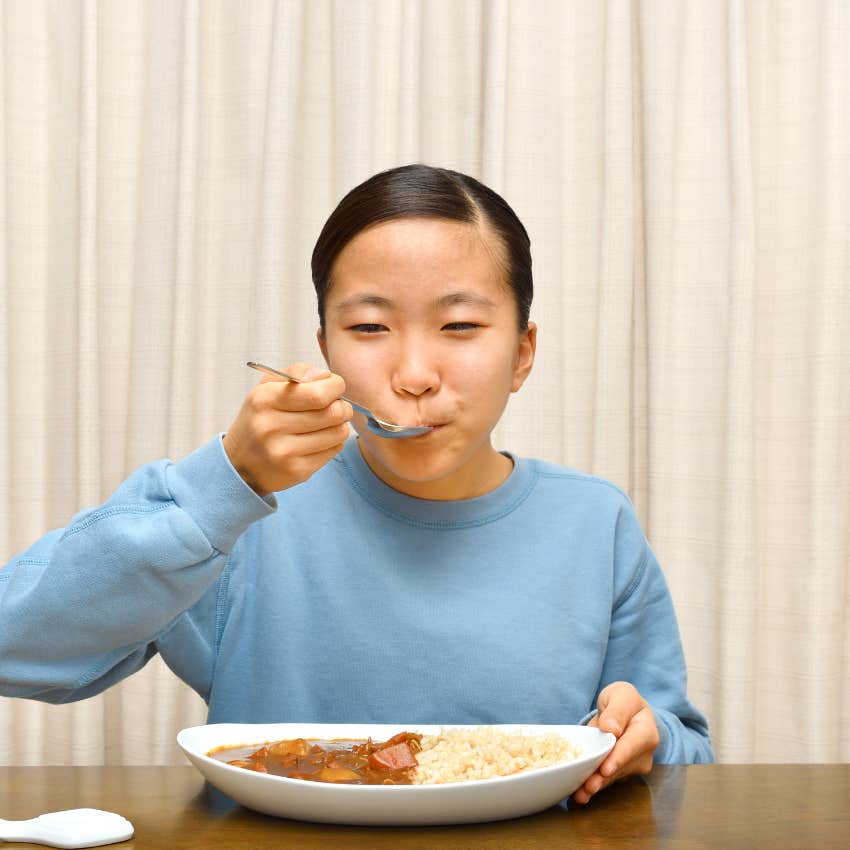
Kids who regularly ate meals with their family also tend to have healthier relationships with food as adults. They view meals not just as a time to eat, but as a chance to spend time with loved ones.
Even if they live alone later, they're likely to see dinner as an opportunity to sit with their thoughts and process the day's events. These dinners also build healthy eating habits, like prioritizing a solid meal instead of snacking mindlessly throughout the day.
Sophie Bagheri is a writer with a bachelor’s degree in English and theatre who covers lifestyle topics.
