
The Powerful Meaning Of Red Envelopes On Chinese New Year & Special Etiquette For Handing Them Out
 Mcimage | Shutterstock
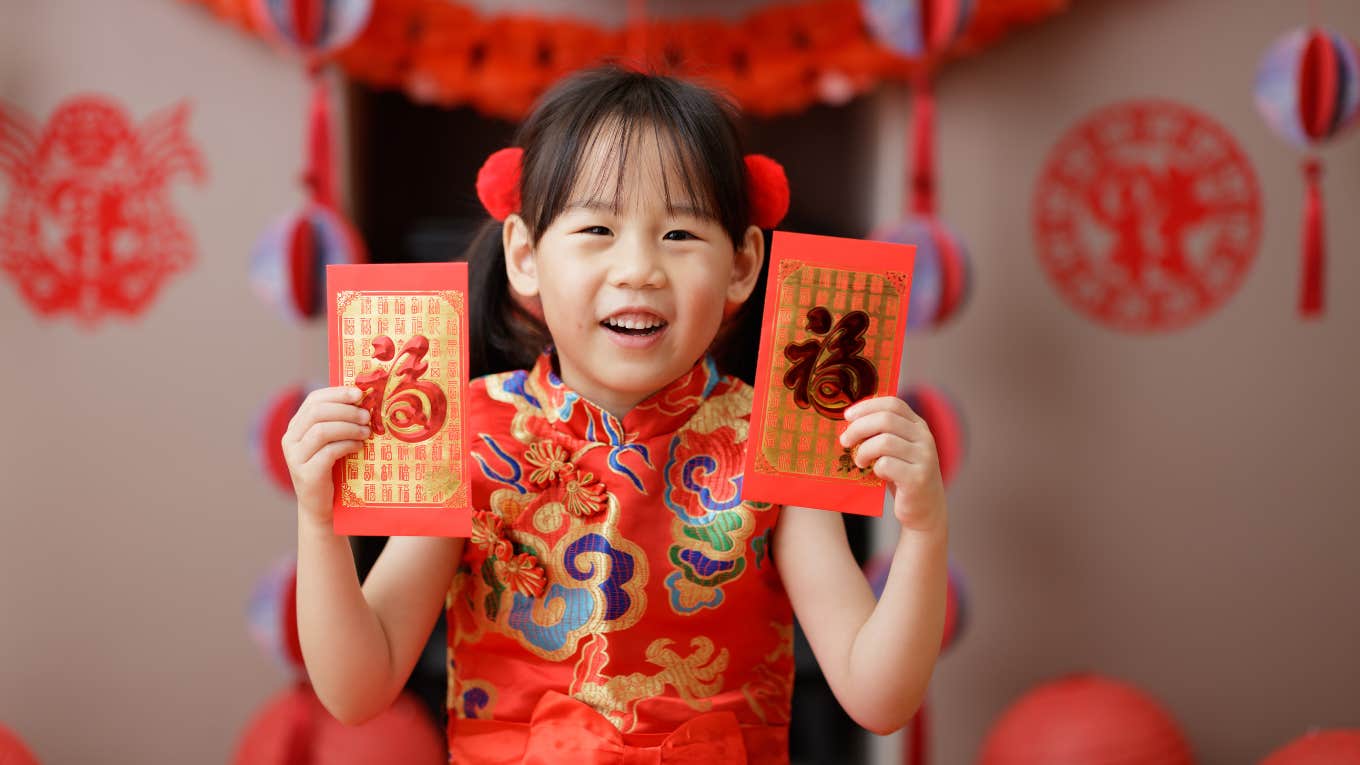
 As we approach Chinese New Year and prepare for the Year of the Fire Horse, people around the world are getting ready to participate in special annual traditions that help them mark the holiday. One tradition that even people who don’t celebrate might be familiar with is giving out red envelopes with money in them.
According to History.com writer Elizabeth Yuko, PhD, this is known as hóngbāo in Mandarin, and has its roots in the Han dynasty, although the modern tradition didn’t begin until the early 1900s. The envelope and color have a powerful meaning, and giving these envelopes out in celebration requires you to follow specific etiquette rules to ensure prosperity in the new year.
Multiple Chinese content creators shared the special meaning behind the envelopes and the etiquette for giving them to others.
A TikToker known as @ancientwifif7 said there’s a reason the envelopes are always red. The color symbolizes good luck and protection. He said that the envelopes are known as yā suì qián in China.
As for their origins, he shared that Chinese people believe that a small creature called a suì scares children on the eve of the New Year. To protect the kids, elders began wrapping coins in red paper. This literally meant they were pressing down suì, or yā suì. It evolved from there.
Another TikToker, Annie, explained in her own video that nearly every aspect of the red envelope exchange on Chinese New Year is symbolic. The first thing she mentioned was the type of money put in the envelopes. “Always put in fresh, crisp, new bills,” she advised. “None of this folded, crumpled up stuff, because it needs to represent a fresh new beginning.”
There is etiquette that needs to be followed by both the giver and receiver of the red envelopes.
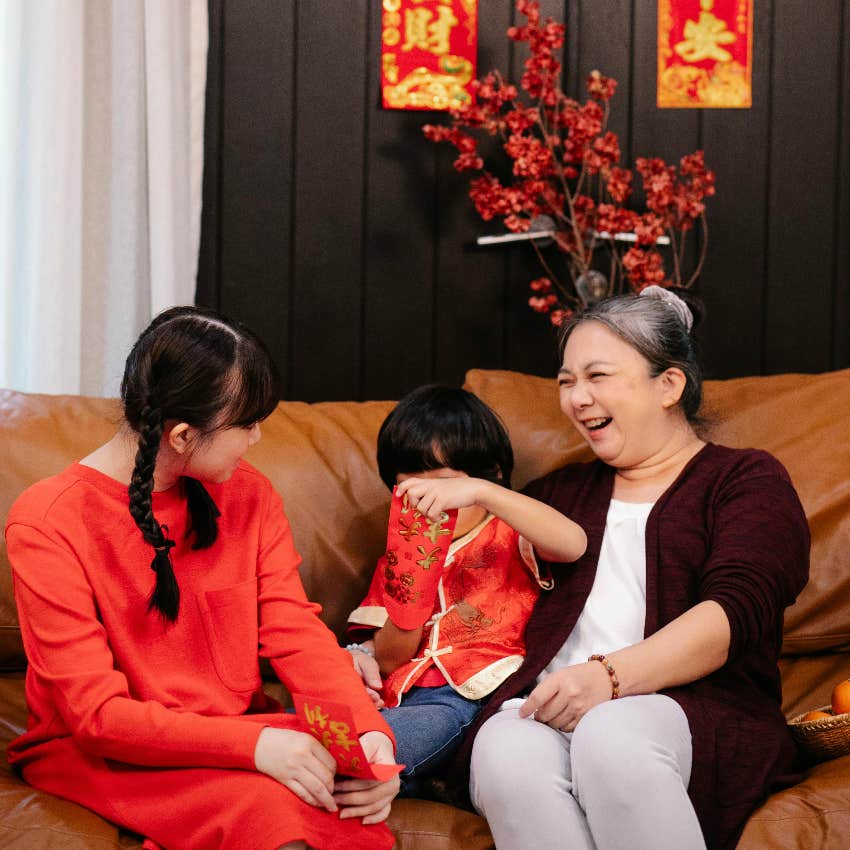
As @ancientwifi7 said, kids are usually the ones who receive red envelopes, and it can definitely be tempting for a kid to run off and spend money as soon as they get it, but that’s not what they’re meant to do in this case. Instead, he said, “You have to play it cool. Act like you don’t even care.”
It’s also important to put the red envelope underneath your pillow and sleep on top of it for one night for good luck before doing anything else with it.
Both content creators emphasized that the number given is meaningful. Annie said that even numbers are often considered more lucky, except for the number four, which symbolizes death. @ancientwifi7 added that six and eight are particularly popular because they sound like the Chinese words for “going smoothly” and “getting rich.”
Another point Annie made is that the red envelopes are traditionally handed out on New Year’s morning, as this is “the most auspicious time and it symbolizes fresh, new energy.” Both noted that the time a young adult gets married is typically when they go from receiving the envelopes to giving them out themselves.
Obviously, this is about a lot more than giving kids a little extra cash to keep on hand.
Yuko quoted Sarah Coleman’s book “Lunar New Year” when explaining the significance of the gifts. “The act of giving and receiving red envelopes transcends a mere financial transaction,” Coleman said. “It is a carefully choreographed dance of respect, affection, and well-wishing.”
 Angela Roma | Pexels
Ming Gao, a research scholar of East Asia Studies from Australian Catholic University, shared similar thoughts. “The act of giving hóngbāo, whether physical or digital, reinforces intergenerational ties and preserves cultural heritage,” Gao said. “Parents and grandparents giving hóngbāo to children during Lunar New Year continue to embody the traditional values of family and unity.”
The world is changing more and more by the day, and things like family and culture are treated with less significance as time goes on. By giving out red envelopes on Chinese New Year, those celebrating maintain close ties to their culture and traditions, while also demonstrating the lasting importance of a strong family bond. What could be more important than that?
Mary-Faith Martinez is a writer with a bachelor’s degree in English and Journalism who covers news, psychology, lifestyle, and human interest topics.
