
When Dads Disappear, The Caregiving Burden Doesn't — It Becomes Gendered
 pics five | Shutterstock
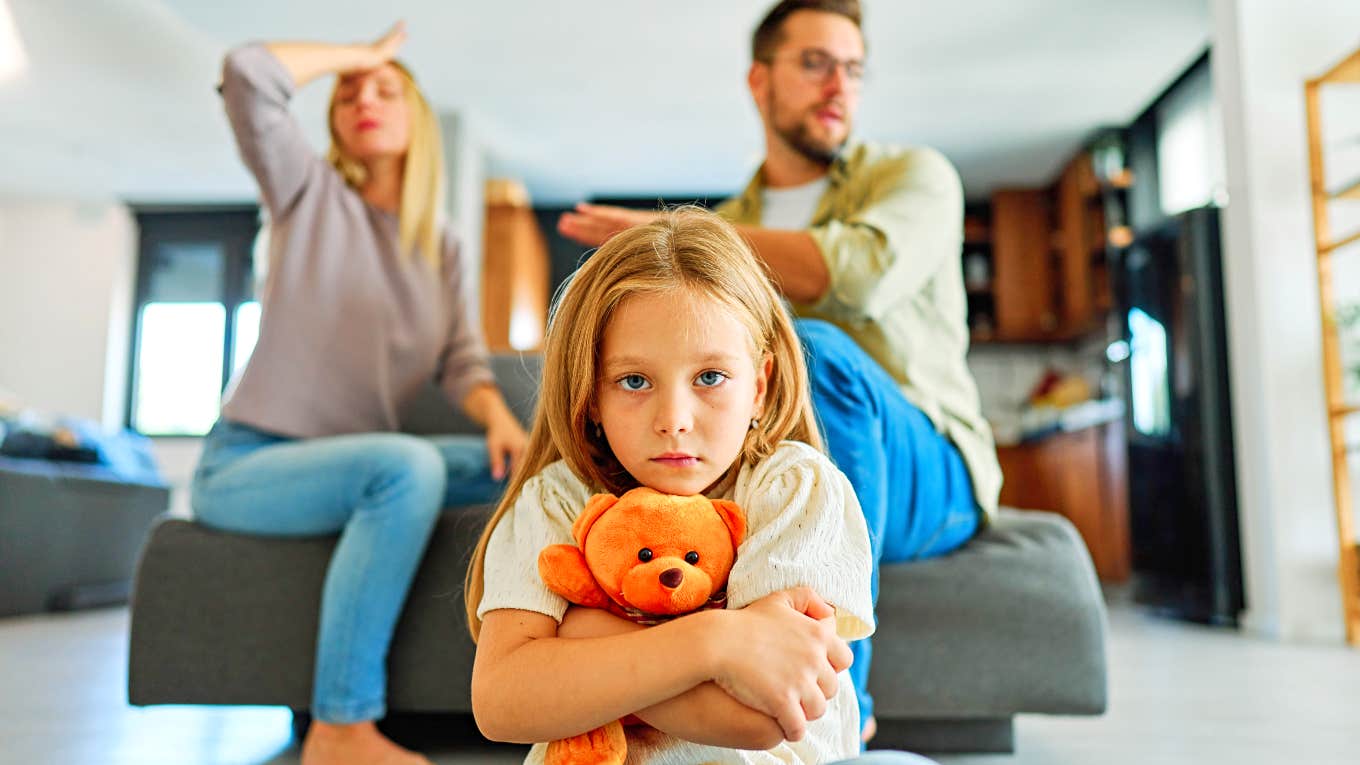
 “Did Dad leave to buy milk?” My son asked me this after his birthday party in July 2024. He was smiling when he asked it, like it was some kind of joke, which I guess it sort of was. At first, I was confused. “What?” I said. My son repeated the question. Slowly, and with horror, I realized what he was getting at.
“My friends asked me where he went, and I said I didn’t know, and they said he probably went to the store to buy milk.” And never came back. The end of the story hung in the air between us, unspoken.
Dad, for the record, had not left to buy milk. But it’s true that we didn’t know where he was. Three months prior, after I initiated a separation, we had agreed to a “nesting” arrangement — that is, rotating between our home and a small apartment at the campus where my ex-husband worked.
When dads disappear, the caregiving burden doesn't — it becomes gendered
We both knew the campus apartment would no longer be available come summer. When I told my ex that a friend had offered us use of an ADU for the summer, he hit me with the first of what would be many surprises over the months to come. He had already secured his own living arrangement. I wasn’t “allowed” to stay there, and neither were the kids.
Some people suspected there was another woman in the mix. For a variety of reasons, I did not, nor was this my primary concern. But I was very concerned that this new living arrangement meant I would be solo parenting for the foreseeable future. I was very concerned that this foreseeable future involved 10 weeks during which I worked, and he did not. Ten weeks during which the children were out of school.
My ex did not tell me where his new living arrangement was. When the kids asked where Dad went, I told them I didn’t know. Which is the information, or lack of information, that my son passed on to his friends, which led them to joke that he must have left to buy milk.
Meanwhile, I was vacillating between utter disbelief and raging fury. I could not believe that my ex was simply opting out of parenting. I could not believe that he had made a unilateral decision without any prior conversation, a decision that profoundly impacted his children and the woman he had once called his soulmate.
A woman who, until that point, hadn’t yet entirely given up on their marriage.
No, I told my son, Dad didn’t leave to go buy milk. But he disappeared from our lives all the same.
He wasn’t, of course, the first dad to disappear. The disappearing dad act is still common enough to merit a cultural trope that has retained its relevance across generations.
This trope says nearly everything we need to know about the division of caregiving labor, the cultural value we place on caregiving, and the wide disparities that persist between the perceived roles of “mother” and “father.”
I know, I know — #NotAllDads. There are tons of “involved fathers” out there, my own father included, who take their role as caregiver seriously and are fiercely committed to their children.
But here’s the thing. Up until our separation, my ex was also an “involved father,” by most definitions of the term. He served as a stay-at-home parent for 16 of our daughter’s first 18 months. He changed diapers. He loaded the dishwasher after dinner, wiped down all the surfaces, and even swept our entire house on a nightly basis. He drove the kids to practices and birthday parties, took them to the arcade, and worried over them when they fell sick.
Yes, I often wished he would take more initiative. Yes, I felt burdened by a disproportionate share of the mental and emotional load. Yes, I didn’t always agree with his approach to parenting. But most mothers I knew felt this way.
Even with all the toxicity and abuse that defined the last months of our marriage, it never really occurred to me that he would interpret a marital separation as an invitation to abandon his role as a father.
But this is surprisingly common. In fact, 44% of single mothers are divorced or separated. Let’s be clear about what this means.
It means that nearly half of single mothers had children while partnered, and when they became unpartnered, the fathers jumped ship.
 Andrej Lišakov / Unsplash+
It was the speed at which my ex transitioned from “involved dad” to “absent dad” that astounded me the most. Perhaps it shouldn’t have. There was, after all, some precedent. Back when we were still dating, we moved several states away from the six-year-old boy who would become stepson.
Even though we could (and did) rationalize the decision — my stepson would no longer be caught in the middle of his parents’ constant fighting and could spend quality time with us during school breaks — I can’t say it was a decision my ex agonized over. I can’t say either of us ever discussed the impact of this decision on my stepson’s mother, nor did we feel particularly burdened by guilt over its ramifications when it came to her labor and time.
I was the one who was moving for work, and my ex was coming with. I hadn’t begged him to, but I was glad he was, and if I felt any nagging discomfort over the readiness with which he made that decision, I didn’t allow myself to sit with it. Now, six months after our divorce, he is planning a cross-state move for another woman.
This is welcome news for me, and I suspect it will ultimately be better for the children. But it’s ironic that I now find myself on this side of the fence. As they say, what goes around comes around.
When I told a colleague a bit about what was going on in my life during the summer of 2024, she said, “Gosh, if my husband and I split, we’d be fighting over who got the kids more.”
I told her he sounds like a great dad. What I didn’t say was: “I wouldn’t be so sure.”
Yes, there are plenty of involved dads who stay involved as active co-parents after a separation or divorce. There are also plenty who don’t.
And this speaks volumes about the ways in which we’re still socially conditioned to view fatherhood, even in the 21st century.
We all love the “family guy.” Isn’t he so committed? Isn’t he just great? While women suffer from financially crippling motherhood penalties at work, politicians and other “successful” dads just love trotting their families out on stages and posting hollow tributes about them on social media. Their wives and children make for such charming accessories to their busy, important lives!
And when all is said and done, the nuclear family is a pretty cozy arrangement for a heterosexual dad. I don’t say this to make light of the formidable challenges of parenting or the formidable challenges inherent in being a spouse. But most married heterosexual dads do enjoy the social prestige of fatherhood while their wives disproportionately manage the daily slog. They enjoy largely unfettered access to their wives’ time, labor, body, and emotional attention without the social pressure to equitably reciprocate — and with much fanfare when they (sort of) do.
While separated and divorced dads are by no means held in as much contempt as separated and divorced mothers, they do lose the “family guy” luster. They might not suffer a fatherhood penalty at work, but they lose out on the perks. Now they’re the sad dads living in sparsely furnished apartments who get the kids on the weekends.
No wonder so many men are in such a hurry to remarry after divorce.
I knew for quite some time, leading up to our separation, that my ex-husband believed his time and labor to be more important than mine. Not because he was an inherently selfish person — he had the capacity to be both tender and generous — but because he had the same blind spots that the patriarchy instills in most heterosexual married fathers.
It was our separation that brought these longstanding caregiving and household labor disparities into frightening focus. Fatherhood suddenly became entirely optional, a role he could swoop in and play from time to time, while motherhood remained a full-time affair. An entire summer’s worth of my time and labor could be exploited without so much as a prior discussion. Meanwhile, a subsequent misunderstanding over an exchange of our children that cost him 45 precious minutes was an egregious crime.
 Karolina Grabowska www.kaboompics.com / Pexels
While statistics on persistent inequities in household and caregiving labor in the context of heterosexual marriage are depressing enough in their own right, it’s the starkness of caregiving statistics outside the context of marriage that should be ringing multiple alarm bells. Yet that 80% of custodial parents are mothers and 80% of single parents are mothers seems to surprise no one.
Some men will tell you it’s all because of “baby mama drama” — that their baby mama is just crazy and too much to handle. Other men will chalk this up to family law, which they say blatantly favors mothers and is hell-bent on depriving fathers of their parental rights.
Multiple studies, plus my lived experience and that of many divorced mothers I know, reveal that in the vast majority of cases, the truth is much messier.
This exploration of custody statistics sums it up nicely:
One study of gender bias in custody disputes reported that in about half (51%) of the cases when parents used mediation, both parents agreed that the mother should have primary custody. As for how judges rule on custody, a study on gender bias in Massachusetts courts showed that even as far back as 1990, fathers who actively sought physical custody of their children won either primary or joint custody over 70% of the time.
And even more illuminating:
Custody battles that involve claims of abuse or parental alienation can be particularly messy. In one study of these cases, the results showed that mothers actually lost custody about half the time, whether they accused the father of abuse or not.
All of this tracks for me. My ex enjoys the rights of joint custody without any of the daily responsibilities of parenting. Neither his extensively documented abusive behavior nor the inequitable division of caregiving and household labor throughout our 16 years of marriage had any bearing whatsoever upon our division of assets. There was a certain logic behind the settlement, yes, but at the end of the day, the full-time caregiver who had extracted herself from an abusive marriage was left with significant debt and an entirely gutted savings account. Meanwhile, the abuser who abandoned his parental responsibilities was paid a hefty lump sum.
My story is not unique. It is alarmingly common, and compared to other women I know in similar situations, I got off easy.
The point I’m making here is not about who wins or who loses in divorce. It’s about how family law both illuminates and reinforces our social beliefs about the value of caregiving, or lack thereof.
 George Rudy | Shutterstock
An equitable division of assets presumes an equitable division of labor during the marriage, and just as fathers in marriages get socially rewarded for doing less, so are they financially rewarded in divorce. Meanwhile, mothers continue to be saddled with the brunt of the caregiving labor.
Most crucially, when fathers no longer enjoy the social status that comes with being Married Family Guy, a surprising percentage seem to lose interest in fatherhood altogether. And on the flip side, when men become fathers outside of the context of marriage, that interest can also be fast to wane.
It all makes me wonder if the nuclear family, at its heart, is really about tethering fathers to their children. Instead of questioning the health of a society in which a father’s commitment to his kids hinges on a legal and financial contract, marriage is predictably propped up as “the answer” to our children’s health and well-being.
We shame single moms and “deadbeat dads” for their failure to conform. But we don’t question why women so often get saddled with full-time caregiving responsibilities, and why men feel entitled to disappear.
In the 18 months since my son’s ninth birthday party, Dad has resurfaced here and there. This past summer, we actually managed to follow the co-parenting plan we’d stipulated in our freshly signed divorce agreement. The kids spent two weeks with him and every other weekend.
In September, he disappeared again, then resurfaced for Christmas. I have no idea when they’ll see him next.
When women like me talk about inequity in marriage, what we’re really talking about is a gross imbalance of intrinsic investment. This isn’t just about how many diapers Dad changes; this is about how we, as a society, fail to instill in men a sense of shared responsibility when it comes to the labor of caregiving.
In Phil Levin’s illuminating and entertaining Substack post, How to Kill a Commune in 8 Easy Steps (stay with me here), he walks his readers through the core principles of communal living. As the nuclear family structure is one form of communal living, albeit not a very successful one, many of these same principles apply. Phil says, “The great harmony of community isn’t when everyone has equal everything. It’s when responsibility, investment, stake, and trust are aligned.”
In the context of marriage and nuclear family, men tend to hone in on the chore lists — and they can argue all day, as many have done with me, about who is doing what and whether yard work is harder than making dentist appointments.
But it’s when we zoom out beyond the nuclear family context that the egregious misalignment comes into sharp focus. Because it’s not about chore lists anymore. It’s about who is actually housing and raising the kids.
It’s also about who is nursing our sick, who is tending to our elderly, who is educating our children, and who is caring for our babies and toddlers. The answer, to no one’s surprise, is women. According to the World Economic Forum, women in the U.S. “represent 95% of the paid-care workforce.”
 Hryshchyshen Serhii | Shutterstock
I’ve said it before, and I’ll say it again: This imbalance is bad for all of us.
Women may lose financially and fail to see their care labor acknowledged or honored, but men lose emotionally, leading to social isolation and all the male misery that has so many of us wringing our hands.
This is, perhaps, our greatest moral failing and the root cause of our greatest suffering. In a functional society, we’d all feel a shared sense of responsibility when it comes to caring for our young, our old, our sick. People of all genders, races, ages, and income levels, people with and without kids of their own.
The story of the father leaving “to buy milk,” like so many stories, is not the story of a single individual making poor choices. It’s the story of a dysfunctional family structure embedded within a dysfunctional social structure.
My ex may enjoy more freedom on a day-to-day basis, but in building my own structures of mutual care and support, I am paving a path toward lifelong liberation.
Kerala Goodkin is an award-winning writer and co-owner of a worker-owned marketing agency. Her weekly stories are dedicated to interrupting notions of what it means to be a mother, woman, worker, and wife. She writes on Medium and has recently launched a Substack publication Mom, Interrupted.
