
If Your Husband Acts This Way Before Bed, He's Not Happy Inside
 MAYA LAB | Shutterstock
 Even if they seem insignificant, a couple's routine and daily habits before bed can shed a lot of insight into their marriage. From going to bed at the same time to spending quality time cuddling before falling asleep, these things are strong indicators of relationship satisfaction. However, if your partner is acting in different ways before going to bed, it could also be a sign that he's unhappy and disconnected.
Thankfully, according to experts from the Institute for Family Studies, there's a light at the end of the tunnel for couples navigating unhappy periods in their marriage. More than two-thirds of couples who were unhappy in their marriage ended up in a much happier, healthier place 5 years later. So, even if your husband acts this way before bed and amid your chaotic routine, he may not be happy inside right now, but there is room to grow back together. Whether it's support, open communication, or shifts in responsibilities, you can reignite the satisfaction and spark.
If your husband acts this way before bed, he's not happy inside.
Husbands who are avoidant, disconnected, and passive with their partners may be unhappier.
From staying up late to indulge in mindless entertainment or avoiding quality time and conversations with their partner, if an unhappy husband is regularly following these routines, they may be coping with more than angst and frustration.
 Prostock-studio | Shutterstock
Avoiding hard conversations and intimacy provides space for them to suppress complex feelings and emotions about the state of their marriage, even if it comes at the expense of closeness and growth.
As a study from Personality and Social Psychology Bulletin explains, avoidant behaviors not only amplify the issue at hand and create more stress, but they also sabotage happiness. An avoidant partner may be subtly ignoring negative experiences and emotions in the moment, but they're also less likely to find and appreciate positive ones.
If a husband uses misguided coping mechanisms for personal mental health struggles, their partners are also at risk.
If a husband is turning to mindless entertainment, doomscrolling, avoidance, and guilt-ridden coping strategies to find solace from their complex feelings inside, they may isolate themselves from a partner, sometimes without even realizing it.
 Nataliya Dmytrenko | Shutterstock
They lean on screens, distractions, and petty issues to cope, and even if that provides a fleeting sense of comfort and control, the emotional suppression that happens in return sabotages communication and closeness in their marriage.
Without safe spaces for vulnerability and openness in their marriages, these men not only increase their risk for mental health struggles and psychiatric disorders, but they also put their partners at risk for them.
Unhappiness and disconnection in a marriage don't have to be forever, but without change, nothing shifts.
Considering marital dissatisfaction and depression are inherently linked, according to a study from Couple and Family Psychology, it's not surprising that couples find themselves in a seemingly ever-evolving spiral of disconnection and unhappiness.
 OWL_VISION_STUDIO | Shutterstock
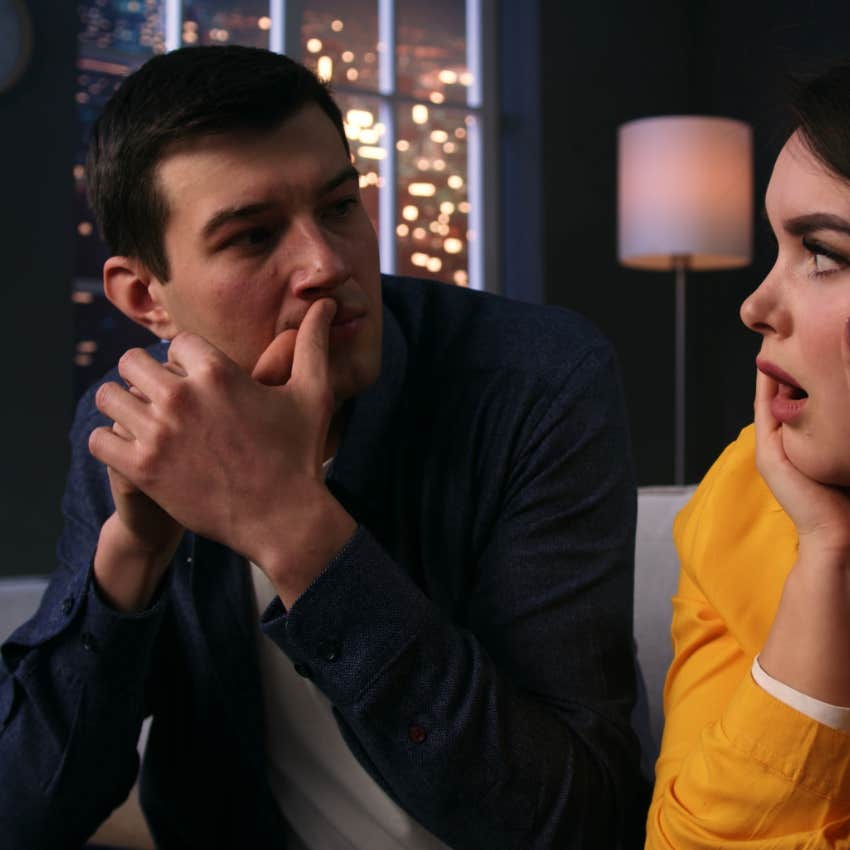
However, with the right changes and commitment, this kind of struggle in a marriage doesn't have to be forever. Yes, from avoidance to relying on screens, if a husband acts this way before bed, he's not happy inside, but by making small steps to alter these rituals, you can grow together.
If you want a better relationship, of course you have to think about the marital pillars — communication, intimacy, affection, and trust — but you should also be prioritizing sleep. Whether that means sleeping in separate beds or following a bedtime routine together for quality time, to boost well-being in a relationship, it's these small, mundane things that have to shift first.
Zayda Slabbekoorn is a senior editorial strategist with a bachelor's degree in social relations & policy and gender studies who focuses on psychology, relationships, self-help, and human interest stories.
