
If You Do At Least 3 Of These 10 Things In Your Sleep, Experts Say You Have Unusually High Stress Levels
 Dragana Gordic | Shutterstock
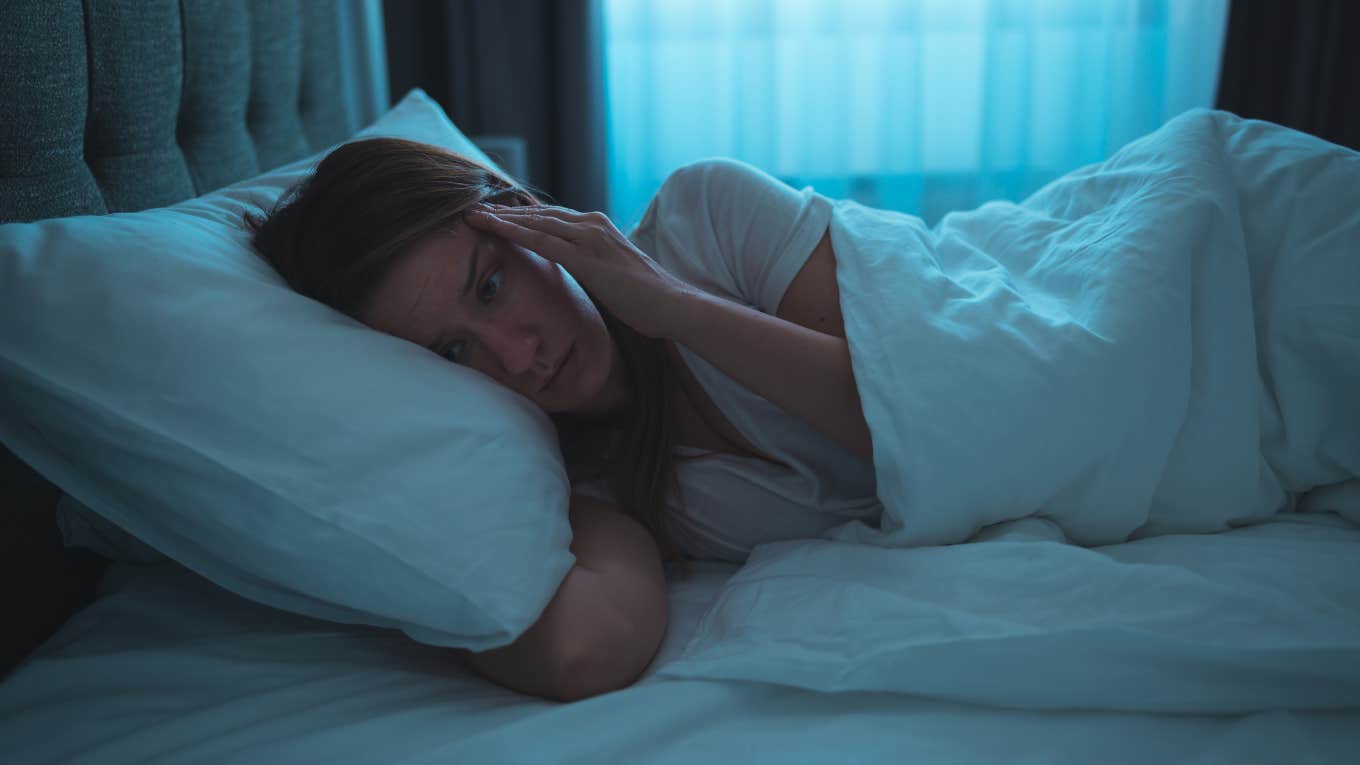
 Your body could actually be trying to send you a message through your sleep habits that your stress levels are too high. Really, it makes sense. We all know that stress can have a deep connection to our physical well-being.
Liz Tenuto, also known as the Workout Witch, is an expert in helping clients heal trauma through somatic exercise. She recently took to TikTok and shared the 10 signs that your body could be stuck in a stress response, commonly referred to as a “fight-or-flight" response. As you can imagine, it’s not healthy for your body to always be stuck in this kind of loop.
Doing at least 3 of these 10 things while sleeping means you have unusually high stress levels:
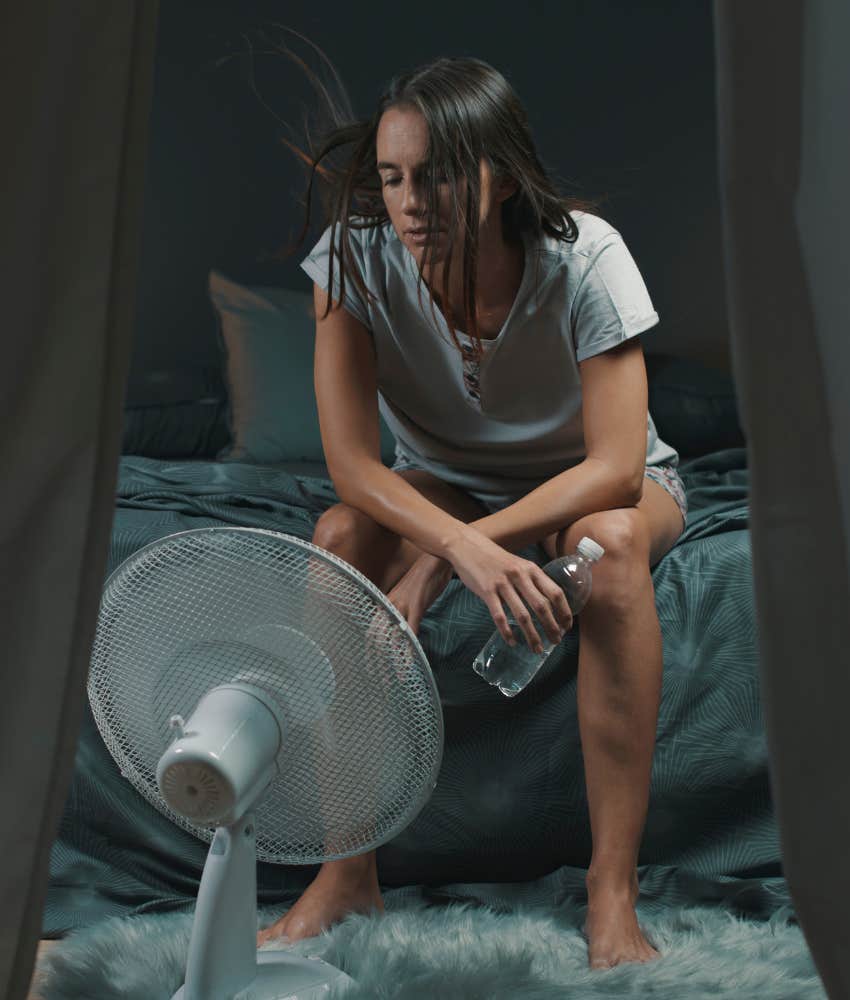
1. Waking up covered in sweat
 Stokkete | Shutterstock
No one likes the feeling of waking up and finding themselves covered in sweat. But this can actually be a sign of something more than just an overly warm blanket. According to the Mayo Clinic, night sweats can be caused by multiple medical conditions, including anxiety disorders.
2. Grinding your teeth
Grinding your teeth in your sleep can also be a sign of a stress response. If teeth grinding is severe enough, it can lead to TMJD or a temporomandibular joint disorder.
3. Frequent nightmares
No one likes being woken up by a disturbing dream. If this happens often, it can be a sign of something more serious.
The Mayo Clinic listed stress, anxiety, and trauma as three main causes of nightmares. If your body is constantly stressed, it may get into a pattern of having regular nightmares.
4. Sleeping with T. rex arms
Sleeping with T. rex arms occurs when you curl up on your side and pull your arms across your chest with your hands tucked into your neck. The sleeping position resembles the short-armed look of the ancient dinosaur.
“This happens when your nervous system is so overloaded or dysregulated that it becomes difficult to shift out of that state, even when you’re asleep,” Tenuto said. In addition to being a sign of a stress response, this can lead to significant pain.
5. Talking in your sleep
Talking in your sleep may seem like something laughable, but it can be serious. It can often be triggered by anxiety and stress.
The subconscious can do strange things, especially when under pressure. Mumbling about something in your sleep is one of them.
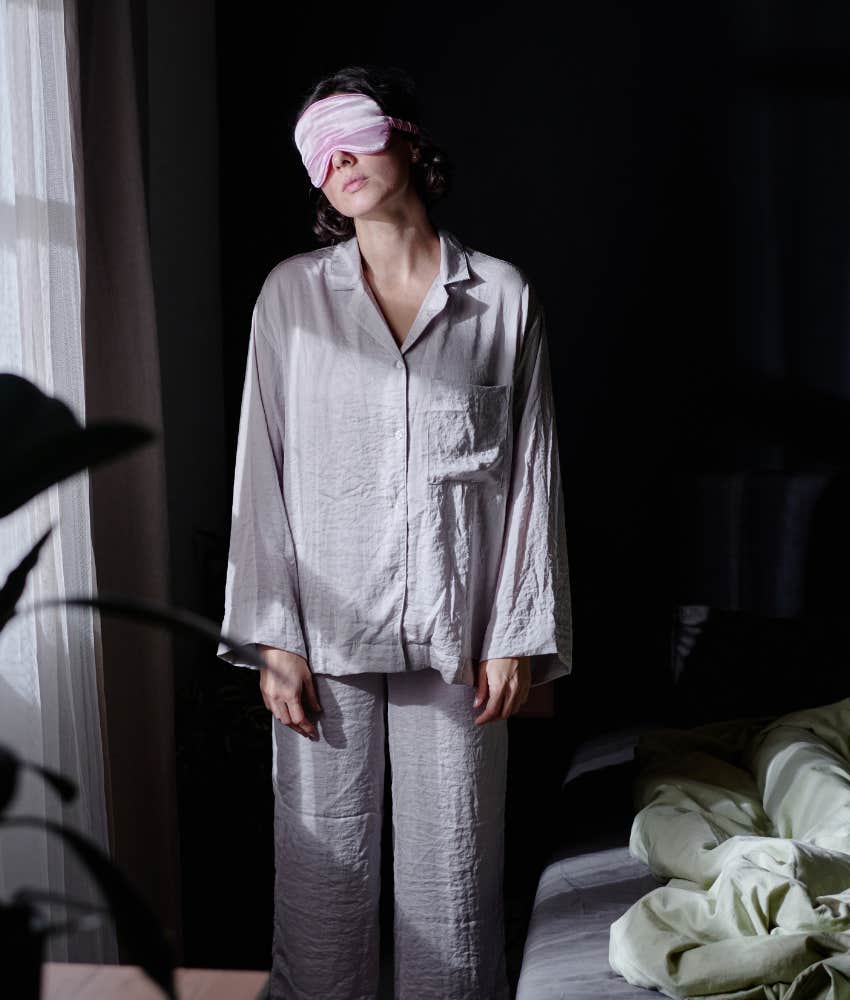
6. Regularly sleepwalking
 AnnaStills | Shutterstock
For many, sleepwalking may seem like something out of a movie. For others, it’s part of their reality.
This, too, can be connected to stress. According to The Cleveland Clinic, “Research links anxiety, stress, childhood trauma, and post-traumatic stress disorder (PTSD) to an increased risk of sleepwalking.” If you find yourself wandering around in the middle of the night, it might be time to consider stress as a potential cause.
7. Waking up multiple times throughout the night
Getting a good night’s rest is so important, so waking up fitfully throughout the night can be incredibly frustrating. Apparently, it’s more than just an annoyance, however. Waking up during the night is another sign that your body is in a stress response.
According to Calm, “Stress and anxiety can activate your body’s ‘fight-or-flight’ response, making it hard to stay asleep.” If you are under a lot of stress, it makes it hard for your body to truly rest. This can make staying asleep especially difficult.
8. Having a hard time falling asleep
If you find yourself tossing and turning instead of quickly falling asleep, it could be a sign of a stress response. “High levels of stress impair sleep by prolonging how long it takes to fall asleep and fragmenting sleep. Sleep loss triggers our body’s stress response system, leading to an elevation in stress hormones, namely cortisol, which further disrupts sleep,” wrote Baylor College of Medicine.
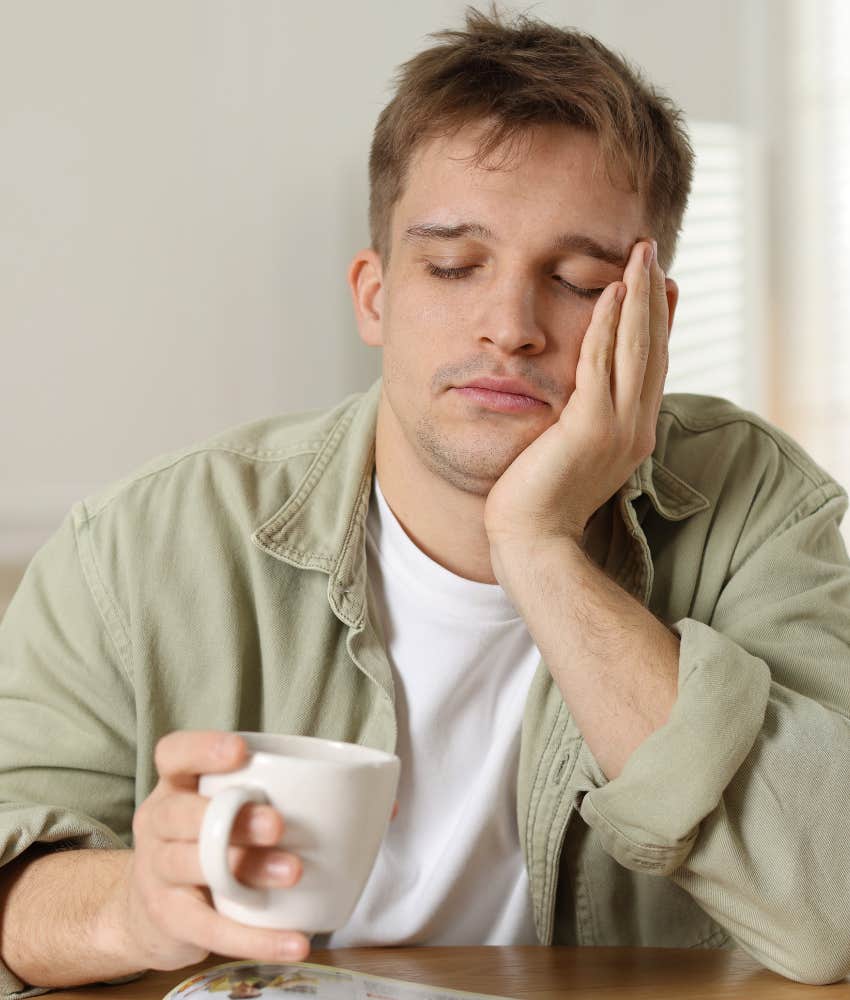
9. Feeling exhausted when you wake up
 New Africa | Shutterstock
It’s understandable that someone would feel exhausted after waking up during the night or struggling to fall asleep. But if your body is in a stress response, there may be even more to it.
Anxiety can cause the body to release hormones to prepare you to fight, flee, or freeze. This sudden onset of hormones can cause exhaustion. So, even if you feel like you got a good night’s sleep, you may still feel tired when you wake up.
10. Waking up with unexplained pain and tension
Stress naturally causes muscle tension. The American Psychological Association said it is almost like a “reflex.” If you are sleeping in a position like t-rex arms, you are causing your muscles to tense up, which can lead to pain. Waking up with tension and pain is a sure sign that your body is experiencing stress.
Stress is never healthy for your body, but being in a full-on stress response is a sign that your body is truly dysregulated.
It’s not healthy to always be in fight-or-flight mode. Finding that your body is operating this way may be a sign that it’s time to get some help. Realizing that you have unusually high levels of stress is the first step in the right direction, however. Once you pinpoint the source of your stress, you can begin to formulate a response. Maybe it's setting better boundaries at work or simply asking for help. It could even be as simple as prioritizing a little more self-care in your daily routine.
Mary-Faith Martinez is a writer with a bachelor’s degree in English and Journalism who covers news, psychology, lifestyle, and human interest topics.
