
People Who Live By Water Naturally Experience 3 Scientifically Proven Benefits That City Folks Have To Travel For
 KikoStock | Shutterstock
 Everyone has heard that spending time in nature is a good thing for both mental and physical health, but it turns out one part of nature may be more beneficial than others. Multiple studies have proven that blue spaces, like oceans, lakes, and rivers, affect our well-being in ways green spaces just can't match.
A few years ago, my husband and I bought a beach house that we could almost afford. This house is about five hours from our home in Massachusetts, so the trip is not easy. But every time we arrive, we see the ocean, and the stress of the drive fades away. There's definitely something about being by the water that calms the body in a way that has city dwellers traveling vast distances to experience it.
Here are 3 scientifically proven benefits people who live by the water naturally experience:
1. Reduced physiological arousal
 PeopleImages | Shutterstock
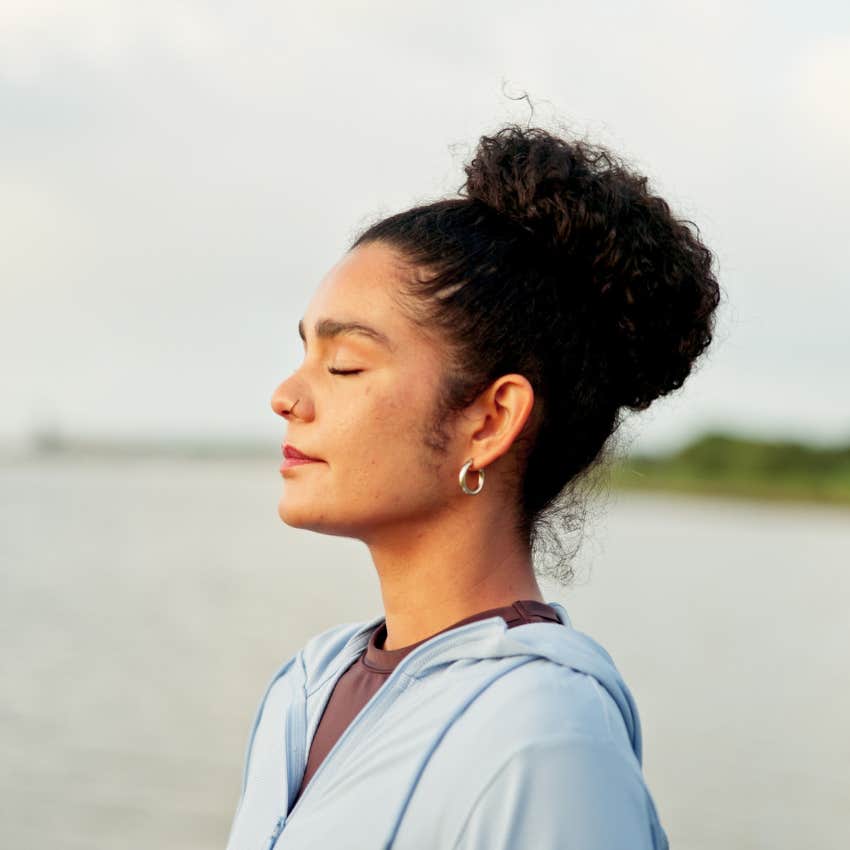
In one of the earliest studies to examine the beneficial effects of looking at water, a researcher at the University of Delaware measured people’s brain waves while they looked at pictures of nature that included either green space or blue space. People who were looking at blue space pictures showed lower levels of brain activation, indicating that simply looking at pictures of water is relaxing for the brain.
More recent research suggests images of water can lessen anxiety, even when it's caused by something as dreaded as a dental procedure. Researchers in a 2018 study assigned some patients to take a walk around a local beach using a virtual reality headset, while others took a virtual walk around a local city, and still others received standard care. The patients who virtually walked around the beach reported less anxiety and pain, and they remembered the procedure more positively a week later.
In these cases, no one was actually in the physical presence of water, but they still experienced major benefits from just being able to see it.
2. Increased happiness
One of the largest studies to examine the impact of blue spaces collected data from more than 20,000 people in the United Kingdom. Using a smartphone app that tracked people’s specific location, researchers asked the participants to report their overall sense of well-being at random points throughout the day. They then calculated how close people were to different types of natural environments.
They weren't surprised to find that people were generally much happier when in any type of natural environment. But, their findings also proved that not all nature was equally beneficial. People were happiest in marine and coastal locations.
In her book "Blue Spaces: How And Why Water Can Make You Feel Better," Catherine Kelly explained why this could be true. "Seeing ourselves in a coastal space allows us to let go of things in a way that other spaces don’t," she wrote. "Here I am, this small thing. So my problems are maybe not that big after all."
This may sound discouraging for people who live in the middle of a city, but there's still good news. Looking at water, even in an urban environment, such as a river or canal in the midst of a city, can make you feel better.
In another study, researchers in New Zealand examined whether blue spaces and green spaces were visible from various residential locations. They also examined residents’ overall level of psychological distress. As predicted, people with a view of the ocean were significantly happier than those without.
3. Improved mental health
 DukiPh | Shutterstock
A 2022 study examined data from more than 15,000 people living in 18 different countries. Participants reported how much time they had spent near water during childhood. They also reported on their current mental well-being and regular exposure to blue spaces in the last month. As predicted, people with more exposure to blue spaces during childhood were more likely to spend time in blue spaces as adults. These early life experiences seem to lead to lasting preferences.
But more importantly, their data also revealed that people with more exposure to blue spaces during childhood reported better mental health during adulthood. Why? Childhood exposure to blue spaces led people to spend more time in such spaces later in life, which in turn led to better mental well-being.
"Our findings suggest that building familiarity and confidence in and around blue spaces during childhood may stimulate an inherent joy of nature and encourage people to seek out recreational nature experiences, with beneficial consequences for adult mental health," said Valeria Vitale, a doctoral candidate at the Sapienza University of Rome and the lead researcher.
Catherine Sanderson is the Poler Family Professor of Psychology at Amherst College and the author of The Positive Shift: Mastering Mindset to Improve Happiness, Health, and Longevity. She speaks on the science of happiness, the power of emotional intelligence and growth mindset, and the psychology of courage and inaction.
