
How Your Brain Changes The Longer You’re In A Relationship With Someone, According To Science
 simona pilolla 2 | Shutterstock
 A new study sheds light on how your brain changes the longer you're in a relationship, transitioning from hot-and-heavy towards something that more and more resembles friendship.
The early times of a relationship are always a heightened experience full of passion, but for most of us, those early days of ardour don't last forever. Eventually, the hot and heaviness give way to a deeper but less dramatic, less heated bond. This new data may shed light on why, and it all comes down to dopamine and the brain's reward system.
The longer you're in a relationship, the more your brain sees your partner as a friend.
The study comes from the Department of Psychology at Kyoto University in Japan. In their research, psychologists focused on 47 heterosexual men between the ages of 20 and 29 who were currently in a romantic relationship to see how their neural reactions to their partner and their friends, including those of the opposite sex, differ.
That's an awfully narrow focus, of course, but it was intentional. Researchers wanted to focus exclusively on the neural differences between friendships and romance, without the added psychological impacts of long-term marriage, children, or other relationship styles.
Researchers had each man choose their two closest male and female friends and their romantic partner to provide video clips to be used as stimuli during the study, and then measured their reactions to them.
 Taryn Elliott | Pexels | Canva Pro
The longer the subjects had been in a relationship, the more it resembled friendship.
In the study, subjects were asked to press a button each time they saw their partner's or friend's face appear onscreen, and depending on the speed of their reaction, they would see either a positive or neutral reaction from their friend or partner.
Perhaps unsurprisingly, the men were more motivated by the images of their partners, and also rated them more favorably than their friends. Brain imaging analysis also determined that the subject rated their female friends the same as their male friends, indicating that our brains classify romantic relationships differently from friendships, regardless of other factors.
However, the longer the men had been in their relationship, the more the lines blurred between the two. Their brains classified their romantic partner as less and less distinct from a friend, even if the subjects self-reported high levels of passion or intimacy.
This is in line with many other studies that show romantic relationships transition over time from "passionate love" to "companionate love," which is characterized by more personal and mental connection rather than romance and physicality. The reason why has to do with dopamine levels.
Scientists believe our brain's reward centers shift our dopamine levels the longer a relationship lasts.
Forming a bond with a romantic partner requires a lot of activity in the brain's reward centers, especially with respect to the chemical dopamine. That's why the early stages are such a rush. Our brains are putting in the hard work of making us form a tight, intense bond.
 Yan Krukau | Pexels | Canva Pro
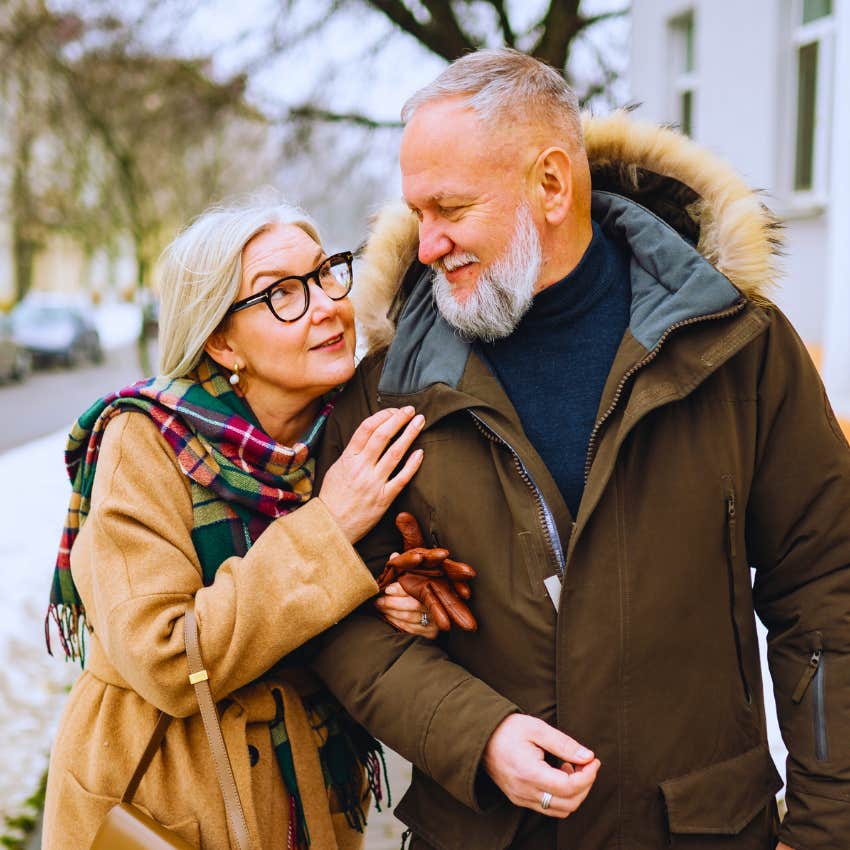
The Japanese researchers' findings suggest that the longer we're in a relationship, the more this biological processing in our brains shifts away from forming a bond and toward forming something a lot more like a friendship. Turns out there's a reason many older couples describe each other as their "best friend."
The researchers were careful to point out that this shift alone has little to do with the quality of the relationship. It is instead likely a natural part of the process of forming a more personal, companionship-based bond over a romantic, sexual one.
The limitations of the study, namely its lack of women and exclusion of non-heterosexual people, mean more research is needed to determine if Kyoto University's findings are ironclad. But it does shed light on our tendency to perceive a decline in passion as "something wrong" with our relationship. It might just be a natural transition toward something that is, even if less exciting, far deeper and more meaningful.
John Sundholm is a writer, editor, and video personality with 20 years of experience in media and entertainment. He covers culture, mental health, and human interest topics.
